Clear Sky Science · en
LISS enables immune evasion of colorectal cancers irrespective of MSI status
Why this research matters
Immunotherapy has changed treatment for several cancers, yet many colorectal cancer patients see little benefit. This study reveals a hidden molecular switch inside tumor cells that helps them hide from immune attack, and shows that turning this switch off can make current immunotherapies work better, regardless of a tumor’s genetic subtype.
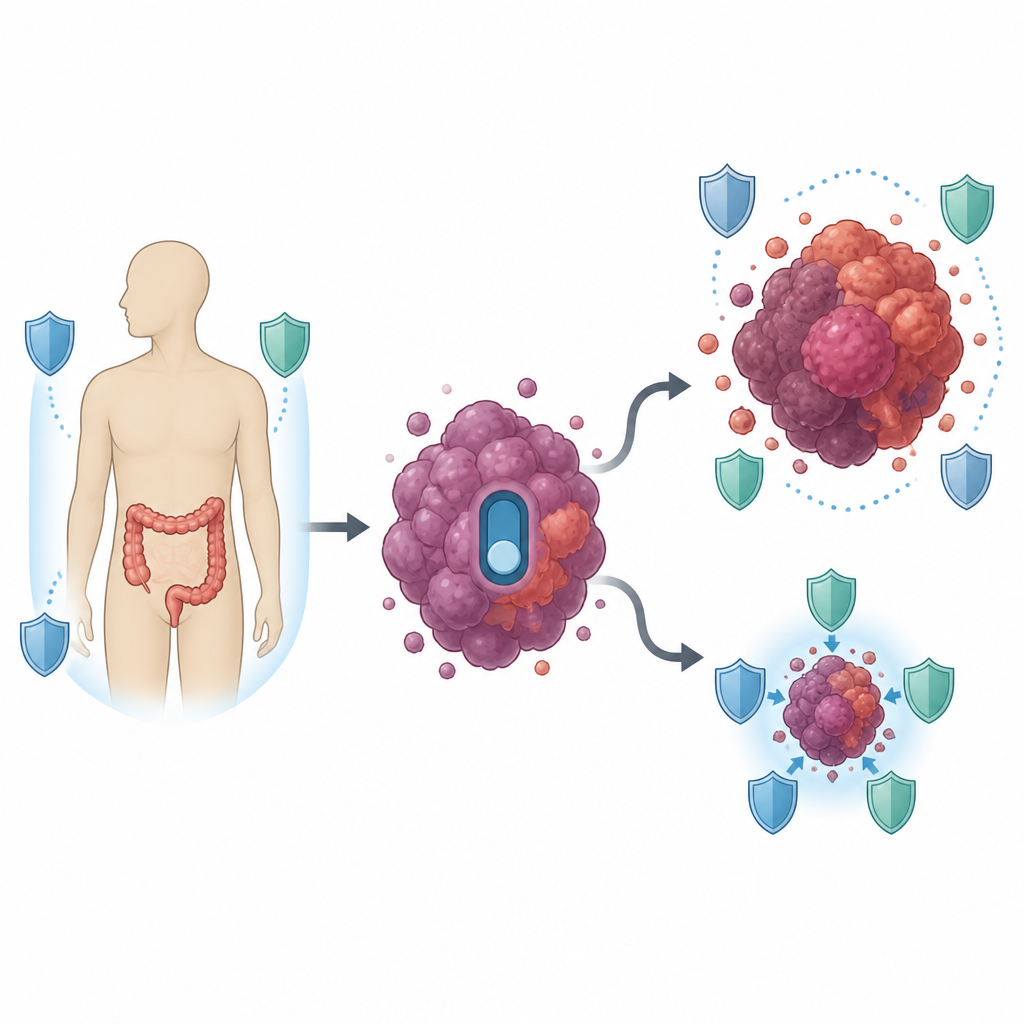
A stealth mode for colon tumors
The authors focused on a puzzle: most colorectal cancers resist drugs that release immune brakes, even when tumors should, in theory, be visible to the immune system. By mining large cancer gene databases, they searched for long noncoding RNAs, a class of RNA molecules that do not make proteins but can strongly influence cell behavior. They found one standout molecule, which they named LISS, that was unusually abundant in colorectal tumors, linked to worse patient survival, and associated with lower levels of cancer-fighting CD8 T cells in the tumor environment.
How LISS helps tumors dodge T cells
Experiments in both mouse and human colorectal cancer cells showed that extra LISS makes tumors less vulnerable to T cell killing, while reducing LISS has the opposite effect. This protection did not depend on whether tumors were classified as microsatellite stable or unstable, two common genetic categories in colorectal cancer. Instead, LISS acted on a central alarm system triggered by the immune messenger interferon gamma. Normally, this signal activates the STAT1 protein, which then boosts production of molecular "flags" on tumor cells that T cells can recognize.
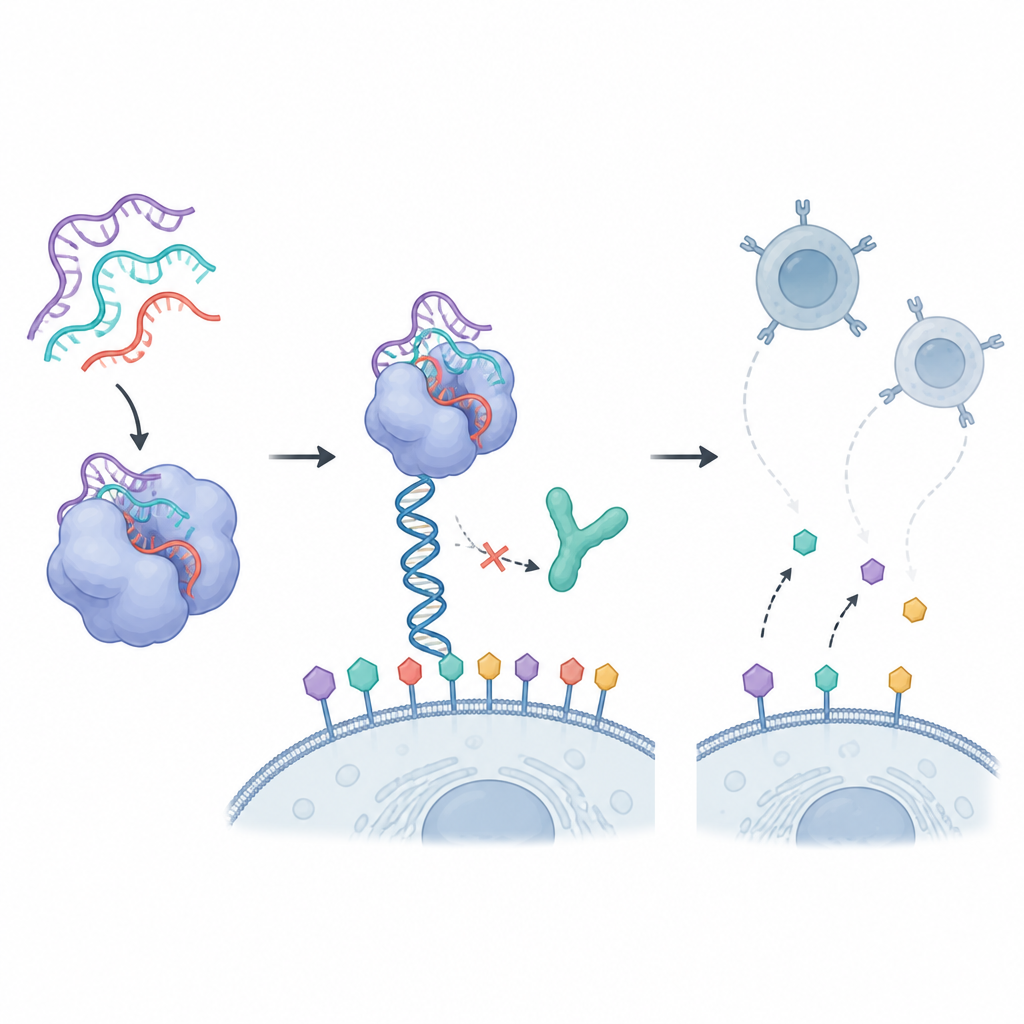
A molecular choke point in immune signaling
The researchers discovered that LISS physically binds to a signaling enzyme called CamKIIγ using a compact double stem-loop RNA structure. This binding blocks CamKIIγ from properly modifying STAT1 at a specific site, a chemical step needed for STAT1 to work at full strength. As a result, tumor cells display fewer major histocompatibility complex I (MHC I) molecules on their surface. With fewer of these molecular flags, CD8 T cells have a harder time identifying and destroying cancer cells, allowing tumors to grow despite the presence of active immune cells.
From mouse intestines to patient tumors
To see if LISS mattered beyond cell culture, the team engineered mice whose intestinal lining could be made to express LISS and combined this with a genetic background that naturally develops intestinal tumors. When LISS was turned on, mice developed more and larger intestinal growths, had fewer CD8 T cells in these tumors, and showed lower levels of active STAT1 and MHC I. In human colorectal cancer samples, higher LISS levels went hand in hand with reduced activated STAT1 and MHC I, supporting the idea that this RNA-driven pathway operates in patients as well.
Turning the switch off to boost immunotherapy
Because LISS sits at a key point in immune control, the researchers tested whether blocking it could improve existing treatments. They designed antisense oligonucleotides, short pieces of synthetic DNA-like material, packaged in lipid particles to specifically degrade LISS in tumor cells. In mouse models of both major colorectal cancer types, these LISS-targeting molecules slowed tumor growth and, when combined with an anti-PD-1 immune checkpoint drug, led to smaller tumors, more active CD8 T cells, and longer survival than either treatment alone.
What this means for patients
This work identifies LISS as a previously unrecognized internal shield that colorectal cancers use to escape immune detection by lowering the number of “here I am” signals on their surface. By interfering with a precise step in immune signaling rather than broadly shutting it down, LISS allows tumors to blunt T cell attack without fully disabling other pathways. The study suggests that drugs or nucleic acid therapies targeting LISS could restore these warning flags and make current immunotherapies more effective for a wider range of colorectal cancer patients.
Citation: Lin, Q., Wang, X., Zhao, W. et al. LISS enables immune evasion of colorectal cancers irrespective of MSI status. Sig Transduct Target Ther 11, 197 (2026). https://doi.org/10.1038/s41392-026-02671-y
Keywords: colorectal cancer, immunotherapy, T cell immunity, noncoding RNA, immune evasion