Clear Sky Science · en
Hypoxia-driven microRNA-27b underlies pathologic cardiac endoreplication in heart disease
When Heart Cells Grow the Wrong Way
Heart disease is not only about clogged arteries or weak pumping. Deep inside the heart muscle, individual cells can start copying their DNA without dividing, becoming oversized and packed with extra nuclei. This work explores why that happens under low-oxygen conditions and reveals a hidden molecular switch that links oxygen shortage, disturbed energy production, and abnormal heart cell growth, pointing to treatment strategies using tools that already exist in the clinic.
Low Oxygen and Stressed Hearts
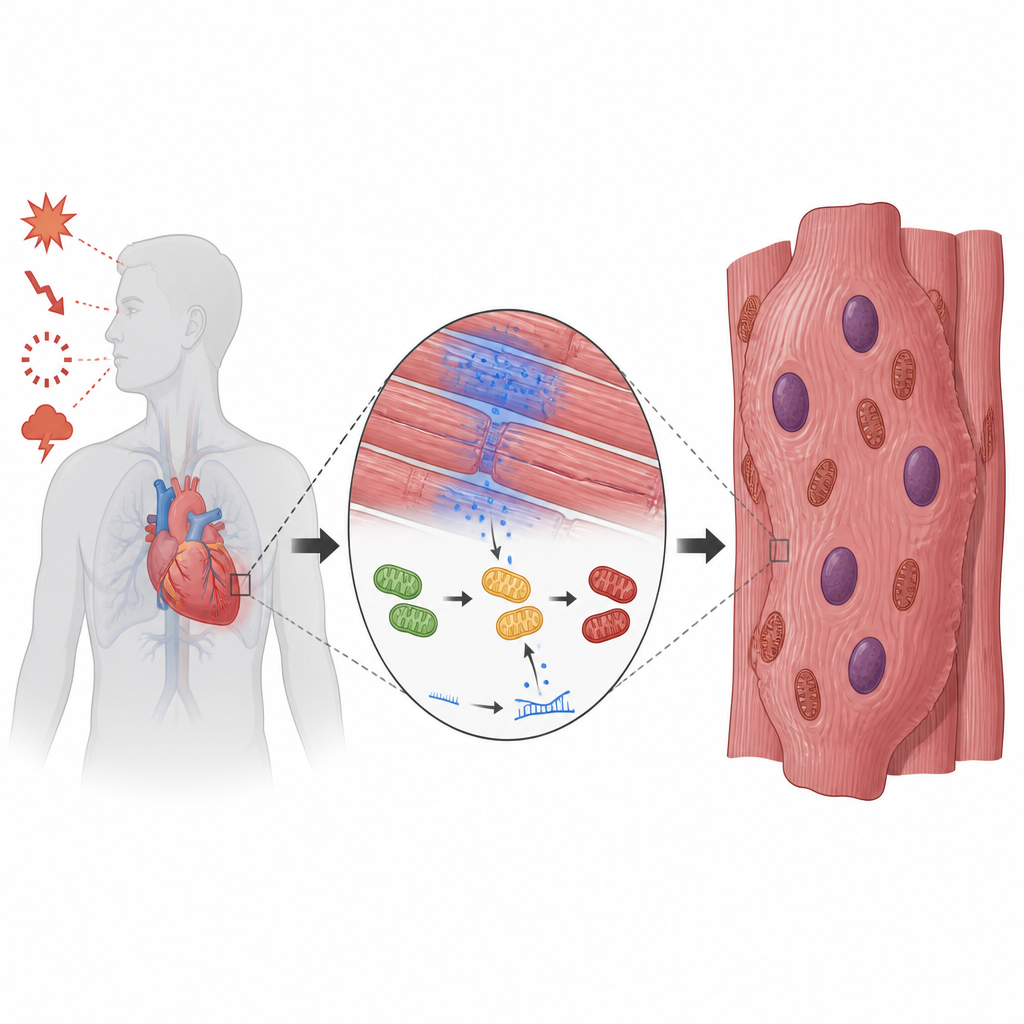
When the heart has to push blood against high pressure, such as in long-standing high blood pressure or a narrowed valve, its main pumping chamber thickens to keep up. As the muscle wall grows, small regions inside it do not receive enough fresh blood and become low in oxygen. In these pockets, a sensor protein inside cells, called HIF1α, becomes active and reshapes how heart cells use fuel. The authors set out to understand how this oxygen sensor connects to the odd habit of heart cells copying their DNA without dividing, which leads to excessively large, multinucleated cells and eventually weak pumping.
A Tiny RNA Switch That Controls Energy
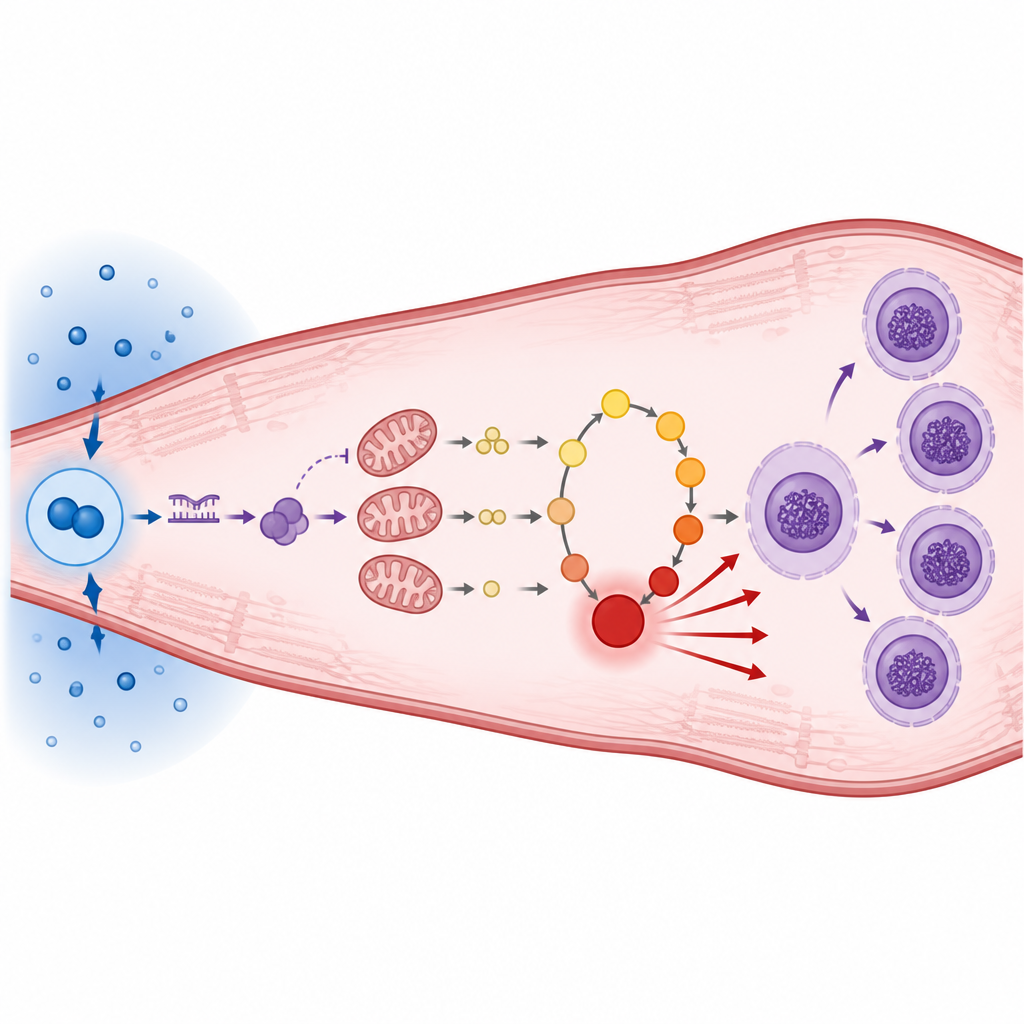
By comparing mouse models of heart strain with human heart biopsies, the team found an inverse pattern: when HIF1α levels were high, a key component of the cell’s power plant, ATP5A1, was low, and overall energy stores were reduced. Instead of acting directly on this power-making protein, HIF1α turned on a very small piece of genetic material called microRNA-27b-5p. This microRNA acts like a fine-tuned dimmer switch, binding to the message for ATP5A1 and blocking its production. As ATP5A1 falls, the tiny turbines in mitochondria run less efficiently, ATP production drops, and a related molecule, ADP, accumulates inside these structures.
From Energy Imbalance to DNA Building Spree
The buildup of ADP does more than signal tired power plants. It feeds a chemical pathway that uses nutrients like glucose, serine, and glycine to make formate, a building block for new DNA units known as purines. The researchers showed that when microRNA-27b-5p or HIF1α are active, heart cells ramp up this DNA-building pathway and channel more carbon from basic nutrients into nucleic acids. Instead of encouraging normal cell division, this extra supply supports repeated DNA copying without cell separation, creating heart muscle cells that are both larger and contain multiple nuclei. Mice engineered to overproduce microRNA-27b in their heart muscle developed enlarged hearts, scar tissue, and poor pumping, closely resembling human disease.
Blocking the Harmful Pathway
Because the microRNA sits at a key control point, the scientists tested whether shutting it down could help a failing heart recover. In mice with severe pressure overload, they used specially designed short strands to neutralize microRNA-27b-5p after heart failure had already developed. This treatment restored ATP5A1 levels, improved energy balance, reduced multinucleated cells, limited scarring, and partially reversed heart enlargement while improving pumping function. Looking for a more practical drug option, they screened approved medicines and identified the antifolate methotrexate, already used for some cancers and autoimmune diseases, as able to blunt the harmful growth pattern in the heart. In stressed mice, methotrexate reduced abnormal nuclear copying and preserved heart structure and function, likely by restricting the DNA-building pathway and easing the oxygen strain that triggers the microRNA.
What This Means for Patients
This study shows that a low-oxygen signal in the heart can flip a microRNA switch that weakens cellular power plants, diverts resources into DNA building, and drives heart cells to grow in a distorted, multinucleated way that undermines pumping. By either directly blocking microRNA-27b-5p or using drugs like methotrexate to limit the overactive DNA-building process, it may be possible to slow or reverse harmful heart enlargement. While more work is needed before changing treatment guidelines, the findings highlight a clear, druggable pathway that links energy balance, oxygen supply, and heart muscle growth in a way that is understandable and potentially actionable.
Citation: Mirtschink, P., Yuan, T., Bischof, C. et al. Hypoxia-driven microRNA-27b underlies pathologic cardiac endoreplication in heart disease. Sig Transduct Target Ther 11, 179 (2026). https://doi.org/10.1038/s41392-026-02656-x
Keywords: heart hypertrophy, mitochondrial energetics, microRNA-27b, hypoxia signaling, methotrexate