Clear Sky Science · en
Anti-PD-1 antibody penpulimab plus chemotherapy for recurrent or metastatic nasopharyngeal carcinoma: a randomized, double-blind phase 3 study
Why this study matters
For many people in parts of Asia and North Africa, a diagnosis of nasopharyngeal carcinoma—a cancer hidden deep behind the nose—is a common and often deadly reality. When this cancer comes back or spreads to distant organs, doctors usually turn to strong chemotherapy drugs, but the disease often starts growing again within months. This study tested whether adding a newer type of treatment, an immune‑based drug called penpulimab, to standard chemotherapy could keep the cancer in check for longer without causing unmanageable side effects.
A hard-to-detect cancer
Nasopharyngeal carcinoma typically grows in a tucked‑away space in the head and neck, so early warning signs can be vague or absent. As a result, more than 70% of patients are diagnosed only after the cancer has spread locally or to distant sites such as bone or liver. Even after aggressive treatment combining radiation and chemotherapy, up to a third of people eventually see their cancer return or metastasize. Once this happens, survival chances drop sharply, and new options that can slow or stop the disease become critically important.
A new kind of immune medicine
Penpulimab belongs to a class of drugs called immune checkpoint inhibitors, which are designed to take the “brakes” off the body’s own immune cells so they can better recognize and attack cancer. Unlike many similar drugs, penpulimab is engineered so that its tail region does not strongly engage certain immune receptors that can trigger extra inflammation. Laboratory work suggested this design might preserve cancer‑fighting power while reducing the risk of serious immune‑related side effects. Penpulimab is already approved in China for several cancers, including nasopharyngeal carcinoma, but this trial was designed to rigorously test it as the first treatment given for people with recurrent or metastatic disease.
How the study was done
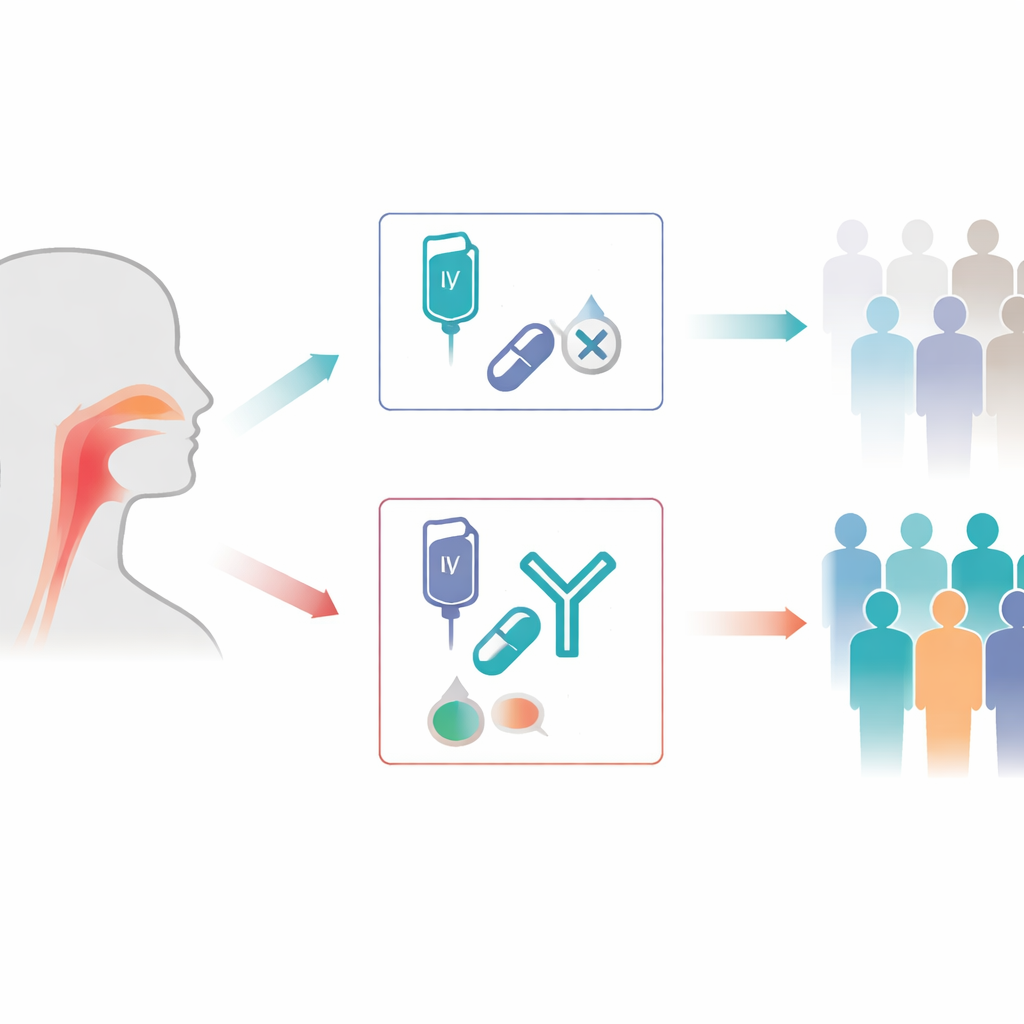
Researchers ran a large phase 3 clinical trial across 36 hospitals in China and 10 centers elsewhere. They enrolled 291 adults whose nasopharyngeal cancer had either spread from the start or returned and metastasized after earlier treatment. Participants were randomly assigned—without doctors or patients knowing who got what—to receive either penpulimab or a look‑alike placebo, both given together with standard chemotherapy drugs (gemcitabine plus cisplatin or carboplatin) every three weeks. After up to six cycles of this combination, patients continued on penpulimab or placebo alone as maintenance until the cancer clearly progressed or side effects became too severe. The main outcome was how long people lived without their disease getting worse, known as progression‑free survival.
What the researchers found
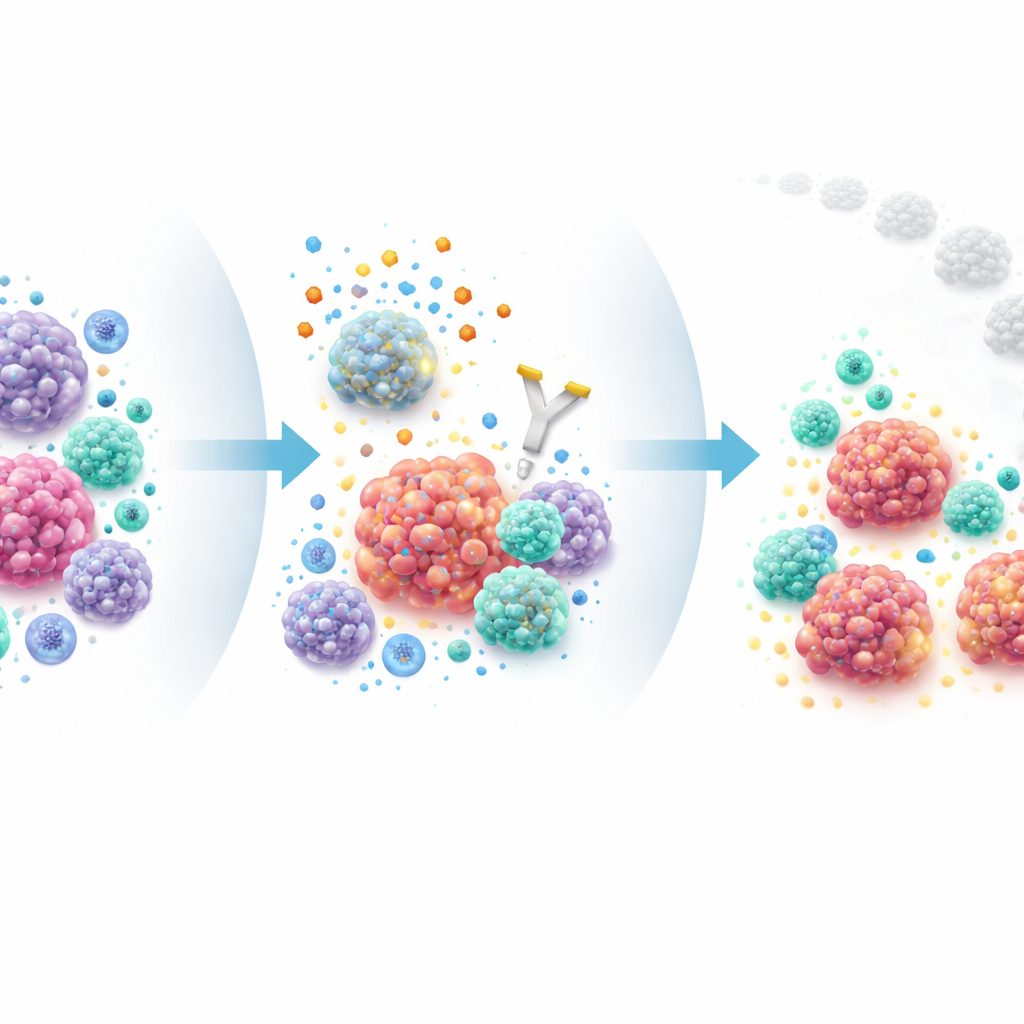
The addition of penpulimab made a clear difference in how long the cancer stayed under control. Patients receiving penpulimab plus chemotherapy went a median of about 9.6 months before their disease worsened, compared with 7.0 months for those on chemotherapy alone—a nearly 55% reduction in the risk of progression or death. This benefit appeared across many subgroups, including people with liver metastases, different levels of a blood marker linked to Epstein–Barr virus (a virus tied to this cancer), and varying levels of the PD‑L1 protein on tumor cells. Tumor shrinkage was also more durable: when responses occurred, they lasted a median of about 9.8 months in the penpulimab group versus 5.7 months with chemotherapy alone. Levels of Epstein–Barr virus DNA in the blood, which track closely with tumor burden, dropped in nearly all patients but tended to stay low for longer in those who received penpulimab.
Side effects and overall survival
As expected with strong chemotherapy, nearly all patients in both groups experienced side effects such as low blood counts, anemia, and nausea, and about nine in ten had severe (grade 3 or higher) treatment‑related problems. Importantly, adding penpulimab did not noticeably increase these chemotherapy‑related toxicities. Immune‑related side effects—such as thyroid problems, rash, or in rare cases diabetes—were more frequent with penpulimab, but most were mild or moderate and could be managed with standard care. Serious immune‑related issues of high grade occurred in just over 4% of penpulimab‑treated patients. At the time of this interim analysis, overall survival data were still immature, partly because many patients in the chemotherapy group later crossed over to receive penpulimab or another similar drug once their cancer progressed. As a result, the study could not yet show a clear difference in how long patients ultimately lived.
What this means for patients
For people facing recurrent or metastatic nasopharyngeal carcinoma, this trial provides strong evidence that adding penpulimab to standard chemotherapy can delay the return or worsening of their cancer, with a safety profile that remains manageable. While it is too early to say for certain whether patients will live significantly longer overall, the longer period of disease control and extended time before virus‑related blood markers rebound are encouraging signs. Together with prior studies of related drugs, these results support chemo‑immunotherapy with penpulimab as a promising new first‑line option for this hard‑to‑treat cancer, especially in regions where the disease is common.
Citation: Huang, S., Liu, F., Qu, S. et al. Anti-PD-1 antibody penpulimab plus chemotherapy for recurrent or metastatic nasopharyngeal carcinoma: a randomized, double-blind phase 3 study. Sig Transduct Target Ther 11, 126 (2026). https://doi.org/10.1038/s41392-026-02645-0
Keywords: nasopharyngeal carcinoma, immunotherapy, penpulimab, chemotherapy, clinical trial