Clear Sky Science · en
Spliceosomal component SNRPE drives cell proliferation by regulating CTP synthase 1 mRNA splicing in ovarian cancer
Why this research matters for women’s health
Ovarian cancer is one of the deadliest cancers affecting women, in part because it is usually found late and often resists current treatments. This study uncovers a hidden weak spot in ovarian cancer cells: a small RNA-processing protein called SNRPE that helps fuel their relentless growth by keeping a key metabolic enzyme, CTPS1, switched on. By exposing this link, the work points to a new way to slow or stop ovarian tumors by cutting off the molecular support they need to multiply.
A tiny molecule with a big impact
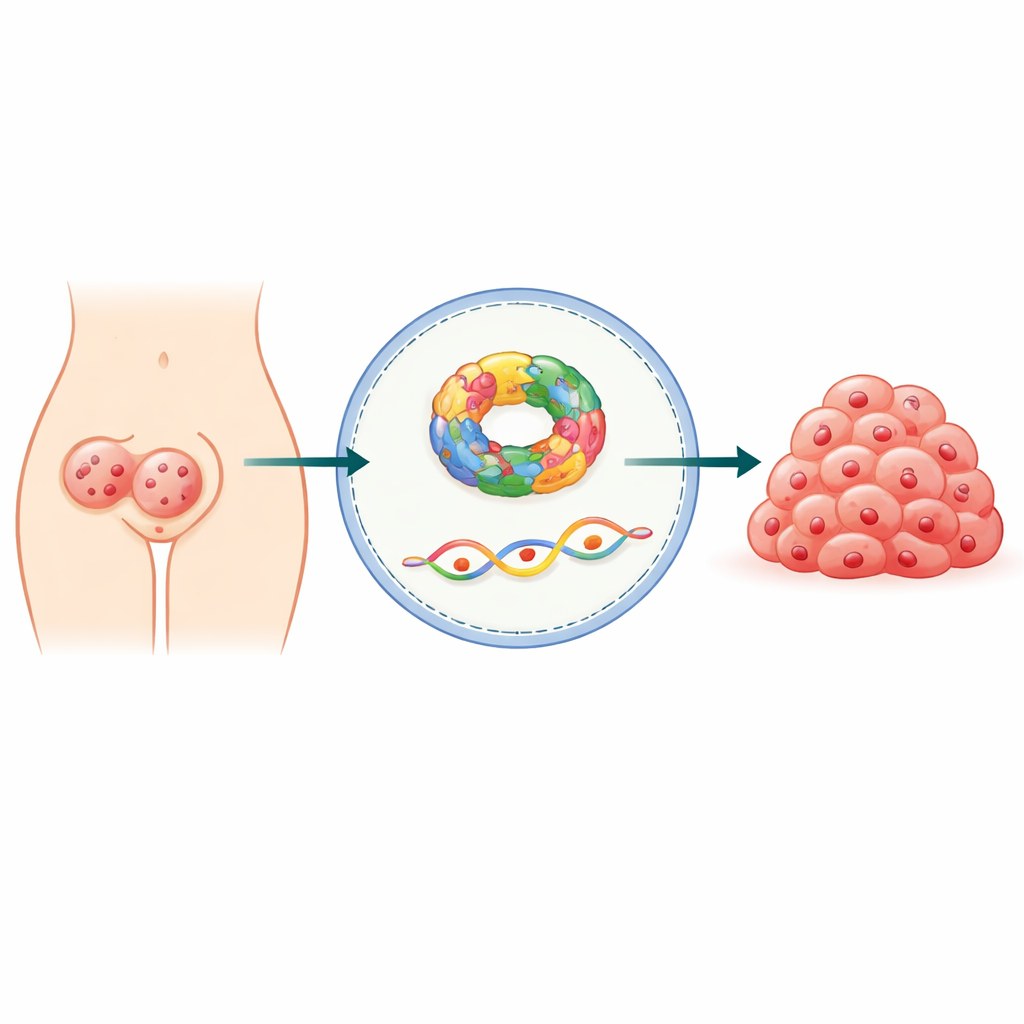
Every cell must carefully edit its RNA messages before making proteins, and this editing is handled by a large machine called the spliceosome. SNRPE is one of its core parts. The authors examined tumor samples and public cancer databases and found that SNRPE levels are much higher in ovarian cancers than in normal ovary or fallopian tube tissue. Levels were especially high in a “proliferative” subtype of ovarian cancer known for fast growth and poor outcomes. Women whose tumors had more SNRPE tended to have shorter survival, suggesting that this small molecule is closely tied to aggressive disease.
Switching off SNRPE slows cancer cells
To test whether SNRPE is simply a marker or an actual driver of disease, the researchers reduced its levels in ovarian cancer cell lines grown in the lab. When SNRPE was knocked down, cancer cells divided more slowly, formed fewer colonies, and showed signs of stress: they paused in an early phase of the cell cycle and underwent more programmed cell death. The cells also became less able to migrate and invade, behaviors linked to metastasis. In mice given human ovarian cancer cells, tumors with lowered SNRPE grew much smaller than control tumors. The team then used short DNA-like drugs called antisense oligonucleotides to target SNRPE, and saw similar reductions in growth and invasiveness, hinting at a future treatment strategy.
How RNA editing feeds tumor metabolism
Digging deeper, the scientists used RNA sequencing to see which genes changed when SNRPE was reduced. Many of the affected genes were involved in cell division and DNA repair, but one stood out: CTPS1, a key enzyme that helps build CTP, a building block of DNA, RNA, and cell membranes. Ovarian tumors had more CTPS1 than healthy tissue, and silencing CTPS1 alone sharply slowed cell growth, reduced DNA replication, triggered cell cycle arrest, and increased cell death. In both dishes and mice, lowering CTPS1 blunted the tumor-boosting effects of extra SNRPE, showing that CTPS1 is a major downstream player in this pathway.
A splicing error that becomes a vulnerability
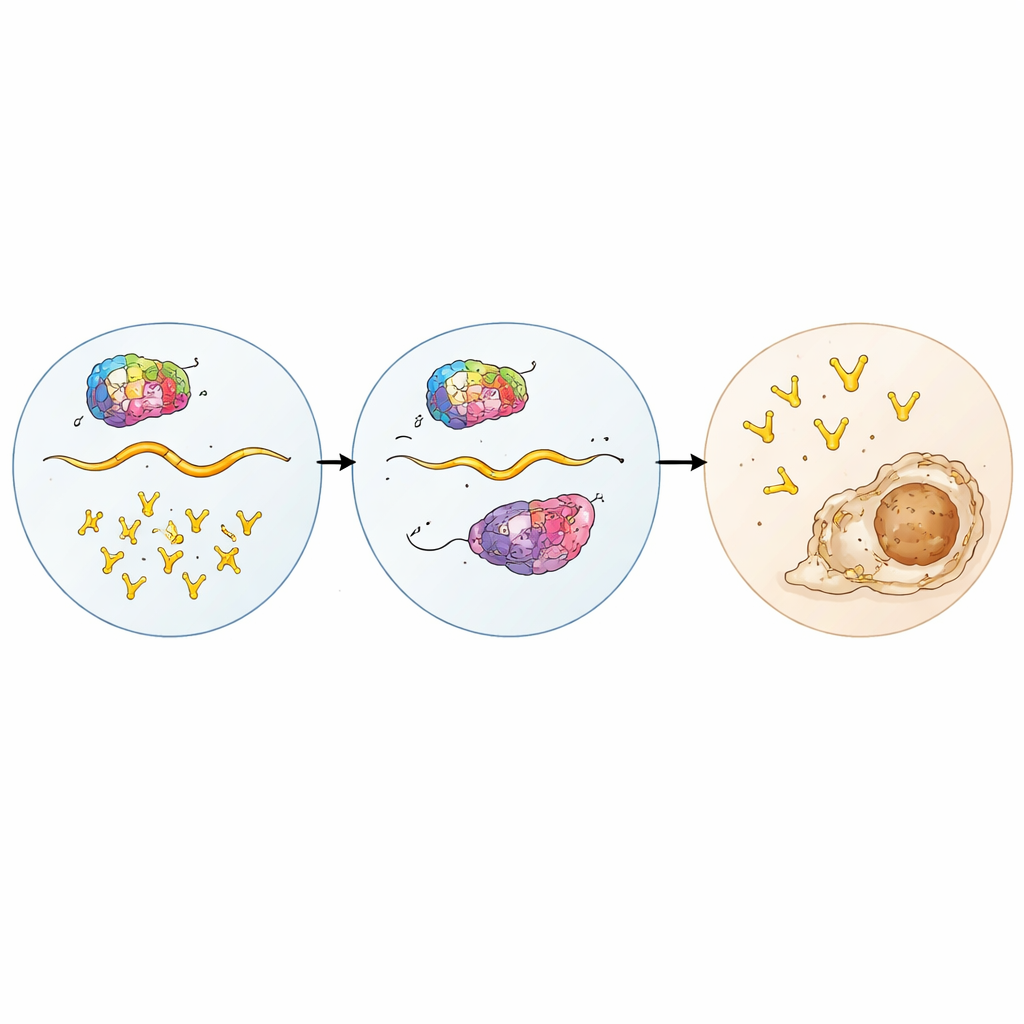
The crucial twist is how SNRPE controls CTPS1. CTPS1’s RNA can be edited in two ways: a “clean” version that yields full-length, active enzyme, and a version that mistakenly keeps an internal segment, or intron, called intron 15. When this intron is left in place, the RNA carries a premature stop signal and is rapidly shredded by the cell’s quality-control system, producing little or no usable enzyme. The team showed that SNRPE helps remove intron 15 so that cancer cells produce abundant CTPS1. When SNRPE is reduced, intron 15 is often retained, the faulty CTPS1 messages are destroyed, and overall CTPS1 levels fall. This starves the cancer cells of the nucleotides they need to copy their DNA and divide.
What this means for future treatment
Put simply, the study reveals a chain of events: high SNRPE in ovarian tumors keeps CTPS1 properly processed, CTPS1 then drives the supply of DNA building blocks, and this fuels rapid tumor growth. Blocking SNRPE or forcing CTPS1 RNA to retain intron 15 disrupts this chain, causing cancer cells to stall and die. Because many ovarian cancers lack a backup enzyme (CTPS2), they may be especially sensitive to therapies that lower CTPS1 by targeting its RNA processing. While much work remains to ensure safety and selectivity, the SNRPE–CTPS1 connection offers a promising new handle for precision treatments that undermine ovarian cancer’s ability to grow at its molecular core.
Citation: Pu, Y., Chen, Z., Gao, Q. et al. Spliceosomal component SNRPE drives cell proliferation by regulating CTP synthase 1 mRNA splicing in ovarian cancer. Oncogene 45, 1645–1659 (2026). https://doi.org/10.1038/s41388-026-03764-2
Keywords: ovarian cancer, RNA splicing, tumor metabolism, CTPS1, antisense therapy