Clear Sky Science · en
The neurobiological cravings signature (NCS) as a predictive neuromarker of clinical outcomes in alcohol use disorder
Why brain signals of craving matter
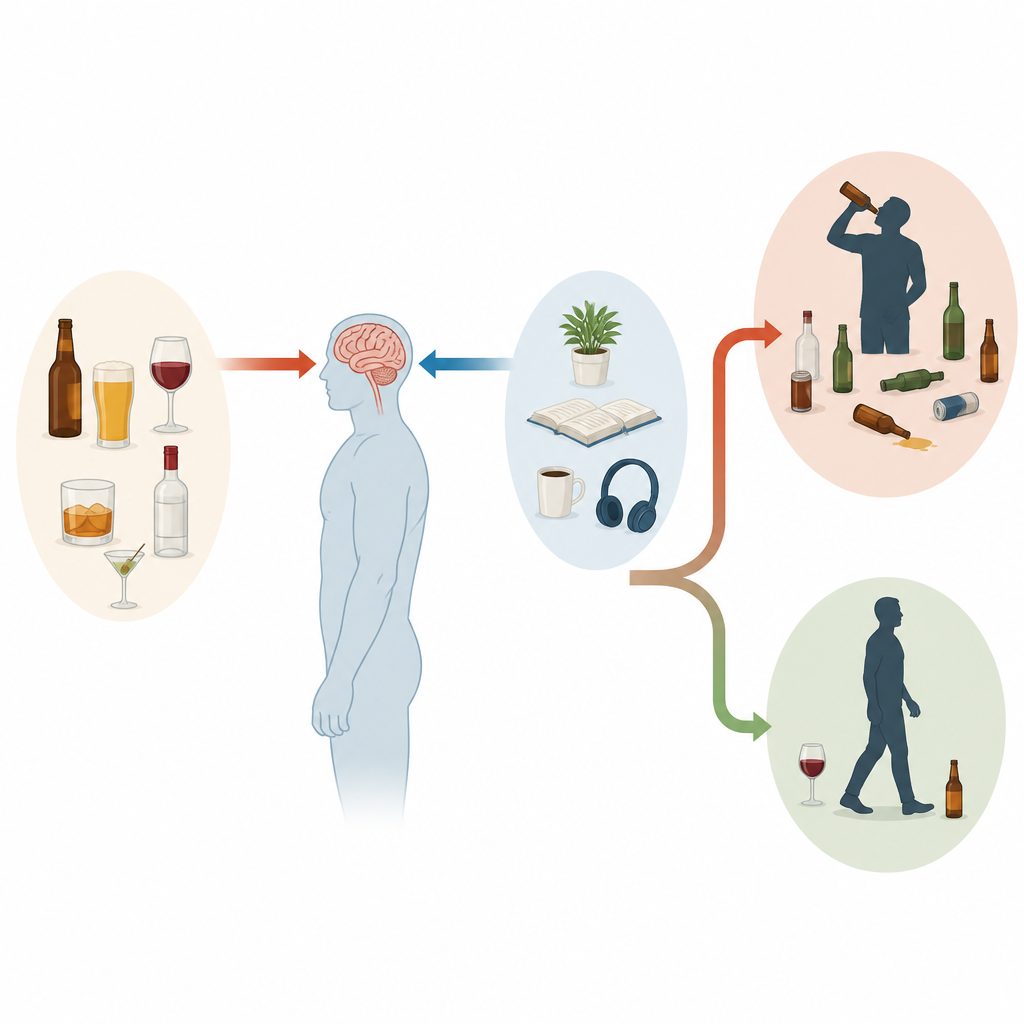
Many people with alcohol problems want to cut down or quit, yet relapses are common and hard to predict. This study asks whether patterns of brain activity linked to craving can forecast who is most at risk of returning to heavy drinking, potentially helping doctors tailor treatment before problems flare up again.
Reading cravings in the brain
The researchers focused on a brain pattern called the Neurobiological Craving Signature, or NCS. This pattern was previously discovered using machine learning on brain scans and is known to distinguish people with substance use problems from those without them. In the new work, the team tested whether NCS scores from brain scans of people treated for alcohol use disorder could predict how strongly they would crave alcohol, how severe their disorder was, and whether they would relapse into heavy drinking after treatment.
How the study was done
Thirty nine adults who met criteria for moderate to severe alcohol use disorder took part in a clinical trial in Sweden. All received either real or sham brain stimulation as a potential treatment, but earlier work had shown that this stimulation did not change drinking outcomes, so the groups could be analyzed together. After three weeks of daily sessions, participants lay in an MRI scanner and completed a picture matching task. On some trials they matched images of alcoholic drinks, on others non alcoholic drinks or simple shapes. This task reliably grabs attention and stirs craving while allowing the researchers to compare brain responses to alcohol related and neutral images.
Turning brain activity into a craving score
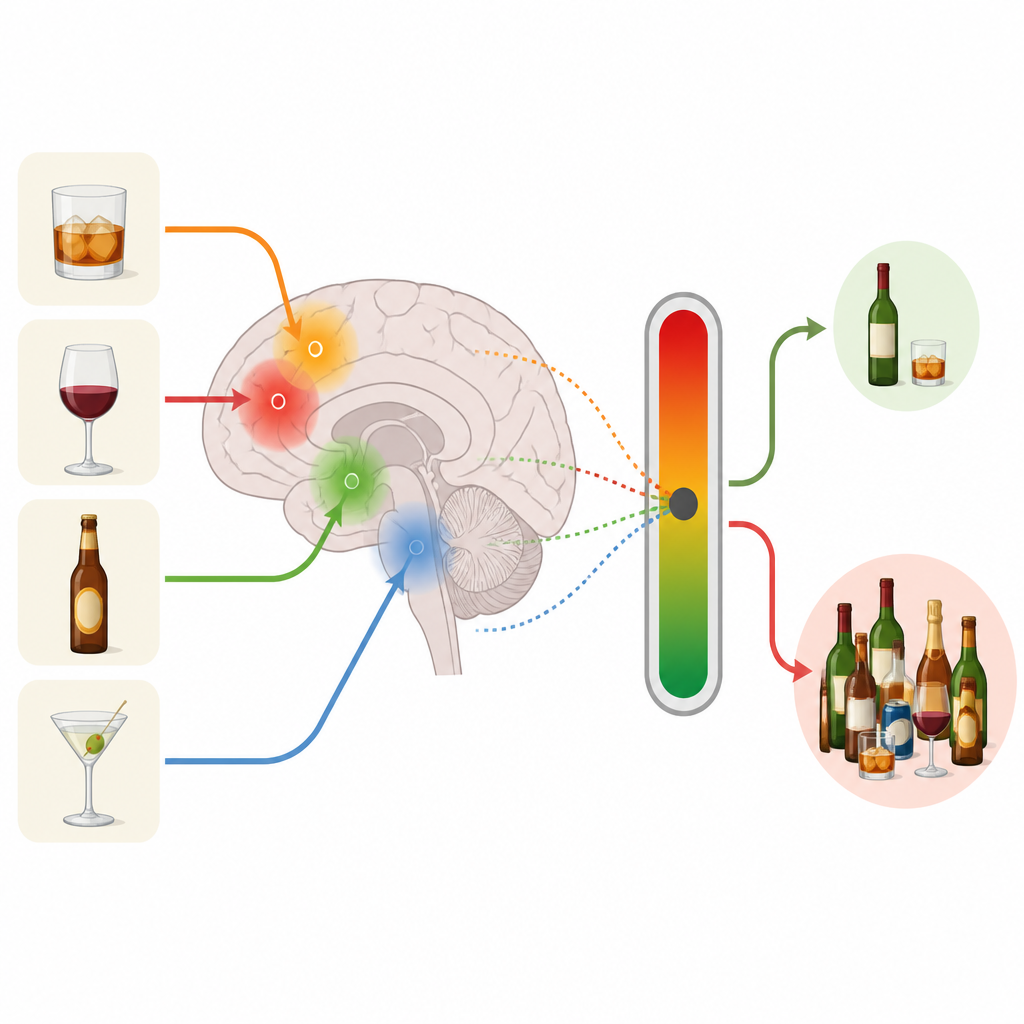
For each person, the scientists contrasted brain activity during alcohol pictures with activity during non alcoholic drink pictures and applied the NCS pattern to this contrast. The result was a single number, the NCS score, reflecting how strongly the person’s brain matched the craving signature. Higher scores meant stronger expression of the craving pattern. These NCS scores were then compared against self reported craving on a standard questionnaire, clinical ratings of alcohol use disorder severity, and detailed follow up data on drinking over the next three months, including both self reports and a blood marker called phosphatidyl ethanol that signals recent alcohol use.
What the brain scores revealed
People with higher NCS scores reported more intense cravings at the time of the scan and across repeated clinic visits. They also tended to have more severe alcohol problems at baseline, as captured by widely used clinical scales. Most strikingly, NCS scores forecasted future drinking. Higher scores were linked to more heavy drinking days and higher levels of the blood marker over the 15 week study period. When the group was divided at the median NCS score, those with lower scores stayed abstinent or light drinking for longer, while those with higher scores relapsed sooner and more often. Statistical models showed that the NCS could distinguish relapse cases with moderate to high accuracy, even when accounting for age, sex, and treatment condition.
What this could mean for care
The findings suggest that a brain based craving signature can provide information about relapse risk that goes beyond what people report about their own urges. Because self reports can be biased or incomplete, having an objective measure from brain scans could help clinicians identify patients who need more intensive or longer lasting support. Although the study is small and needs to be replicated in larger and more diverse groups, it offers early evidence that patterns of brain activity during alcohol cues may serve as a useful warning signal, guiding more personalized treatment plans for alcohol use disorder.
Citation: Löfberg, A., Harp, N., Perini, I. et al. The neurobiological cravings signature (NCS) as a predictive neuromarker of clinical outcomes in alcohol use disorder. Neuropsychopharmacol. 51, 1237–1244 (2026). https://doi.org/10.1038/s41386-026-02369-3
Keywords: alcohol use disorder, craving, fMRI, relapse, brain biomarker