Clear Sky Science · en
Splitting schizophrenia: divergent cognitive and educational outcomes revealed by genomic structural equation modelling
Why this study matters
Schizophrenia is often linked with learning problems and difficulties at school, yet some genetic studies have suggested that a higher genetic tendency for education can also increase the risk of this illness. This puzzling result has left scientists wondering how the same condition could be tied both to lower thinking skills and to more years in school. The authors of this study use large genetic datasets and a new kind of statistical model to tease apart different genetic routes into schizophrenia and show how each route relates in a different way to intelligence and education.
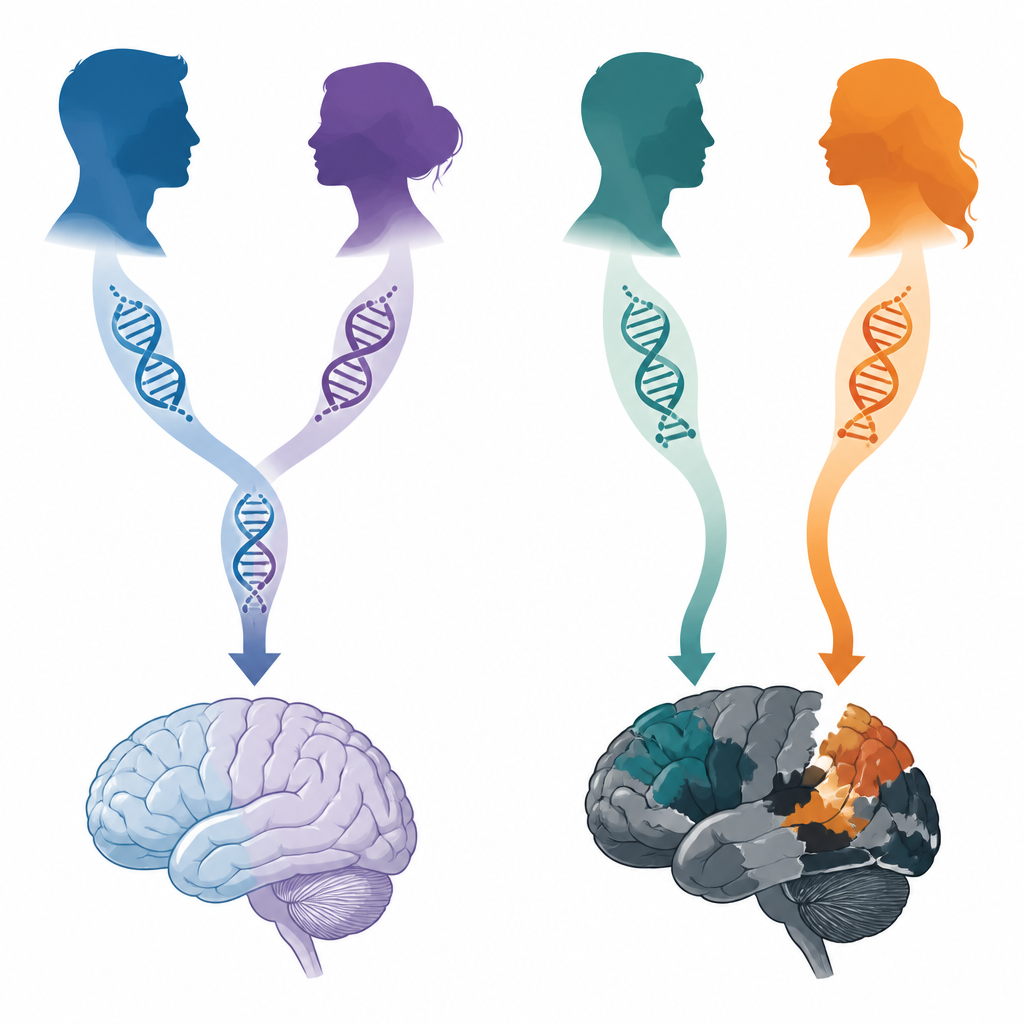
Two different genetic paths to the same illness
The researchers began with genetic results from huge previous studies of schizophrenia and bipolar disorder. Instead of treating schizophrenia as a single block of risk, they used a method that allowed them to split its genetic influences into two parts. One part, which they call SZspecific, captures genetic variants that raise the risk of schizophrenia but are not shared with bipolar disorder. The other part, PSYshared, reflects genetic variants that increase the risk of both schizophrenia and bipolar disorder. By separating these two hidden components, the team could ask whether they show different patterns when compared with intelligence test scores and years of education.
Untangling links with intelligence and schooling
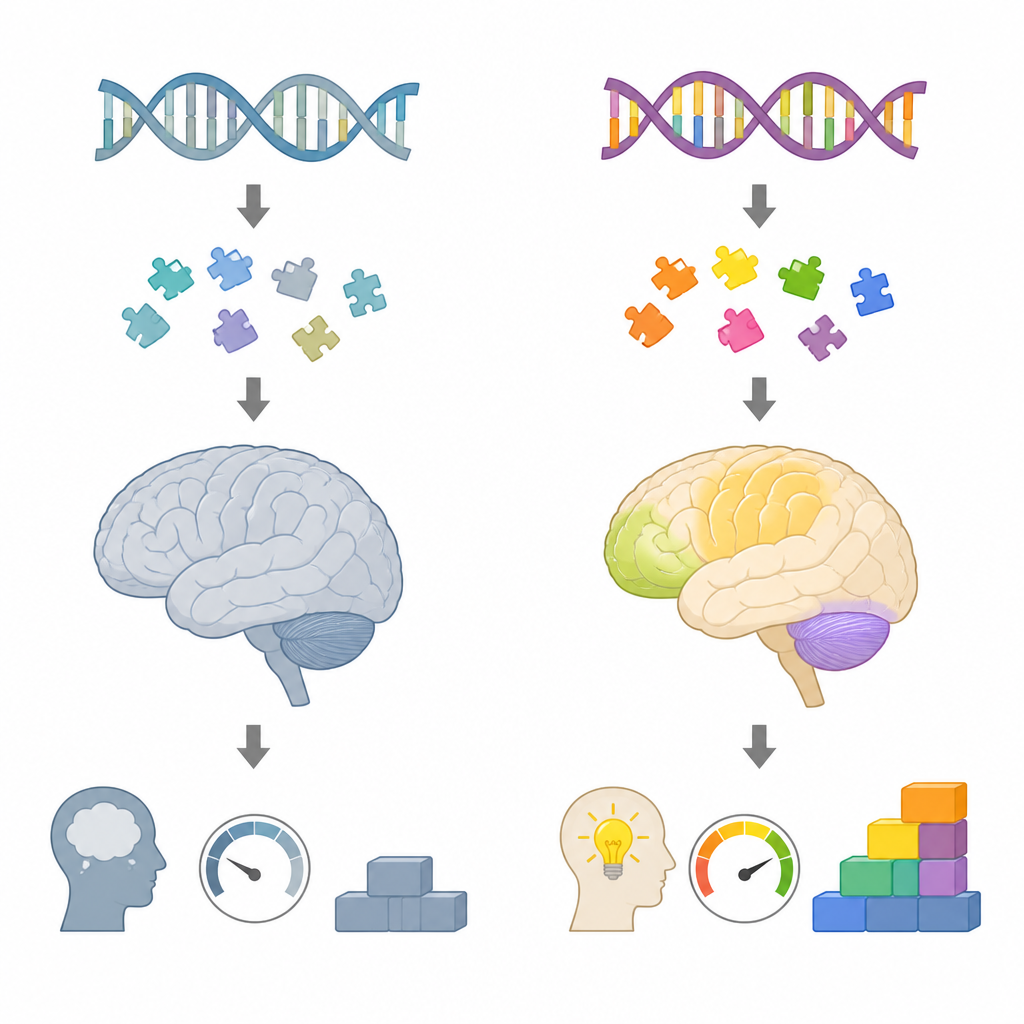
When the team looked at overall schizophrenia, they saw the expected negative genetic link with IQ but almost no genetic link with educational attainment. However, this average picture hid two opposite trends. Genetic risk that is unique to schizophrenia showed a clear negative relationship with both IQ and education, suggesting that this path to illness is more strongly tied to thinking problems and disrupted schooling. In contrast, the risk shared with bipolar disorder showed a mild negative link with IQ but a positive link with education. In other words, some of the genes that raise risk for schizophrenia and bipolar disorder also seem to be associated with staying in education longer.
Checking the patterns in real people
To see how these genetic patterns play out in everyday life, the authors created polygenic scores, which summarize a person’s genetic tendency toward each trait, and tested them in more than 380,000 participants from the UK Biobank. People with higher scores for SZspecific tended to have spent fewer years in education and did worse on a quick reasoning test. Those with higher scores for the shared psychosis component, or for bipolar disorder overall, tended to have more years of education, even though all of the psychosis-related scores were linked to slightly lower performance on the reasoning test. Additional analyses that mimic cause-and-effect, known as Mendelian randomisation, supported a two-way relationship between intelligence and schizophrenia-specific genetic risk, while also revealing that many genes influence multiple traits at once.
Clues from brain-related genes
The study also explored what kinds of biological processes these different sets of genes might affect. Genes linked to the shared psychosis component were especially active in brain regions involved in thinking and mood, with strong signals in the outer layers of the brain that support complex mental tasks. Genes unique to schizophrenia were active not only in these cortical regions but also in deeper structures such as the hippocampus and caudate, areas important for memory, learning, and motivation. This pattern fits with the idea that one form of schizophrenia is closer to a developmental brain disorder with strong effects on cognition, while another form overlaps more with mood disorders like bipolar disorder.
What this means for understanding schizophrenia
For a lay reader, the main message is that schizophrenia is unlikely to be a single, uniform condition at the genetic level. Instead, this work suggests there may be at least two broad genetic pathways into the illness. One pathway, shared with bipolar disorder, is tied to somewhat better educational outcomes, while the other, unique to schizophrenia, is more strongly linked to difficulties with thinking and schooling. Recognizing these distinct routes could eventually help doctors and researchers design more targeted approaches to prevention and treatment, focused on the specific cognitive and educational challenges faced by different groups of people with psychotic disorders.
Citation: Watson, C.J., Zvrskovec, J., Merola, G.P. et al. Splitting schizophrenia: divergent cognitive and educational outcomes revealed by genomic structural equation modelling. Mol Psychiatry 31, 3098–3107 (2026). https://doi.org/10.1038/s41380-026-03444-3
Keywords: schizophrenia genetics, bipolar disorder, intelligence, educational attainment, polygenic risk