Clear Sky Science · en
Delay discounting correlates with depression but does not predict relapse after antidepressant discontinuation
Why Our Choices About Waiting Matter
When people recover from major depression, an important question looms: can they safely stop taking antidepressant medication? About one in three will become depressed again within six months of stopping, yet doctors have few reliable tools to predict who is at risk. This study explores whether a simple measure of how we value rewards now versus later—called “delay discounting,” or impatience for future rewards—might help forecast relapse after stopping antidepressants.
How The Study Looked At Patience And Mood
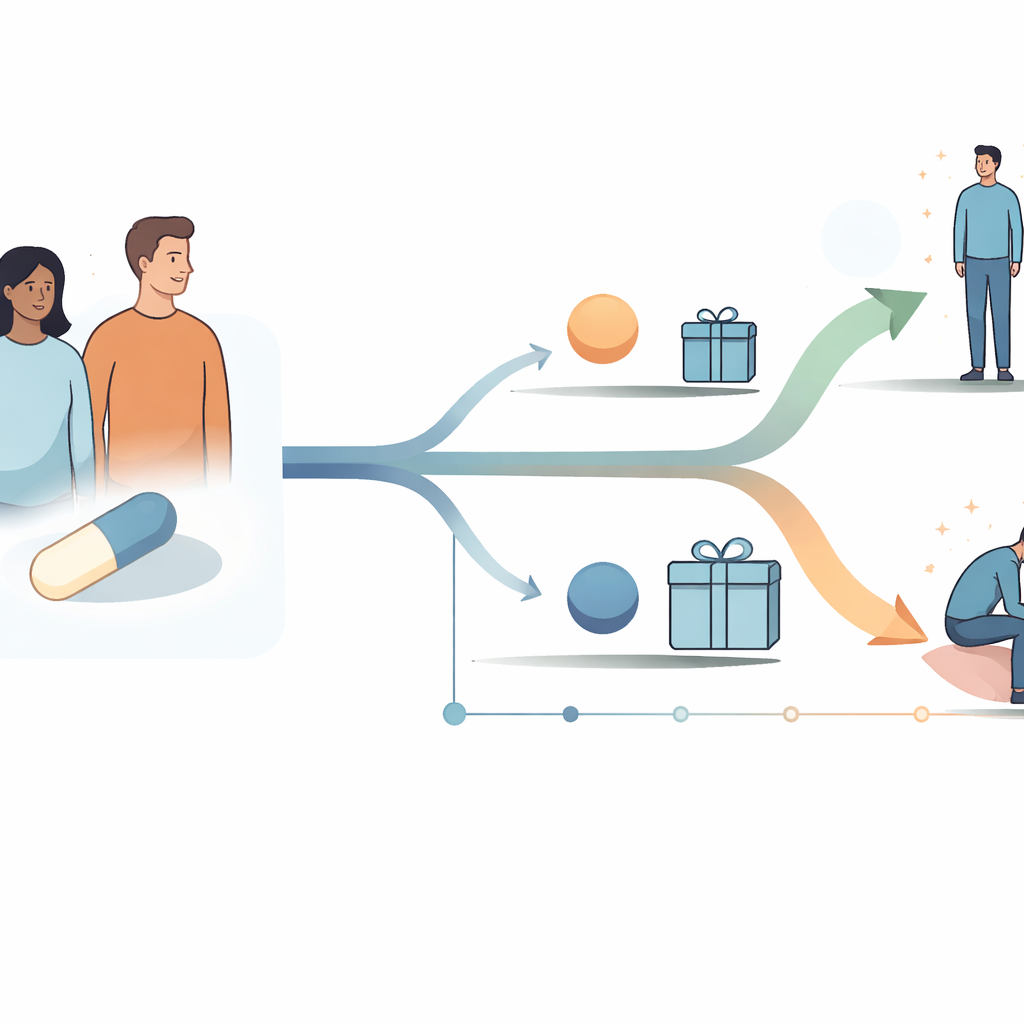
The researchers followed 97 people who had a history of major depressive episodes but were currently doing well on antidepressant medication, and 54 similar people who had never had depression. Everyone completed tasks in which they repeatedly chose between a smaller amount of money right away or a larger amount after a delay. From these choices, the team calculated an individual “discount rate,” summarizing how sharply each person devalued delayed rewards. Patients were then randomly assigned either to discontinue their medication soon or to stay on it for a while longer before stopping. Their mood and discount rates were measured again, and they were tracked for six months to see who became depressed again.
What Was Already Suspected
Earlier work suggested two reasons why impatience for future rewards might be linked to depression and to the brain systems affected by antidepressants. First, people with depression often show a bleak view of the future and difficulty distinguishing how good or bad different future outcomes might be. This could lead them to favor immediate payoffs over distant ones. Second, antidepressants typically act on serotonin, a brain chemical known from both human and animal studies to influence the willingness to wait for rewards. Lower serotonin has been associated with more impatient choices, while boosting serotonin can make individuals more willing to wait. Taken together, these findings made delay discounting an appealing candidate for a quick, behavioral test that might flag patients at higher risk of relapse after stopping medication.
What The Researchers Actually Found
The study confirmed one part of this picture: even though their depression was in remission, the patient group showed more impatience for delayed rewards than the never-depressed control group. The effect was modest but clear—on average, patients were slightly more likely to give up part of a future reward to get some money sooner. Within the combined sample of patients and controls, higher impatience was also linked to having more depressive symptoms, even though symptom levels overall were low. This suggests a real but relatively small connection between how people trade off future versus immediate rewards and how depressed they feel.
When Patience Does Not Predict The Future
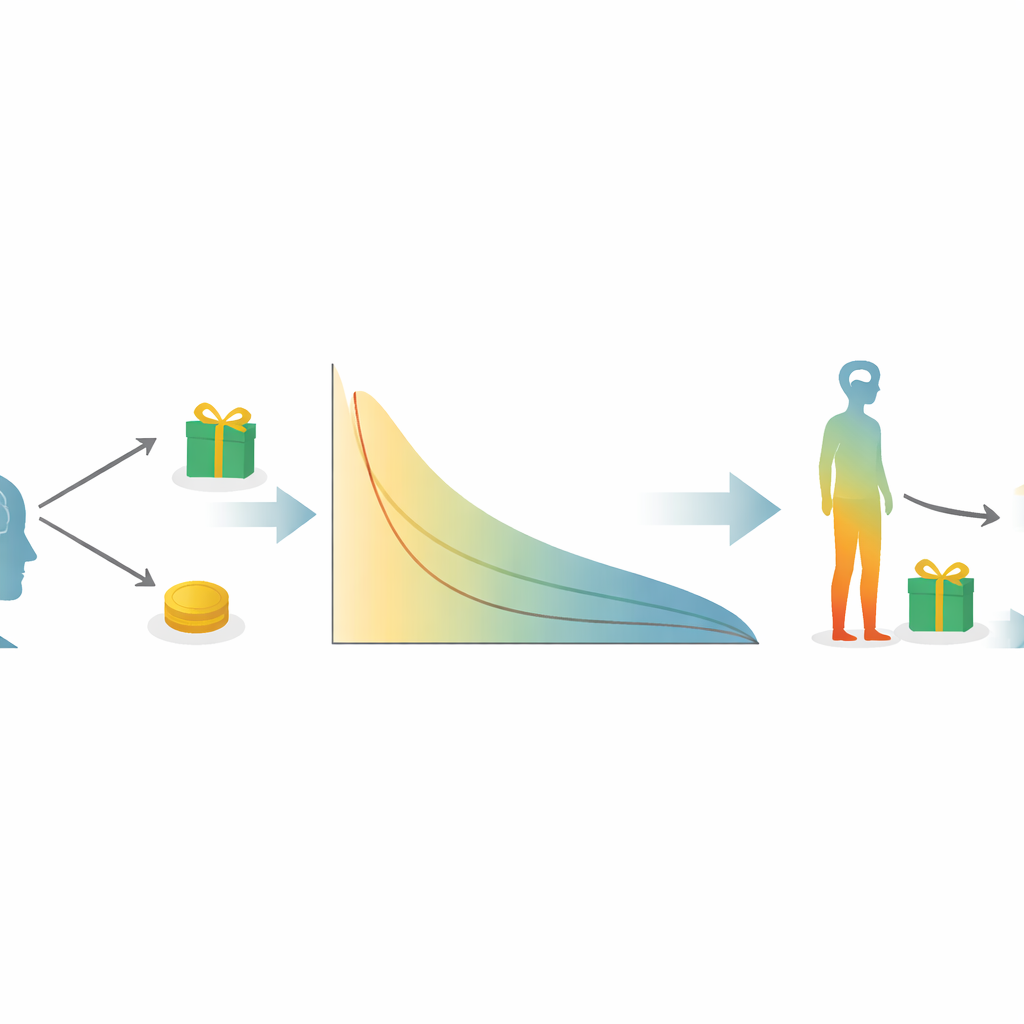
However, the central hopes of the study were not borne out. Patients who were more impatient at the beginning were no more likely to relapse after discontinuing antidepressants than those who were more willing to wait. Nor did changes in impatience after stopping medication signal who would later become depressed. Statistical models that tried to predict relapse using discount rates performed no better than chance. Interestingly, while stopping medication did lead to a small but noticeable rise in depressive symptoms in the short term, it did not systematically change how patients valued delayed rewards. The measure of impatience itself was quite stable over time, suggesting it behaves more like a personality trait than a short-term barometer of brain chemistry or mood.
What This Means For Patients And Clinicians
For people making decisions about whether to stop antidepressants, this research offers both clarification and caution. It supports the idea that a greater focus on the present and difficulty valuing future rewards are part of the broader landscape of depression and may linger even when symptoms improve. At the same time, the study indicates that a brief decision-making task about money and waiting cannot, on its own, guide safe choices about discontinuing medication. Delay discounting appears too weakly tied to the course of illness after stopping treatment to serve as a practical test in the clinic. The search therefore continues for better, more reliable ways to identify who can safely come off antidepressants and who needs longer-term protection against relapse.
Citation: Elad, D., Story, G.W., Berwian, I.M. et al. Delay discounting correlates with depression but does not predict relapse after antidepressant discontinuation. Mol Psychiatry 31, 2445–2453 (2026). https://doi.org/10.1038/s41380-025-03402-5
Keywords: antidepressant discontinuation, depression relapse, delay discounting, serotonin and reward, decision-making in depression