Clear Sky Science · en
Development of a prognostic scoring system for chronic myeloid leukemia in blast phase
Why this matters for people living with leukemia
For most people with chronic myeloid leukemia (CML), modern drugs have turned a once-deadly illness into a long-term, manageable disease. But when CML shifts into an aggressive "blast phase," survival can drop to just a year or two. Doctors have had no simple, shared way to estimate how a person in this dangerous stage is likely to do. This study set out to change that by creating a practical score, based on routine medical information, that can sort patients into low, intermediate, or high risk of dying—helping researchers compare studies and giving doctors and patients clearer expectations.
Looking closely at a rare and serious stage
Blast phase CML is uncommon, partly because earlier treatment has improved so much, which makes it hard to gather enough cases for solid statistics. To overcome this, researchers across 13 European countries joined forces in the European LeukemiaNet Blast Phase Registry. They collected information on 305 people diagnosed with blast phase after 2015 and analyzed 275 who met strict criteria and had enough data. These patients were followed for a median of nearly four years, and their median survival after entering blast phase was about 19 months. By pooling this many cases, the team could search for which features at the time of blast phase diagnosis best predicted how long people lived.
Simple measurements that tell a bigger story
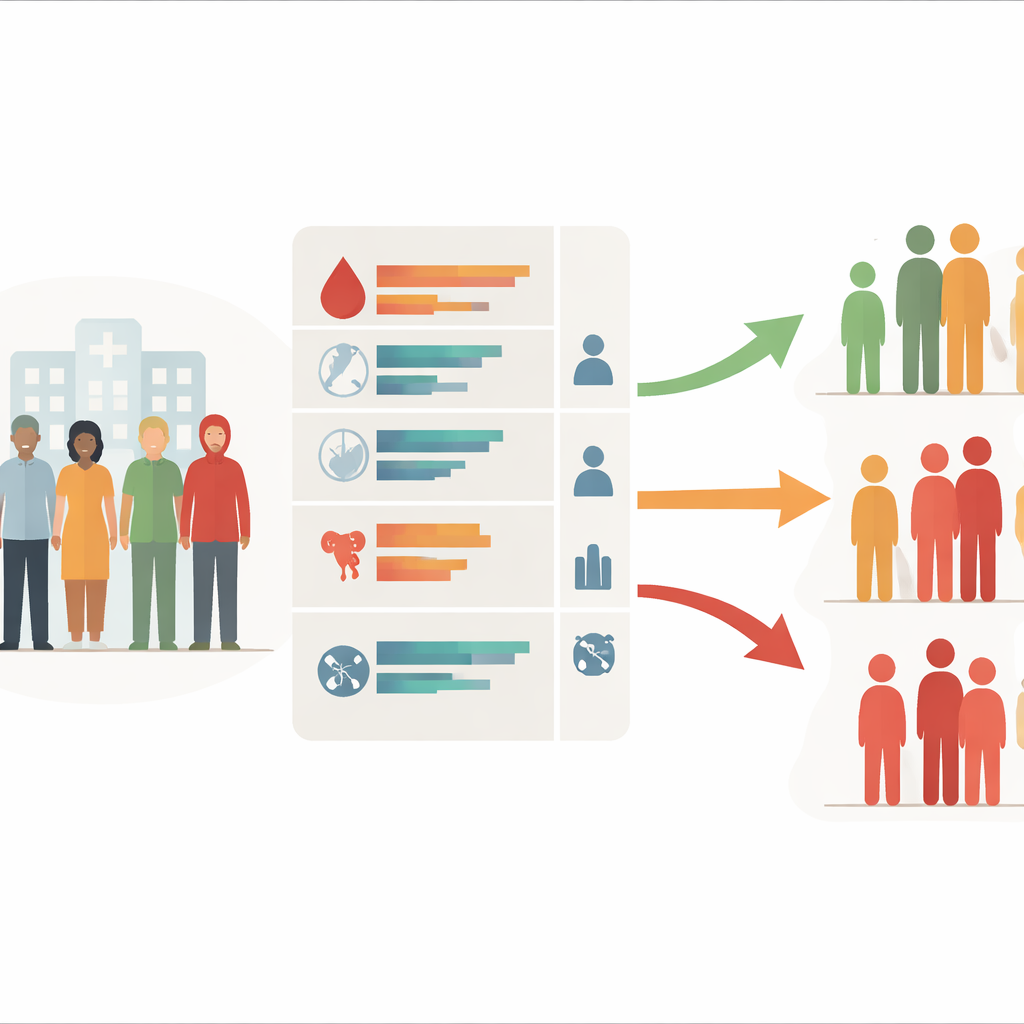
The researchers looked at 17 different features that are usually available when blast phase is diagnosed. These included age, blood counts, the percentage of immature leukemia cells (blasts) in the blood, the type of blast cells (myeloid versus lymphoid), whether the disease had spread outside the bone marrow, and whether the person had previously lived with chronic-phase CML or arrived directly in blast phase. They used standard survival-analysis tools and careful handling of missing data to see which of these factors really mattered when considered together. Six stood out as independently important: blast percentage in the blood, platelet count, age, the type of blast cells, presence of disease outside the marrow, and whether the patient had a prior history of CML.
Building a score and three clear risk groups
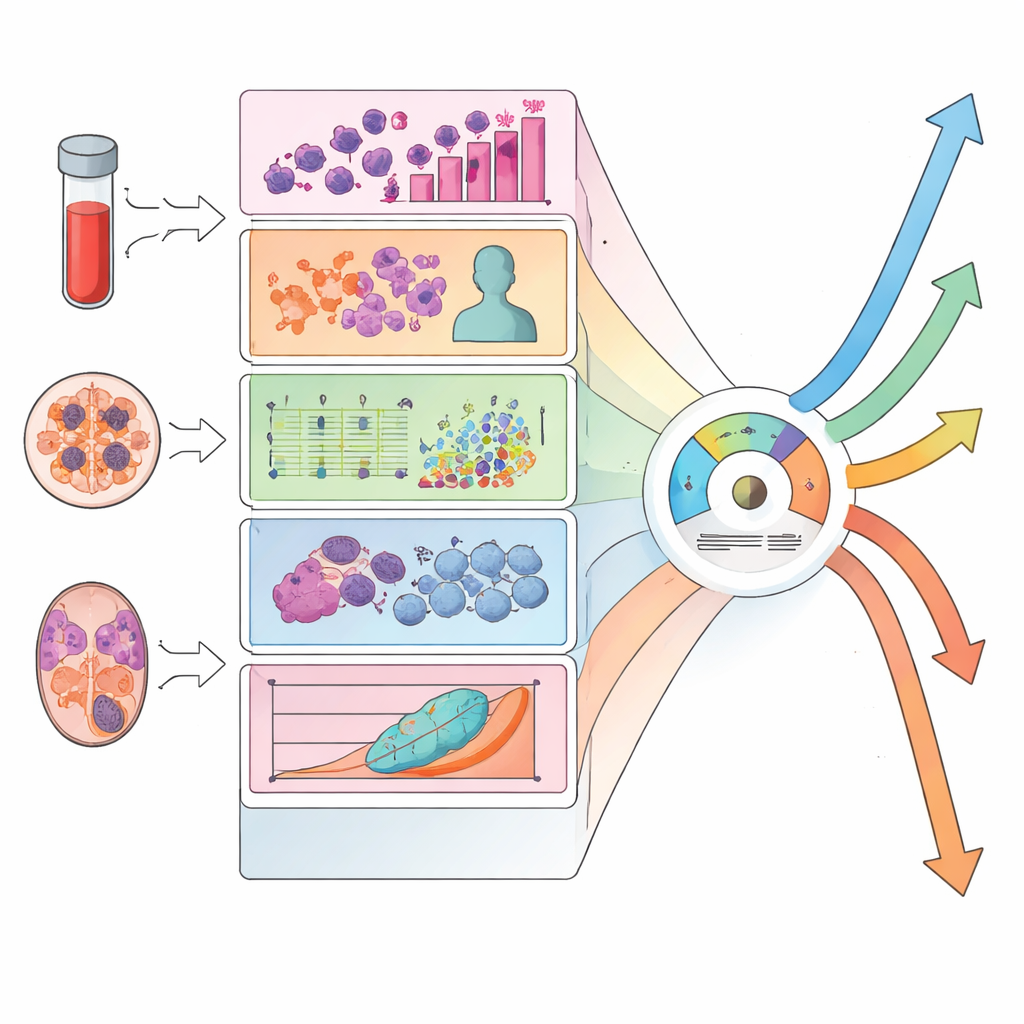
From these six ingredients, the team constructed a numerical score that weighs each factor. Higher blast percentages, lower platelet counts, older age, disease beyond the bone marrow, and a history of earlier-phase CML all pushed the score toward worse outlook. In contrast, having lymphoid-type blasts and being diagnosed directly in blast phase improved it. Using this score, the researchers divided patients into three groups that each contained at least one in ten people. The low-risk group, about 14% of patients, lived a median of roughly eight years after blast phase began. The intermediate group, nearly 60%, lived about two years, and the high-risk group, a bit more than one-quarter of patients, survived about nine to ten months. Cross-checking the score by repeatedly refitting it on different subsets of patients showed it performed reasonably well and consistently.
Strengths, limits, and what treatment means
Importantly, the researchers chose not to build treatment choices into the score. In real life, blast phase care is highly individual: patients may receive different drugs, combinations, or a stem cell transplant depending on their health, prior therapies, and what is available in their country. Mixing these complex treatment patterns into a single formula would blur the picture rather than clarify it. Instead, the score is meant to capture the underlying seriousness of the disease at the moment blast phase is diagnosed, before key decisions are made. The study’s wide mix of centers and countries makes the findings more general, but the authors acknowledge that missing data, varied local practices, and the lack of modern genetic sequencing in many cases are important limitations. They stress that the score has so far only been tested internally and should be checked in other, independent patient groups.
What this means for patients and future research
In everyday terms, this work offers a way to translate a handful of simple measurements taken when blast phase begins into a clearer picture of expected survival. It does not tell doctors which treatment to choose or guarantee what will happen to any one person, but it can help frame discussions about risk, guide how closely to monitor, and make research studies more comparable by ensuring that "high-risk" or "low-risk" patients mean roughly the same thing from one trial to the next. Over time, as more genetic and treatment information is added and the score is tested in broader settings, this kind of tool could support more tailored care for people facing one of the most dangerous stages of CML.
Citation: Lauseker, M., Sacha, T., Klamova, H. et al. Development of a prognostic scoring system for chronic myeloid leukemia in blast phase. Leukemia 40, 751–758 (2026). https://doi.org/10.1038/s41375-026-02875-9
Keywords: chronic myeloid leukemia, blast phase, prognostic score, risk stratification, leukemia survival