Clear Sky Science · en
Prevalence and clinical characteristics of secondary hypertension in young hypertensive tertiary care patients
Why this matters for young adults
High blood pressure is often seen as a problem of middle or old age, but more and more young adults are being diagnosed with it. Doctors are taught to look carefully for hidden medical conditions that might be driving these early cases, because some of those causes can be treated directly. This study from Finland asked a practical question with big implications for patients and health systems: among 16- to 30-year-olds seen in a specialized hospital clinic for high blood pressure, how often is there a specific underlying cause, and which clues help doctors decide who needs in‑depth testing?
Taking a closer look at young patients
The researchers reviewed the medical records of 243 young adults whose high blood pressure was first evaluated at a tertiary care hospital between 2002 and 2023. These were not people from the general population, but patients referred to an internal medicine clinic for a more detailed work‑up. Each person was classified as having primary hypertension (no single clear cause), secondary hypertension (high blood pressure driven by a specific condition), or exogenic hypertension (caused by drugs or other external substances). The team collected information on lifestyle, body weight, blood pressure readings at home and in the clinic, sleep studies, heart and kidney imaging, and a wide range of blood and urine tests.
How often hidden causes were found
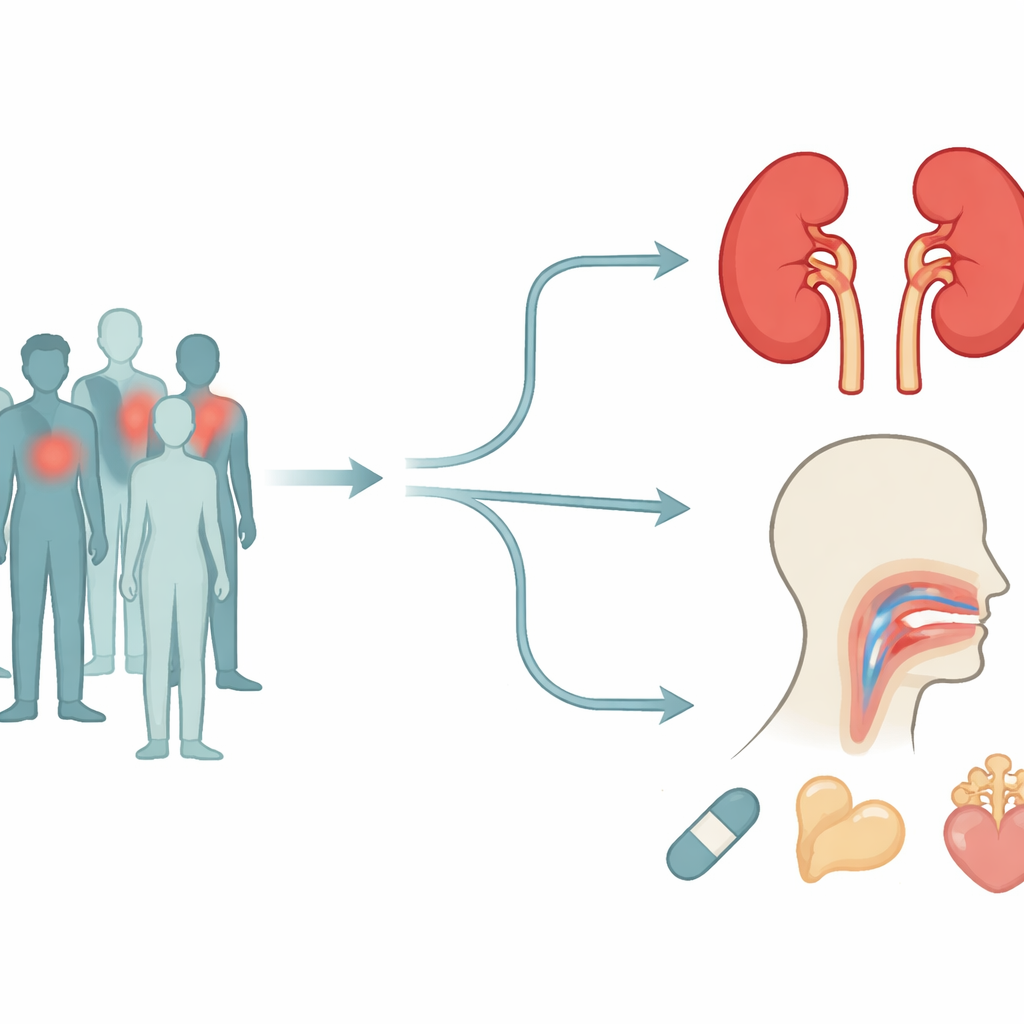
Surprisingly, almost half of these young patients did not simply have “essential” or primary high blood pressure. Of the 243 people, 133 had primary hypertension, 98 had secondary hypertension, and 12 had blood pressure raised by external substances. Among the secondary cases, one pattern dominated: about three quarters were linked to kidney disease, while sleep apnea accounted for most of the remaining cases. Other well‑known causes—such as hormone‑producing tumors, Cushing syndrome, or narrowing of major blood vessels—were each seen only once or twice. In other words, in this real‑world hospital setting, exotic explanations for high blood pressure in young adults were extremely uncommon.
Key warning signs: kidneys and diabetes
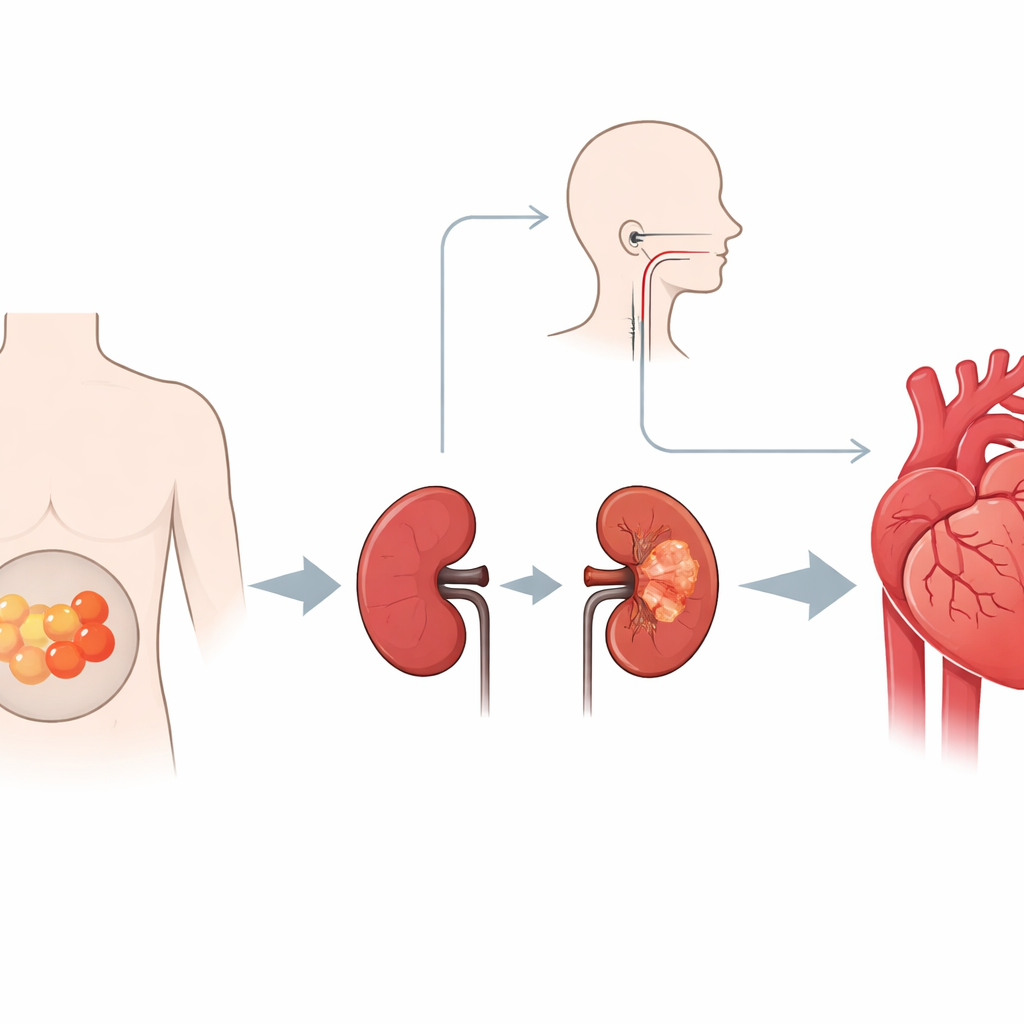
The study then asked which everyday clinical features helped distinguish young adults with secondary hypertension from those with primary hypertension. Using statistical models, the researchers found that two factors clearly stood out. Young adults with diabetes were almost three times as likely to have secondary rather than primary hypertension. Higher blood levels of creatinine—a standard marker of reduced kidney function—also went hand‑in‑hand with secondary hypertension: even small increases in creatinine nudged the odds upward. Many of the kidney problems behind the high blood pressure were related to diabetes‑driven kidney damage, but other kidney diseases such as IgA nephropathy and polycystic kidney disease also appeared. By contrast, overall blood pressure levels, body weight, and most routine lab values did not reliably separate primary from secondary cases.
Rethinking who needs extensive testing
Current European and American guidelines often recommend broad screening for secondary hypertension in people whose high blood pressure starts before their mid‑30s. This study suggests a more targeted strategy may be enough, at least in settings similar to this Finnish hospital. Because kidney disease and sleep apnea made up nearly all the secondary cases, and because diabetes and abnormal kidney tests were strong red flags, the authors argue that universal, wide‑ranging searches for rare causes in every young patient may waste resources and provoke unnecessary worry. Instead, they propose starting with simple, inexpensive checks—basic blood and urine tests for kidney function and markers of diabetes, and focused sleep studies when symptoms suggest sleep apnea.
What this means going forward
For a layperson, the main takeaway is straightforward: in young adults with high blood pressure, serious but treatable underlying problems are often tied to the kidneys and, frequently, to diabetes. Simple tests can usually flag who needs more intensive investigation. The study does not settle exactly how doctors everywhere should screen young people, and it may not represent all patients, since it focused on those already referred to a specialist clinic. Still, the findings support a practical approach: check for diabetes and kidney trouble early, look for signs of sleep apnea, and avoid delaying basic blood pressure treatment while chasing rare conditions. Catching high blood pressure and its kidney‑related causes early could help prevent heart and vessel damage that otherwise builds up by midlife.
Citation: Vesamo, J., Niiranen, T.J. & Suvila, K. Prevalence and clinical characteristics of secondary hypertension in young hypertensive tertiary care patients. J Hum Hypertens 40, 324–332 (2026). https://doi.org/10.1038/s41371-026-01133-w
Keywords: secondary hypertension, kidney disease, young adults, diabetic nephropathy, sleep apnea