Clear Sky Science · en
The psychopathological profile of candidates for metabolic bariatric surgery: a transdiagnostic and network approach
Why Mind and Body Matter Before Weight-Loss Surgery
Metabolic bariatric surgery is often portrayed as a powerful answer to severe obesity, helping people lose weight and improve health when diets and exercise programs have failed. But for many candidates, the story is not just about the number on the scale. This study looks beneath the surface, asking which emotional and mental struggles people bring with them into the operating room, how these difficulties cluster together, and which worries around food may tie everyday distress to disordered eating.
Who Took Part and What Was Measured
Researchers followed 222 adults at a Dutch obesity clinic who were being considered for metabolic bariatric surgery. Before they were formally approved for surgery, participants completed a battery of 16 questionnaires. These covered broad emotional topics such as depression, anxiety, stress, self-esteem, trauma, impulsivity, self-control, and rigid “all-or-nothing” thinking. They also answered detailed questions about eating behavior and body image, including cravings, emotional and external eating, night eating, loss of control over food, binge episodes, and how they felt about their weight and shape. Body mass index (BMI) was taken from clinic records, allowing the team to compare psychological patterns with actual body size.
Two Hidden Mental Health Groups
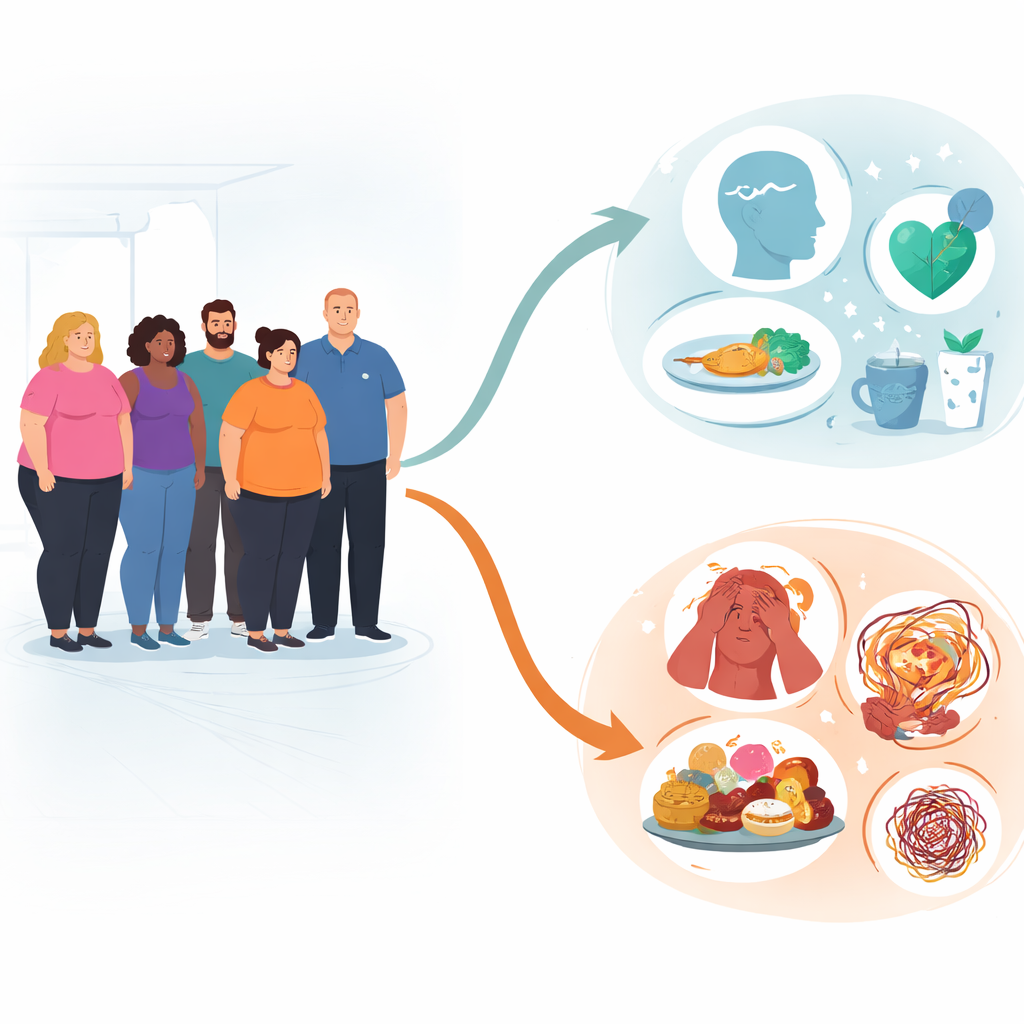
When the researchers grouped people based on the broad emotional measures, two distinct profiles emerged. About one third of the sample fell into a “high psychopathology” profile. These individuals reported severe levels of depression and anxiety, more stress, more traumatic experiences, stronger impulsivity, more rigid black‑and‑white thinking, and both lower self-esteem and self-control. The remaining two thirds formed a “low psychopathology” profile, with generally healthy scores on the same measures. Yet the two groups did not differ in BMI: both had similarly high body weights. In other words, people arriving at the clinic with similar bodies were psychologically very different under the skin.
Eating Problems Run Through the Whole Group
Although their emotional lives differed sharply, both groups showed notable problems around food. The high‑psychopathology group had much more severe eating-related difficulties: higher rates of food addiction and binge eating, stronger feelings of losing control over eating, more distress about binges, greater night eating, and more intense dissatisfaction with their body. However, even the low‑psychopathology group scored above healthy norms on several eating measures, especially weight and shape concerns and eating in response to external cues like the sight or smell of food. This suggests that elevated eating problems are the rule rather than the exception among people seeking bariatric surgery, but for about one third of patients, these problems sit atop a broader landscape of emotional suffering.
How Worries About Eating Link Feelings and Food
To examine how specific symptoms relate to one another, the authors used a “network” approach. In this method, each symptom or trait is a node, and statistical links between them form edges, creating a map of how problems cluster and reinforce one another. In this map, depression and feeling out of control with eating were especially central, connecting strongly to many other symptoms. Most striking was a particular bridge node: “eating concerns,” which capture how much people worry about food, eating, and its consequences. These eating concerns sat between general emotional problems (like depression, anxiety, low self‑esteem, and trauma) and disordered eating behaviors (such as emotional and external eating and loss of control). The pattern suggests that when people are distressed, their preoccupation with eating may be the channel through which emotional pain spills over into problematic eating.

What This Means for Patients and Care
The study concludes that roughly one in three people seeking metabolic bariatric surgery is dealing with complex, wide‑ranging psychological difficulties, not just issues around food. Importantly, the severity of these mental health problems was unrelated to BMI: how heavy someone was told little about how much they were suffering emotionally. Instead, worries and concerns about eating emerged as a key link tying emotional distress to disordered eating patterns. For clinicians, this means that careful psychological assessment before and after surgery is essential, and that focusing on transdiagnostic features like eating concerns and loss of control may be especially important. Understanding and treating these intertwined symptoms could help patients not only lose weight, but also improve their long‑term mental well‑being and quality of life after surgery.
Citation: Dix, M.H.C., Boerma, EJ.G., Martijn, C. et al. The psychopathological profile of candidates for metabolic bariatric surgery: a transdiagnostic and network approach. Int J Obes 50, 907–915 (2026). https://doi.org/10.1038/s41366-026-02023-4
Keywords: bariatric surgery, obesity and mental health, eating disorders, psychological profiles, symptom networks