Clear Sky Science · en
Intersectional inequality in general and central obesity: cross-sectional UK Biobank study
Why Some Bodies Carry More Weight
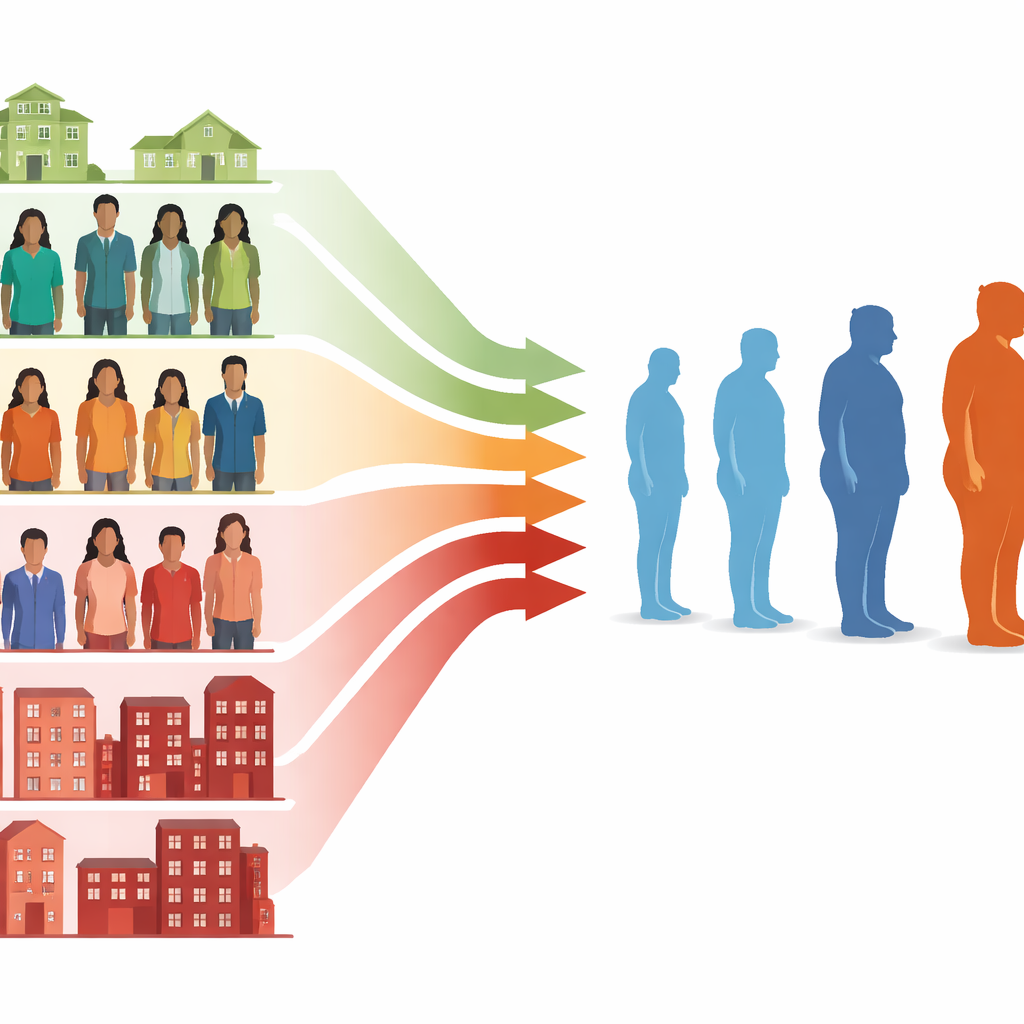
Obesity rates are rising around the world, but not everyone faces the same risk. This study looks beyond simple explanations like diet or exercise to ask a bigger question: how do different aspects of our lives—such as our income, where we live, our sex, age and ethnic background—combine to influence whether we develop excess body fat, especially around the waist? Understanding this tangle of influences can help design fairer and more effective health policies.
Many Factors, One Body
The researchers used data from more than 450,000 adults in the UK Biobank, a large health study covering England and Scotland. Each person was assigned to one of 320 groups defined by five things: their household income, the level of deprivation in their neighbourhood, their sex, their broad ethnic group (White, Black, Asian or Mixed), and whether they were younger than 55 or 55 and over. For each group, the team examined three measures: body mass index (overall weight relative to height), fat mass index (how much of that weight is actually fat) and waist-to-height ratio (how much fat is carried around the waist, a strong signal of heart and diabetes risk).
Adding Up Advantages and Disadvantages
One way to think about inequality is to simply “add up” disadvantages: lower income tends to raise obesity risk, and so does living in a deprived area, so having both should be worse than either alone. The team used a statistical approach called multilevel analysis to separate this straightforward additive effect from something more subtle—extra advantages or disadvantages that arise when certain factors occur together. They found that differences between the 320 groups explained a notable share of variation in body weight: about one-tenth for general obesity and nearly one-fifth for obesity around the waist. Crucially, roughly one-fifth to one-quarter of these group differences were due to these extra, interactive effects rather than simple addition.
When Social Positions Multiply Risk
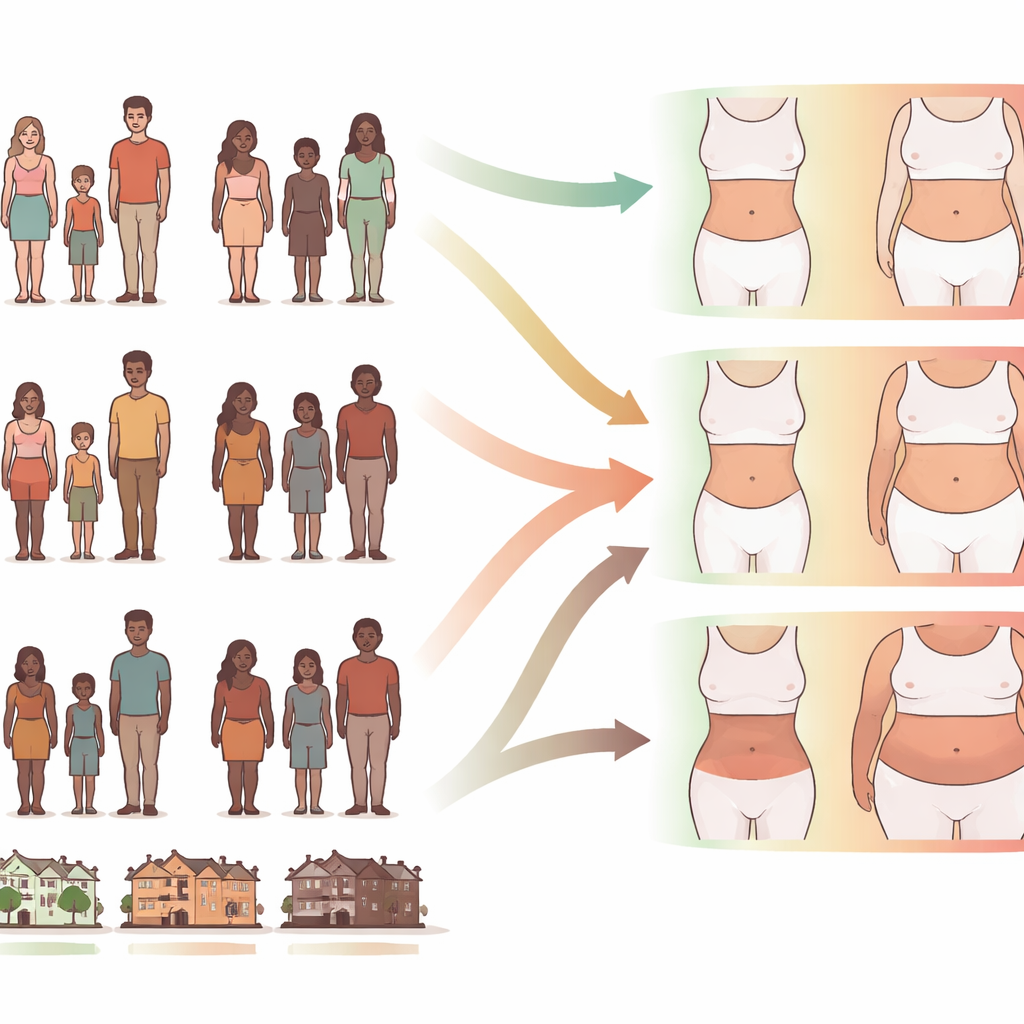
The results showed that obesity risk does not change in the same way for everyone as income or neighbourhood conditions change. In general, higher income and living in less deprived areas were linked with lower body fat. But this protective effect was uneven. Affluent White women, especially those living in better-off neighbourhoods, experienced more benefit than would be expected from simply adding their advantages together—their social position seemed to give them an extra “bonus” protection against obesity. In contrast, Black women with low incomes living in deprived neighbourhoods faced a compounded disadvantage: their risk of obesity, particularly around the waist, was higher than the sum of each separate risk factor would predict.
Different Patterns for Men and Women
Men showed a different pattern. For Black men, living in deprived areas but having a higher income could actually be linked with higher body mass, the reverse of what is usually seen. Overall, the interaction of factors tended to narrow the gap in obesity between Black and White men, even as it widened the gap between Black and White women. When the researchers used fat mass index—which looks directly at body fat rather than total weight—the inequalities between groups appeared even larger, suggesting that standard body mass index may understate how unfairly body fat is distributed in the population.
What This Means for Fair Health Policy
For a layperson, the main message is that obesity risk is not just about personal choices or single background factors. It arises from the combined weight of many aspects of our lives, and for some groups these forces stack up in especially harmful ways. The study shows that if health policies ignore these intersecting disadvantages and treat everyone as though only one factor—like income or neighbourhood—matters, they may underestimate risk in groups such as deprived Black women and fail to reduce inequalities. Targeting support and resources to the specific combinations of people and places with both high overall risk and strong extra disadvantages could make efforts to prevent and treat obesity more effective and more just.
Citation: Hutchinson, J., Darko, N., Hardy, R. et al. Intersectional inequality in general and central obesity: cross-sectional UK Biobank study. Int J Obes 50, 731–740 (2026). https://doi.org/10.1038/s41366-025-01984-2
Keywords: obesity inequality, intersectionality, socioeconomic deprivation, UK Biobank, public health policy