Clear Sky Science · en
Deciphering the structure and properties of wheat starch-based paste through a multi-response factorial design experiment
Why Old Books Need Better Glue
Anyone who has opened a fragile old book or unfurled a historic scroll has seen how time punishes paper. Conservators rely on simple wheat-based pastes—essentially a kind of cooked starch glue—to mend tears and support thinning sheets. Yet these age-old recipes are still mixed largely by feel. This study asks a surprisingly modern question about this very traditional material: how do the exact cooking conditions of wheat paste control its strength, stability, and gentleness toward precious paper?
From Kitchen Staple to Heritage Tool
Wheat starch paste has been used for more than a thousand years in Asia and elsewhere to repair and mount works on paper. It is favored because it is made from a familiar food ingredient, is reversible with moisture, and generally behaves kindly toward fragile artifacts. In practice, however, conservators use different starting materials (pure starch or ordinary flour containing protein), mix them at different strengths, and cook them at different temperatures. Until now, these choices were guided mostly by experience rather than by a clear scientific map linking recipe to performance.
Designing a Systematic Paste Experiment
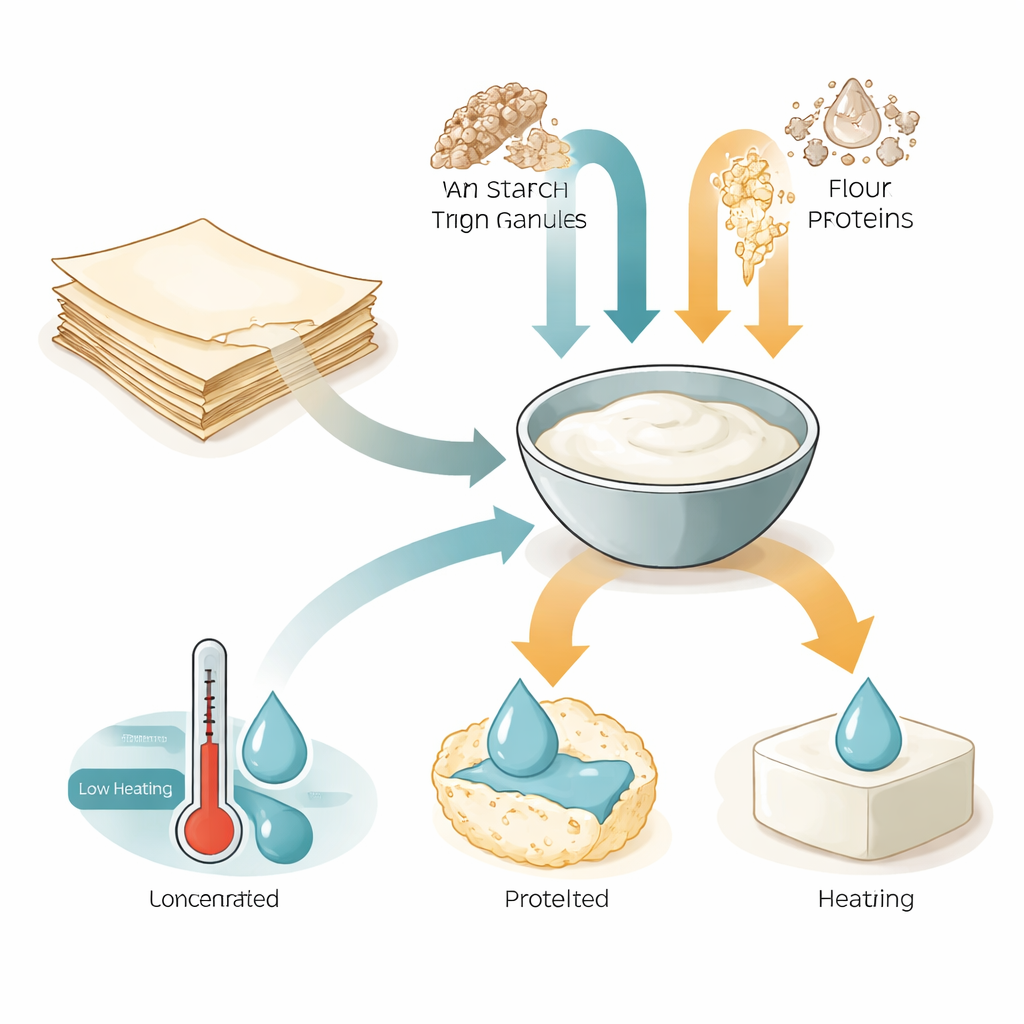
The researchers created eight carefully controlled batches of wheat-based paste by varying three factors: how concentrated the paste was (the mass fraction of starch or flour in water), whether the starting powder was pure starch or flour with protein, and whether the mixture was cooked at a relatively low or high temperature. They then let the pastes cool and age under conditions similar to those in conservation studios. Using a suite of laboratory techniques, they measured each paste’s acidity, its ability to hold water, how thick or runny it was under flow, how ordered its internal starch structure remained, and how well it withstood heat before breaking down.
What Happens Inside the Paste
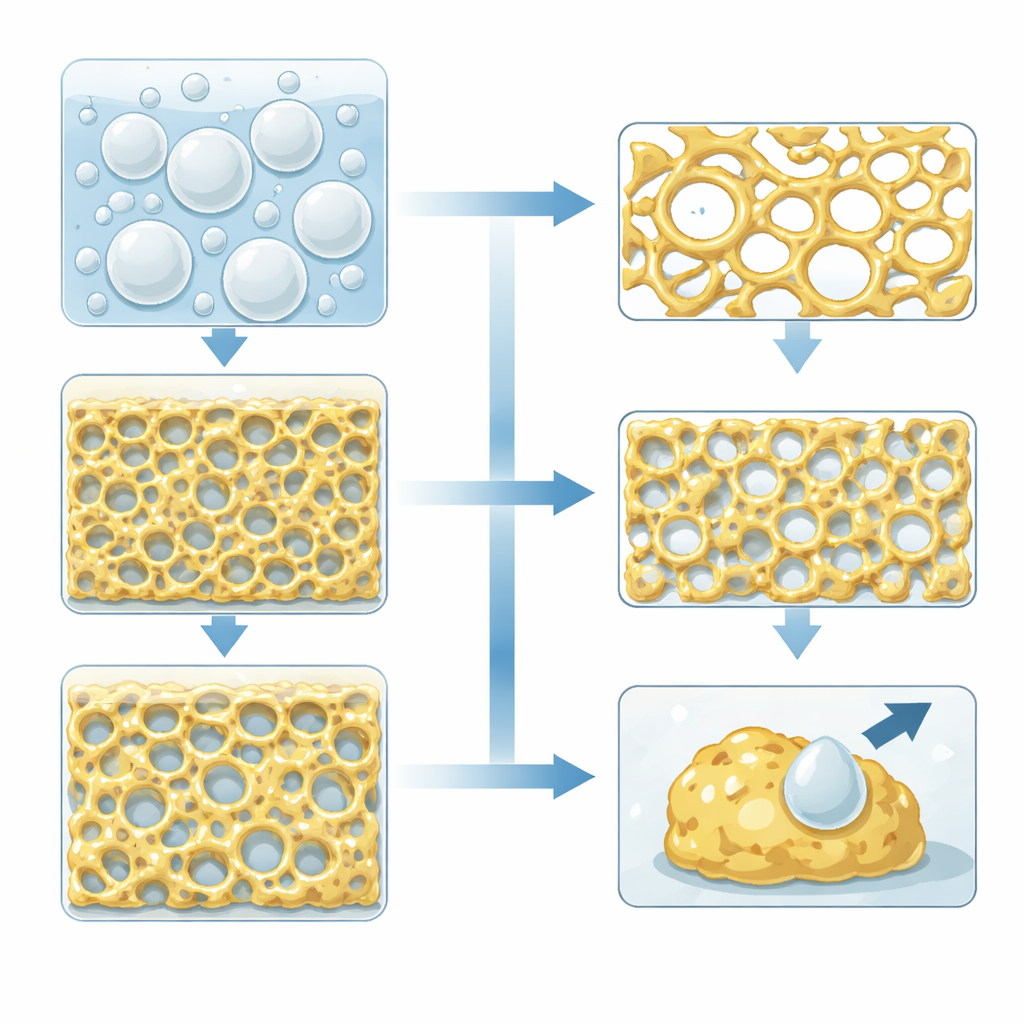
On the microscopic and molecular level, all of the cooked pastes lost the long-range crystalline order found in raw wheat starch granules, meaning the heat and water had thoroughly disrupted their original structure. At the same time, subtle signs of local ordering remained, suggesting that starch chains still organized over very short distances. Electron microscope images revealed that hotter cooking temperatures transformed partially swollen granules into a continuous, honeycomb-like network. This more developed network trapped water more effectively and resisted flow, helping explain why hotter-cooked, more concentrated pastes became thicker and held onto moisture better.
How Recipe Choices Change Performance
The study showed that each of the three recipe knobs plays a distinct role. Protein from flour, absent in pure starch, was the main driver of slightly higher pH, an important consideration for avoiding extra acidity in old paper. Cooking temperature was the key factor controlling how much water the paste could retain, with hotter pastes holding roughly twice as much as cooler ones. Both high temperature and higher concentration worked together to increase apparent viscosity—the practical sense of how thick and strong the paste feels during use—especially when combined. Concentration also increased a measure of local structural ordering inside the starch, while the combination of high temperature and added protein made the paste more thermally stable when heated to high temperatures in the lab.
Translating Findings into Conservation Practice
For conservators and others who use wheat paste, these results turn long-held rules of thumb into a clearer guide. If a stronger, more water-retentive and viscous paste is needed—for example, to reinforce severely weakened paper—a recipe using a higher starch concentration and a hotter cooking step will create a dense network that performs like a robust scaffold. When gentler, softer pastes are desired, lowering concentration or cooking temperature can reduce internal ordering and stiffness. Choosing flour rather than pure starch nudges the paste toward a slightly higher pH and better heat resistance, though it may also lower thickness compared with starch alone. Overall, the work provides a scientific basis for tailoring traditional wheat paste recipes to the specific needs of paper-based heritage objects, helping ensure that the glue holding history together is as carefully designed as the treasures it protects.
Citation: Liu, P., Luo, Y., Hou, Z. et al. Deciphering the structure and properties of wheat starch-based paste through a multi-response factorial design experiment. npj Herit. Sci. 14, 235 (2026). https://doi.org/10.1038/s40494-026-02492-w
Keywords: wheat starch paste, paper conservation, heritage science, adhesive properties, starch structure