Clear Sky Science · en
Spatial pattern and driving mechanisms of ICH soundscape in Jilin: a GeoAI framework for cultural sustainability
Why the Songs of a Place Matter
Across the world, traditional songs are fading as towns grow, people move, and daily work changes. Yet these songs are more than melodies: they capture how people live with their land, their neighbors, and the weather around them. This study looks at folk songs in China’s Jilin Province as a kind of living “sound map,” asking where different songs occur, what shapes them, and how modern tools can help keep them alive in changing times. 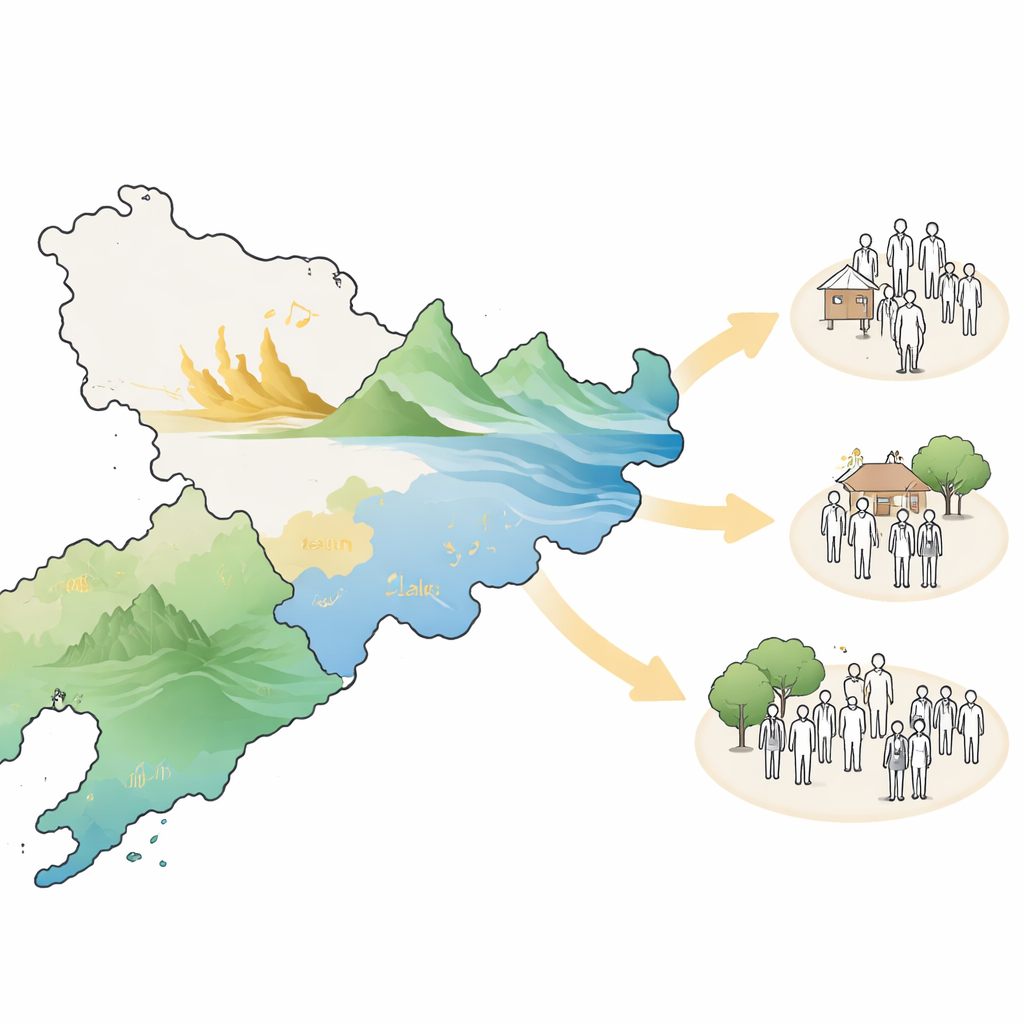
Songs as Living Landscapes
The authors treat folk songs as part of the landscape, much like rivers or forests. In Jilin, four main song types are considered, with special focus on three: work songs used during labor, mountain songs sung in hills and open country, and lyric folk songs meant more for storytelling and entertainment. These songs are seen as “soundscape genes” – basic patterns of sound that communities have shaped over generations in response to their surroundings and ways of life. Instead of looking only at lyrics or music style, the study connects songs to climate, terrain, ethnic groups, villages, roads, and economic activity.
Using Smart Maps to Read the Music
To uncover these patterns, the team builds a GeoAI framework that combines geographic information systems with machine learning. They collect 797 folk songs from Jilin and link each one to 17 environmental and social factors on a fine grid across the province. A tool called GeoDetector first checks which factors most strongly match where different songs appear. Then a machine-learning model (CatBoost) learns to predict what kind of song is likely in each location. Finally, an interpretability method (SHAP) works backward through the model to show how each factor pushes song types up or down in different settings. The result is a set of high-resolution maps that show where each sound type is most likely to thrive and why. 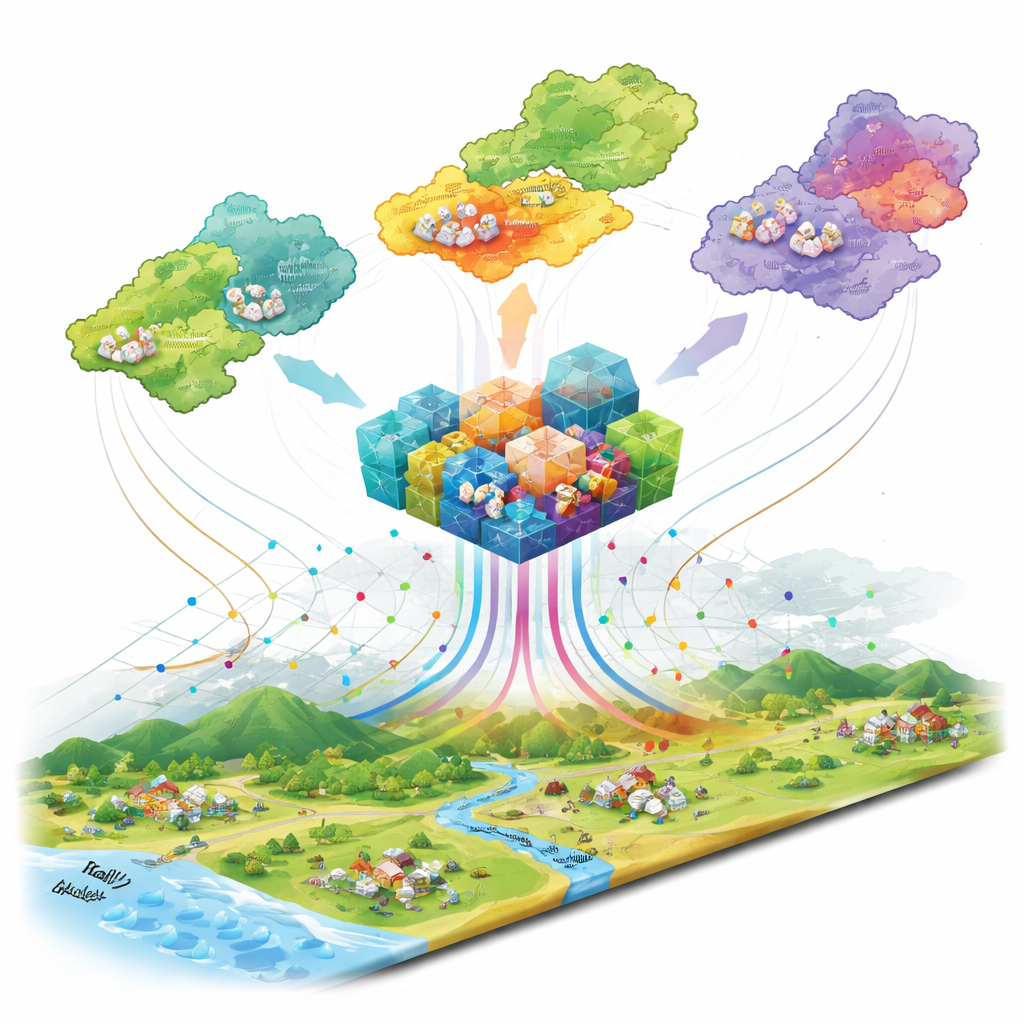
Rain, Land, and People Shaping the Sound
The analysis reveals that climate and culture work together to shape Jilin’s soundscapes. Work songs dominate much of the province, especially central plains and mountain–plain transition zones with rich river networks. Here, annual rainfall above about 700 millimeters supports intensive farming and water projects, creating coordinated labor scenes where rhythmic songs help people work together. These areas often have dense Han settlements and stronger local economies, which historically supported both agricultural expansion and the spread and recording of labor songs.
Islands of Song in Mountains and Villages
Mountain songs, by contrast, flourish in drier, more isolated hilly regions, often in areas with less than about 680 millimeters of rain and at considerable distances from ancient villages. Steep land and scattered homes limit traffic and outside influence, helping preserve distinctive singing styles within certain ethnic communities, such as Mongolian and other minority groups. Lyric folk songs respond more to social nodes than to rainfall. They cluster within about 25–40 kilometers of ancient villages and cultural protection sites, where markets, festivals, and shared public spaces bring people together. Interestingly, at intermediate distances from official heritage sites, lyric songs become less common, hinting at zones where modernization weakens older musical traditions without yet replacing them with active protection.
Guiding Protection from Static to Living Heritage
By translating song traditions into spatial patterns and thresholds, the study offers concrete guidance for cultural policy. It suggests protecting whole “eco-cultural corridors” where work songs, rivers, and traditional farming still interact; limiting heavy development in fragile mountain song regions; and focusing support on the social hubs that keep lyric songs alive. In plain terms, the article shows that saving folk music is not just about recording old tunes—it is about caring for the landscapes, communities, and daily routines that give those songs meaning. With careful use of GeoAI, heritage managers can move from locking culture in museums to sustaining it as a living part of local life.
Citation: Fan, Y., Tian, J., Sun, D. et al. Spatial pattern and driving mechanisms of ICH soundscape in Jilin: a GeoAI framework for cultural sustainability. npj Herit. Sci. 14, 281 (2026). https://doi.org/10.1038/s40494-026-02473-z
Keywords: intangible cultural heritage, folk song soundscapes, geospatial AI, Jilin Province, cultural sustainability