Clear Sky Science · en
Enhanced multicancer screening assay through whole-genome methylation sequencing-based multimodal cell-free DNA analysis
Why a Simple Blood Test for Many Cancers Matters
Cancer is often most curable when caught early, but many dangerous cancers still have no routine screening test. Instead of separate scans or scopes for each organ, this study explores a single blood test that could signal several common cancers at once, even in their earliest stages. By reading subtle chemical and structural patterns in free‑floating DNA fragments found in blood, the researchers show that a carefully designed, computer‑driven analysis can spot cancer with high accuracy and even suggest where in the body it began. 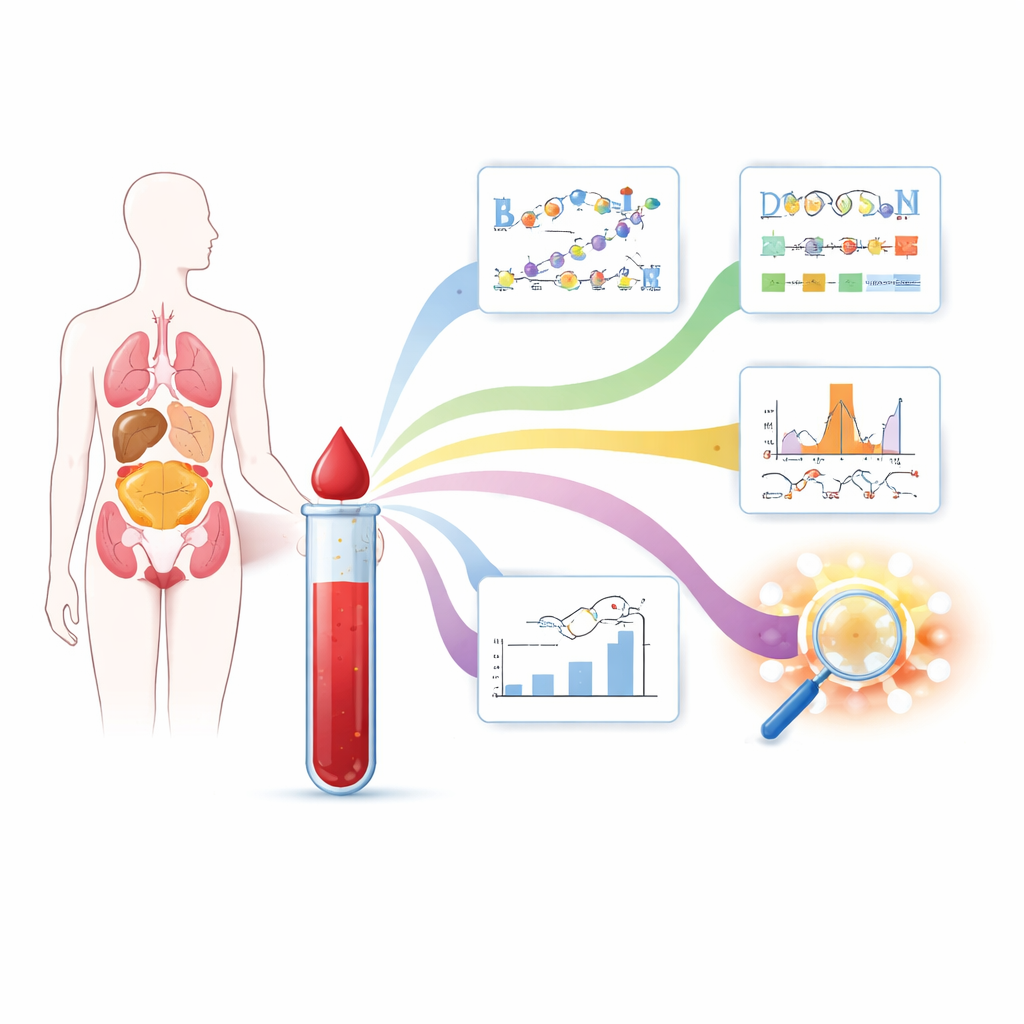
Turning a Blood Sample into a Window on the Body
Our blood carries tiny fragments of DNA released from cells as they die and break apart. In people with cancer, some of this “cell‑free DNA” comes from tumors. The team behind this paper developed an improved multicancer early detection test that examines these fragments in several different ways at once. They studied 1,415 blood samples, including 1,034 from patients with eight cancers—colon, stomach, liver, pancreas, lung, breast, ovary and prostate—and 381 from people without cancer. The goal was not just to detect cancer but to do so reliably at early stages, when tumor DNA is scarce and easily drowned out by DNA from healthy cells.
Four Clues Hidden in Tumor DNA Fragments
The researchers focused on four distinct features of the cell‑free DNA. First, they measured methylation, a chemical tagging pattern on DNA that changes in characteristic ways in cancers and differs among organs. Second, they looked for copy number changes—stretches of DNA that tumors have lost or gained. Third, they examined the ratio of short to long fragments, since tumor DNA tends to be chopped into shorter pieces. Finally, they analyzed the overall distribution of fragment sizes. Each of these features on its own gave useful but incomplete information, and their strengths varied by cancer type and stage.
Letting Machine Learning Weigh the Evidence
To combine these signals, the team trained separate computer models for each feature and then built an “ensemble” model that learned how much to trust each one. Using only samples from people aged 50 or older—the typical age group for screening—they tuned the system to keep false alarms low, aiming for 95% specificity. On an independent test set, the combined model detected cancer in 93.2% of patients overall while maintaining that 95% specificity. Importantly, performance in early disease was strong: sensitivity was about 92% for both stage I and stage II cancers, meaning that roughly nine out of ten early cancers were flagged by the blood test. 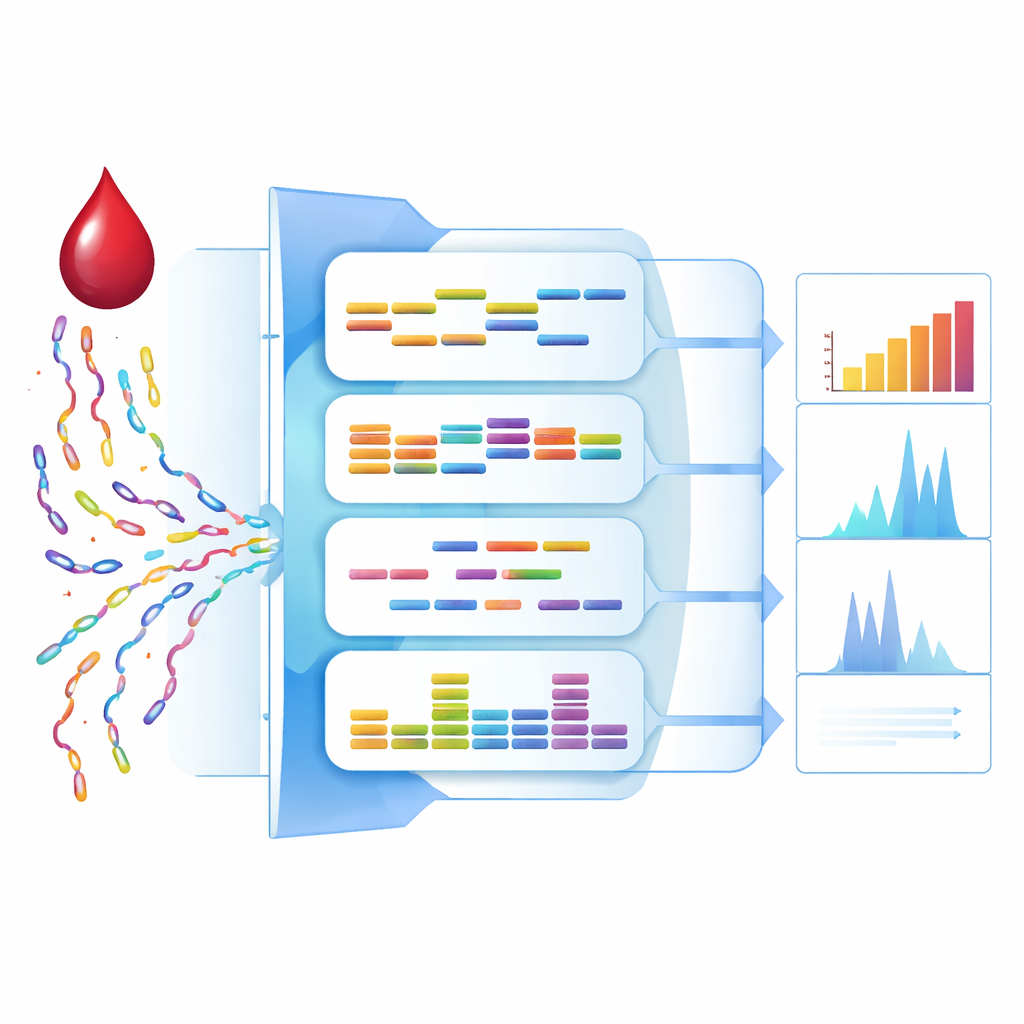
Finding Where the Cancer Started
Beyond saying “cancer” or “no cancer,” the test also tries to guess the tissue of origin—where in the body the tumor likely arose. Using the same four DNA features, the model chose a most likely cancer type and a runner‑up. Its first choice was correct about 73% of the time; if doctors consider both the first and second suggestions, accuracy rose to nearly 86%. Colon, stomach, and prostate cancers were identified particularly well, and breast cancers, when predicted, were rarely misassigned. This information could help steer follow‑up scans or procedures toward the right organ and spare patients from unfocused testing.
What This Could Mean for Future Checkups
To a non‑specialist, the bottom line is that a single blood draw, interpreted through a sophisticated combination of DNA chemistry and pattern‑recognizing algorithms, can detect a wide range of cancers with high accuracy, including many at an early, more treatable stage. The study still needs confirmation in large prospective screening trials and in more diverse populations, and performance for some hard‑to‑detect cancers must improve. But the work shows that blending several complementary DNA signals into one decision can move multicancer blood screening from concept toward real‑world practice, potentially reshaping how we look for cancer long before symptoms appear.
Citation: Jeong, S., Go, D., Jeon, Y. et al. Enhanced multicancer screening assay through whole-genome methylation sequencing-based multimodal cell-free DNA analysis. Exp Mol Med 58, 1311–1324 (2026). https://doi.org/10.1038/s12276-026-01674-7
Keywords: multi-cancer early detection, liquid biopsy, cell-free DNA, DNA methylation, cancer screening