Clear Sky Science · en
Clan ties, collective minds: the persistent impact of Chinese kinship structures on modern collectivism
Why family ties still matter today
When we think about cultural differences, we often picture broad ideas like “individualistic West” and “collectivistic East.” This study asks a more concrete question: in modern China, where cities are booming and people are constantly online, do old family structures still shape how strongly people feel tied to their group? The authors argue that traditional clans, built around shared ancestors and family halls, continue to influence how people think about themselves and their responsibilities to others.
From lone selves to shared selves
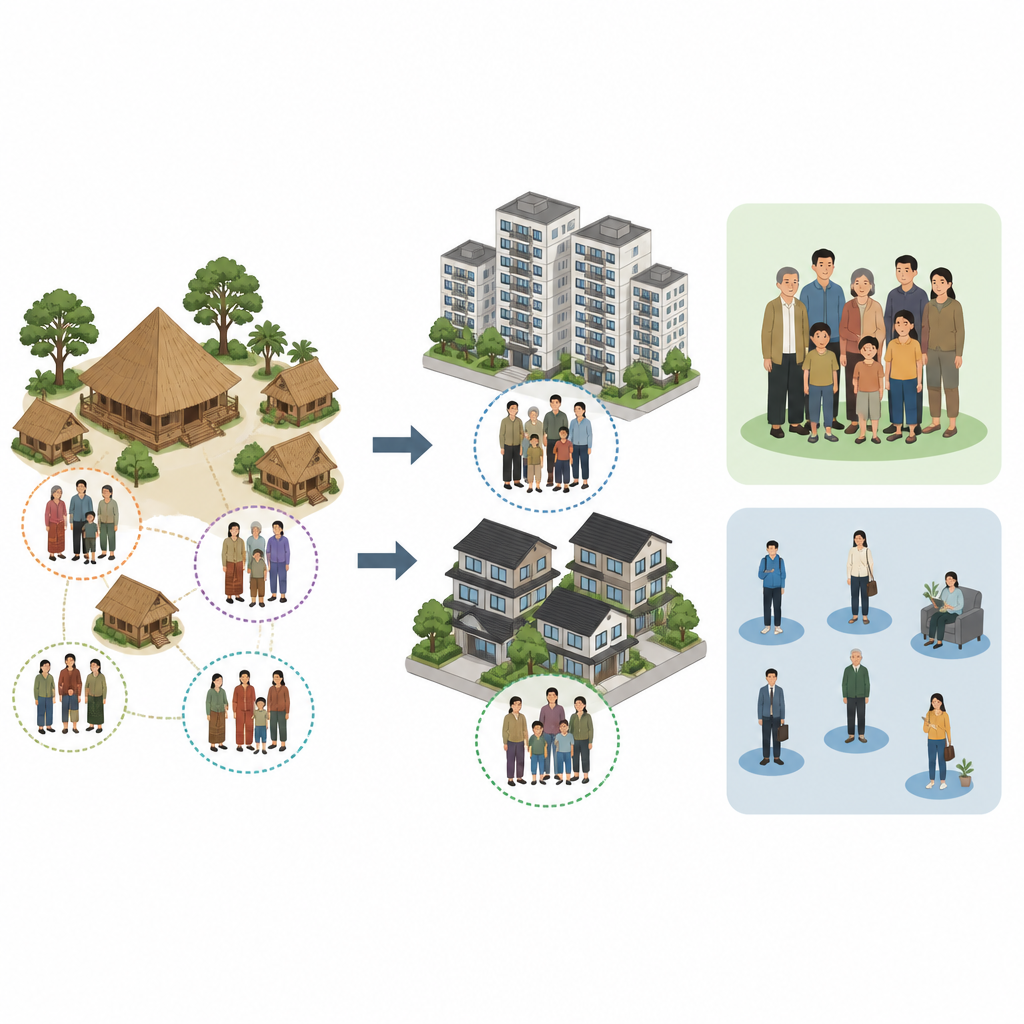
Psychologists often describe cultures along a line from individualism to collectivism. Individualistic cultures stress personal choice and independence, while collectivistic cultures highlight duty to family and harmony within the group. Earlier research has linked these patterns to things like climate, farming style, and economic growth. For example, rice farming, which needs careful coordination, has been tied to more group-oriented thinking, whereas wheat farming allows more independent work. Modernisation theories predict that as countries grow richer and more urban, people will move toward individualism because they rely less on fixed communities and more on flexible networks and personal choice.
How Chinese clans organise everyday life
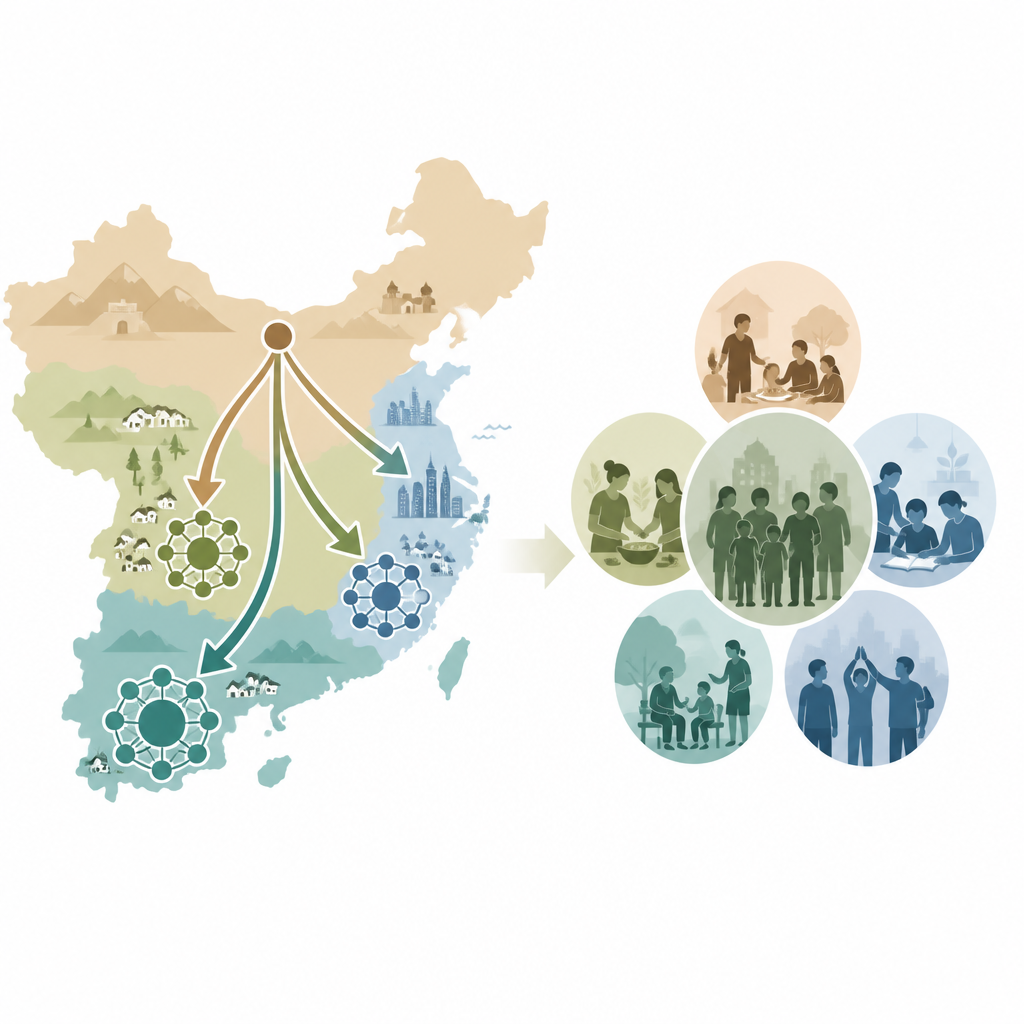
China offers a powerful counterpoint to this simple story. For centuries, Chinese clans have organised local life through shared surnames, ancestral halls, and detailed family records. These institutions did more than trace bloodlines: they helped settle disputes, manage shared land and money, and organise rituals for ancestors. In many southern regions, one or a few surnames dominate whole villages, and clans historically filled gaps left by distant state power. Growing up in such settings means navigating layers of obligation, from close relatives to wider kin. Support with education, loans, or help in crises often depended on staying in good standing with the clan, encouraging people to place group needs above personal wishes.
Testing clan influence with surveys and social media
The authors combined several kinds of data to see whether these clan structures still relate to collectivism today. In the first study, over 6,700 adults from 17 provinces filled in questionnaires. The researchers built a “clan engagement” index based on whether there was an ancestral hall in the village, whether the family kept a genealogy book, and how often people took part in ancestor worship. Those with higher scores on this index consistently reported stronger collectivist values, even after taking into account age, gender, income, education, and where they lived. Surprisingly, higher education and income also went along with stronger collectivism, suggesting that in a Confucian setting, social success can increase expectations to care for others rather than freeing people from group duties.
Reading cultural patterns in online words and family statistics
The second study turned to Sina Weibo, a major Chinese microblogging site, to see how clan strength lines up with everyday language. The team analysed posts from roughly 300,000 active users across nearly 200 cities, using dictionaries of words linked to individualistic or collectivistic themes. In cities with stronger signs of clan culture, such as concentrated surnames and higher birth rates, posts contained more collectivist language. These links held even after controlling for wealth, urbanisation, population density, rice farming, and geography. A third study zoomed out to more than 800 counties and districts, asking whether distance from Beijing, the long-time political centre, was tied to family patterns. Regions farther from Beijing tended to have stronger clan markers and more family-based living arrangements, such as larger households and more three-generation homes, and lower divorce rates. Statistical models suggested that clan strength partly explains how distance from the capital relates to these modern family patterns.
Old family systems in a changing world
Taken together, the three studies show that China’s historic clan system still shapes how people relate to one another today. Instead of fading away with economic development and social media, kin-based institutions seem to carry collectivist values into modern city life, affecting both how people talk online and how households are formed. The authors caution that their evidence is correlational rather than strictly causal, and they call for future work that follows communities over time or uses policy changes as natural experiments. Still, their results highlight how deep-rooted social structures, not just abstract ideas, can keep group-focused ways of thinking alive in a rapidly changing society.
Citation: Ji, X., Liu, Z. & Zhu, T. Clan ties, collective minds: the persistent impact of Chinese kinship structures on modern collectivism. Humanit Soc Sci Commun 13, 724 (2026). https://doi.org/10.1057/s41599-026-07079-1
Keywords: Chinese clan system, collectivism, kinship, social institutions, cultural psychology