Clear Sky Science · en
Artificial intelligence, green innovation, and regional carbon inequality: evidence from Chinese provincial data
Why this matters for everyday life
China is the world’s largest carbon emitter, and what happens there helps shape global climate risks that affect food prices, extreme weather, and economic stability worldwide. This study looks at how artificial intelligence and new green technologies are changing not just how much carbon China emits, but how fairly those emissions are spread across its regions. Understanding who pollutes more, who cleans up faster, and why, offers clues for making climate policies that are both effective and fair.
Uneven pollution across China
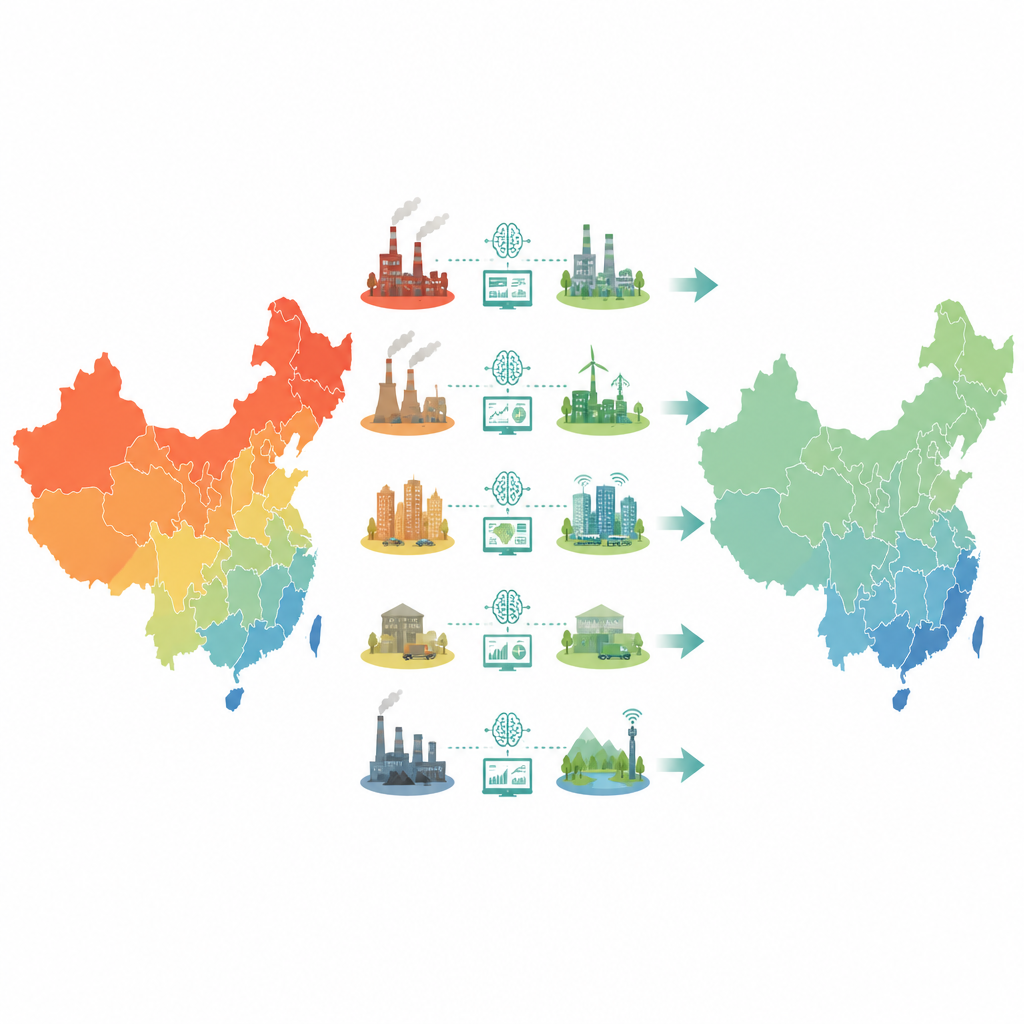
China’s eastern coastal provinces are richer, more urban, and more advanced in technology, while many inland regions still rely heavily on coal, steel, and other high‑pollution industries. This has created a clear pattern of carbon inequality: some regions emit far more carbon per unit of economic output than others. The study tracks this inequality from 2003 to 2022 using two measures that capture different sides of the problem: one highlights simple gaps between regions, while the other reveals deeper structural divides in how emissions and economic activity line up.
The role of artificial intelligence
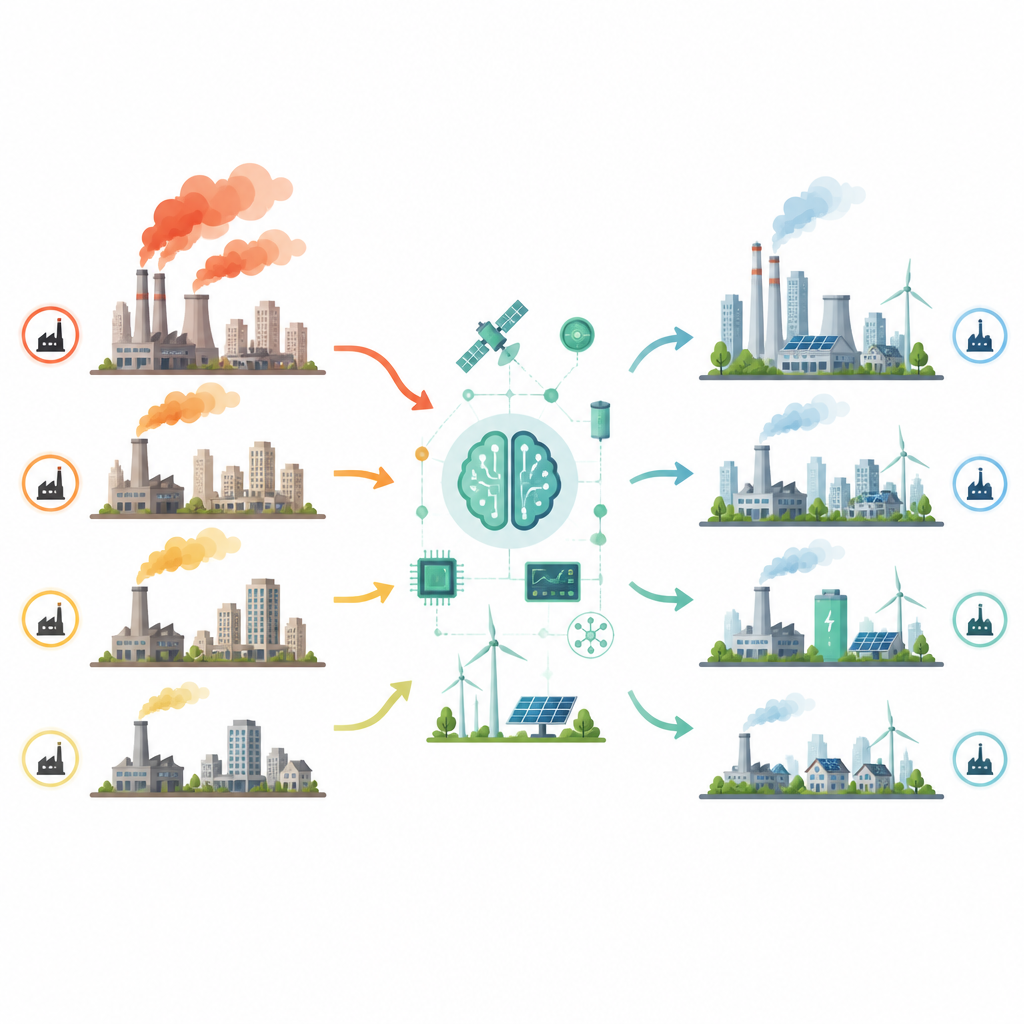
The researcher finds that, overall, growth in artificial intelligence is linked to smaller gaps in carbon emissions between provinces. AI helps factories and power systems use energy more efficiently, allows governments to monitor pollution in real time, and supports smarter planning of transport and industry. Together, these changes tend to benefit lagging regions, helping them catch up to cleaner leaders. However, the equalizing effect is stronger when looking at basic emission gaps than when examining deeper structural divides, suggesting that digital tools alone cannot erase long‑standing differences in industrial base and energy resources.
Green innovation still clustered in a few places
Green innovation, measured mainly through patents for cleaner technologies, does not yet play a strong role in narrowing carbon gaps. Most of these new ideas and inventions are concentrated in a handful of coastal provinces with strong research capacity and better financing. Inland regions see far fewer green patents and struggle to turn inventions into working equipment and cleaner factories. As a result, green technologies have not spread widely enough to change the overall pattern of who emits most and who benefits from cleaner growth.
Different stories in different regions
The study shows that the impact of growth, AI, and innovation varies sharply across China’s eastern, central, western, and northeastern areas. In some regions, economic growth first widens carbon gaps and then narrows them as cleaner sectors expand. In others, growth helps balance emissions more quickly. AI often reduces inequality where digital networks, skilled workers, and solid institutions are already in place, but can even worsen gaps where only a few provinces or large firms adopt it. Urbanization also pulls in different directions: coastal cities are shifting toward cleaner services, while some inland cities continue to depend on heavy industry, deepening structural divides.
What this means for climate fairness
For a lay reader, the bottom line is that smart digital tools are starting to make China’s climate transition a bit fairer, but long‑running differences in industry, technology, and urban growth still shape who bears the heaviest carbon burden. Artificial intelligence shows real promise for lifting lagging regions if it is paired with the right institutions and support. Green innovation, by contrast, will only help close carbon gaps once cleaner technologies spread beyond wealthy coastal hubs. The study argues that policies must combine digital expansion, green technology sharing, and region‑specific support to move China toward its climate goals in a way that is not only cleaner overall, but also more balanced across its provinces.
Citation: Fan, X. Artificial intelligence, green innovation, and regional carbon inequality: evidence from Chinese provincial data. Humanit Soc Sci Commun 13, 722 (2026). https://doi.org/10.1057/s41599-026-07053-x
Keywords: artificial intelligence, green innovation, carbon inequality, China climate policy, regional emissions