Clear Sky Science · en
Historical and cultural heritage of rural areas as a basis for sustainable development of local governance: China’s evidence
Why village history matters today
As cities grow and more people leave the countryside, many villages risk losing not only residents but also their stories, traditions, and historic places. This article explores how China can use the history and culture of its rural areas to support village life through tourism, turning old houses, museums, and landscapes into fresh opportunities for local people.
From fields and temples to visitor journeys
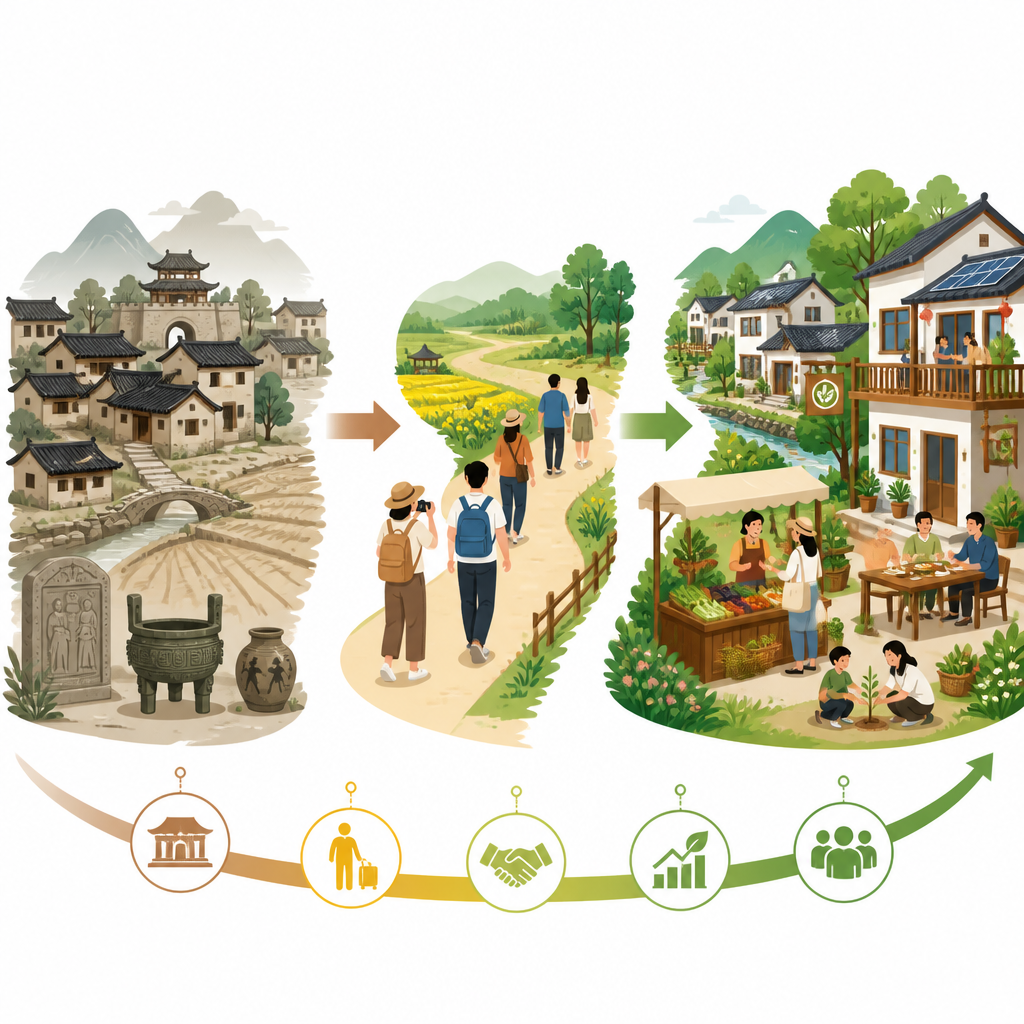
Rural tourism covers trips where visitors experience country life, nature, and local customs. In China, many important battle sites, ancestral homes, and traditional villages lie outside big cities, giving the countryside a rich cultural appeal. The study argues that these places can anchor a new kind of travel focused on small guesthouses, farm visits, and local crafts, helping residents earn income while keeping their customs and landmarks alive for future generations.
Rising cities, shrinking village appeal
Using national statistics from 2000 to 2023, the author shows how the balance between city and village travel has shifted. At the start of the century, more than half of all domestic trips were made by rural residents, and visits to the countryside formed a large share of travel. By 2007, their share had climbed to over three fifths, but as incomes rose and long distance trips became easier, attention turned toward cities and foreign destinations. By 2023, the rural share of domestic tourists had dropped to just over one fifth, and spending on city trips far outpaced that in villages, a gap that widened sharply after 2011 and was only briefly disrupted by the pandemic.
Maps, museums, and missed chances
The study examines where cultural resources are actually located. Many museums and famous sites cluster in China’s coastal and urban provinces, but large inland regions with high rural populations also hold deep historical roots and unique traditions. By mapping museum collections and rural populations, the author shows that provinces with more cultural sites tend to gain more value from tourism. Yet limited transport, digital networks, and visitor services mean that many villages cannot fully share in this success, even though they possess landscapes and stories that could attract guests.

Working together for living villages
To close this gap, the article proposes a cooperation model linking local government, village communities, and private businesses. In this model, officials provide planning, infrastructure, and fair rules, while residents contribute local knowledge, heritage, and hospitality, and investors help build small scale services such as homestays and guided routes. When these groups align their efforts, the result can be more jobs, better public services, and cleaner environments, all grounded in respect for local history. Examples from places like Yunnan and the village of Nangou suggest that carefully designed routes and preserved landscapes encourage visitors to return and support the area over time.
What this means for rural futures
The article concludes that village history and culture are not just relics of the past but active tools for building better rural lives today. In China, the sharp fall in the share of rural tourism shows how easily these areas can be left behind when funding and planning favor cities. At the same time, strong links between cultural sites and tourism income reveal clear potential. By developing agritourism that respects local traditions, improving roads and services, and involving villagers in decisions, rural areas can turn their heritage into a steady source of pride and livelihood, supporting sustainable development without losing their identity.
Citation: Kong, L. Historical and cultural heritage of rural areas as a basis for sustainable development of local governance: China’s evidence. Humanit Soc Sci Commun 13, 621 (2026). https://doi.org/10.1057/s41599-026-06963-0
Keywords: rural tourism, cultural heritage, China villages, agritourism, sustainable development