Clear Sky Science · en
Framing medical encounters through metaphor: a cognitive and cultural account of Chinese doctor–patient discourse
Why the words we use about doctors matter
When people in China talk about doctors, they often reach for rich images: angels in white coats, careful engineers, or, in painful cases, cold butchers and enemies. These pictures in language are more than colorful turns of phrase. They quietly shape how patients feel in the clinic, how doctors see their own role, and how both sides decide whether to trust or doubt each other. This study explores how such metaphors work inside real medical encounters and how Chinese culture gives them special meanings.
Pictures in the mind during a medical visit
Every conversation between a doctor and a patient is full of hidden mental pictures. We rely on these to make sense of illness, expertise, and care. In Western countries, common images portray the doctor as a ruler, expert, or seller of services, and the patient as follower or customer. The authors of this article ask whether those patterns hold in China, where Confucian traditions and ideas from Traditional Chinese Medicine color how people understand body, mind, and morality. In this setting, metaphors of family duty, virtue, and balance are especially powerful, and they may change how trust and conflict grow in the clinic.
How the researchers listened to doctors and patients
To uncover these invisible images, the team combined surveys and interviews with 82 doctors and 181 patients across different Chinese hospitals. Participants rated how well certain comparisons fit their own experience, such as seeing the doctor as a parent, partner, friend, machine technician, angel in white, health engineer, or even foe and butcher. Open conversations then allowed people to use their own words, which were carefully examined to spot metaphorical phrases and group them into broader themes like caring, cooperation, or conflict. Statistical tools were used to see which metaphors tended to cluster together and how strongly doctors and patients agreed or disagreed.
Warm images, cold images, and broken ties
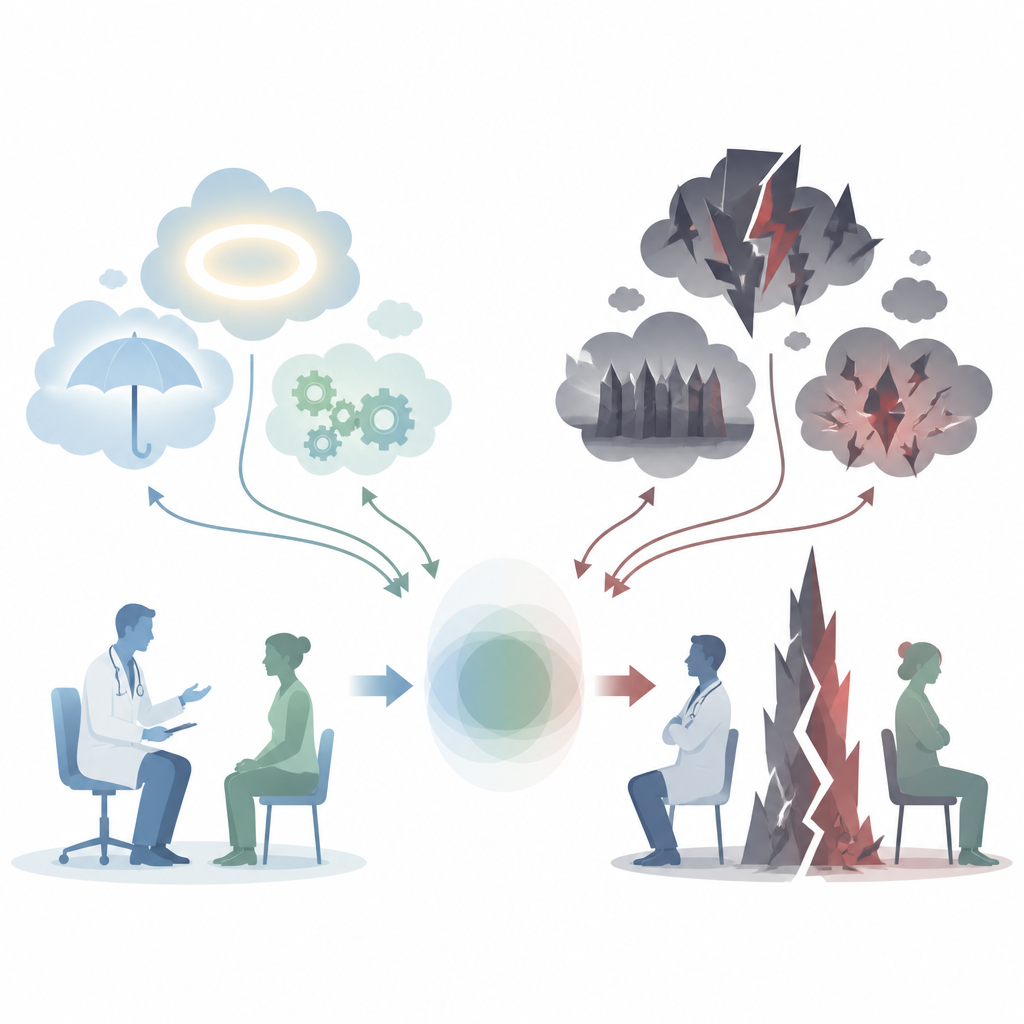
The results show that many Chinese patients view current doctor–patient relations as somewhere between acceptable and good, yet with room for improvement. Warm images such as parent–child, friend, and guardian angel capture hopes for caring authority and personal attention. Both doctors and patients strongly value positive role images like angel in white and health engineer, which blend moral kindness with technical skill. At the same time, tensions appear when patients feel rushed, unheard, or treated as mere buyers of a service. Then colder images surface, such as service provider, foe, and butcher, especially among those who report failed treatments or poor communication. Doctors mostly reject these harsh terms, but some patients adopt them after painful experiences, marking a sharp break in trust.
How culture and emotion work together
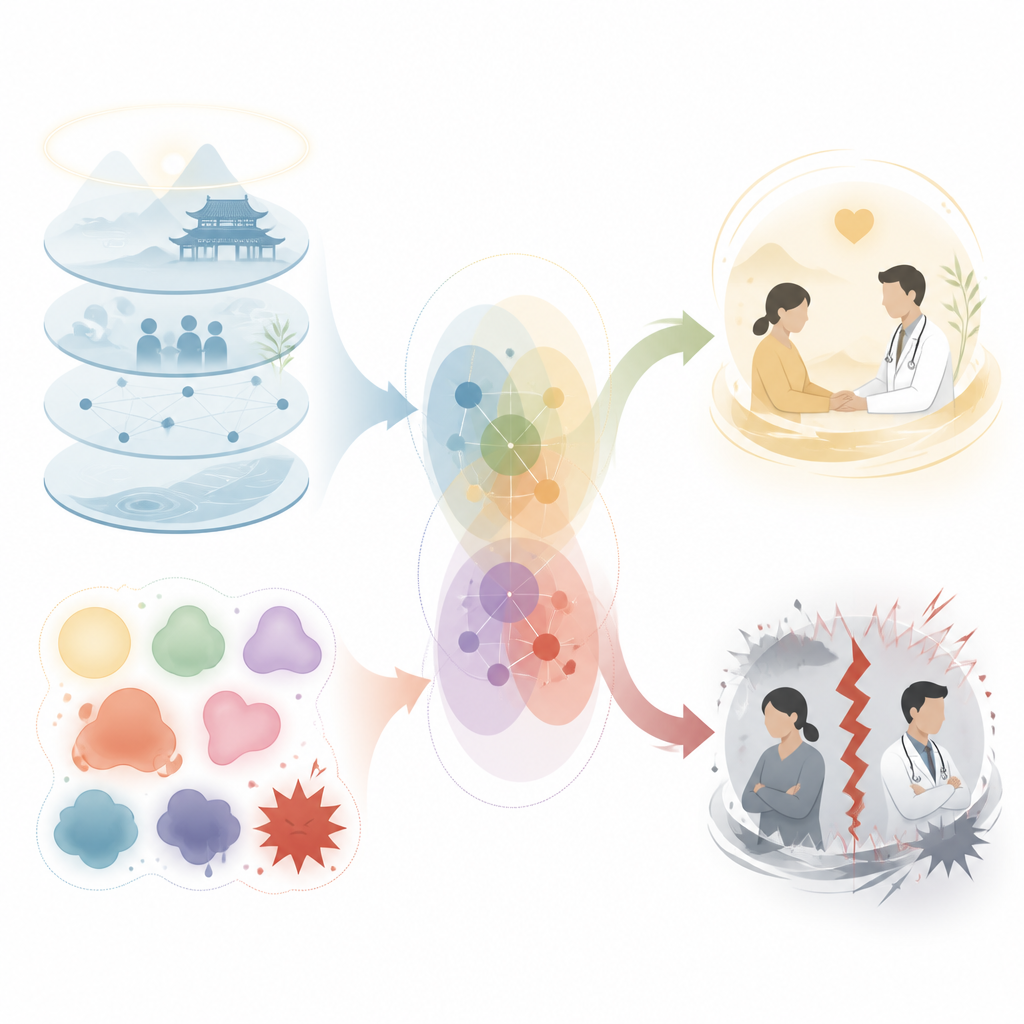
To make sense of these shifts, the authors use two ideas from language science. One describes how culture supplies shared storylines, like the long-standing ideal of the virtuous, selfless healer who also has high skill. The other explains how, during a specific visit, emotions such as fear, disappointment, or relief can mix with those storylines to create new meanings. In calm, respectful encounters, the cultural image of the angel in white or health engineer stays stable. In stressful or disappointing encounters, strong feelings can twist the same basic image into that of a foe or butcher. This two-layer view helps explain why benevolent images survive many small problems, yet can flip quickly once a patient feels deeply hurt or betrayed.
What this means for everyday care
For a layperson, the study’s conclusion is clear: the pictures we use to talk about doctors are not harmless ornaments. In China, shared cultural stories about virtuous, skilled healers encourage trust, but they also set high expectations for warmth, respect, and clear explanation. When real encounters fall short, people may swing toward darker images that see doctors as distant service sellers or even dangerous enemies, which can weaken cooperation and follow-up care. By becoming more aware of these hidden images, health workers, trainers, and policymakers can adjust how they communicate, gently reinforce positive pictures, and spot early warning signs of conflict before trust fully breaks down.
Citation: Yang, Y., Wang, W. & Xu, M. Framing medical encounters through metaphor: a cognitive and cultural account of Chinese doctor–patient discourse. Humanit Soc Sci Commun 13, 677 (2026). https://doi.org/10.1057/s41599-026-06932-7
Keywords: doctor patient relationship, medical metaphors, Chinese healthcare, trust in medicine, health communication