Clear Sky Science · en
The roles of educational awareness, socioeconomic status, rationalization of action, and government educational policy in enhancing parental investment in education
Why Parents’ Choices About Schooling Matter
All over the world, parents quietly make one of the most important investments of their lives: how much time, money, and attention to put into their children’s education. This article looks closely at how Indonesian parents make those choices, and how government education policies can either strengthen or weaken families’ efforts. By examining hundreds of parents in one city, the researchers show that what parents believe, what they can afford, and how they reason through trade-offs all shape how far their children go in school—and that smart public policies can help turn good intentions into real opportunities.
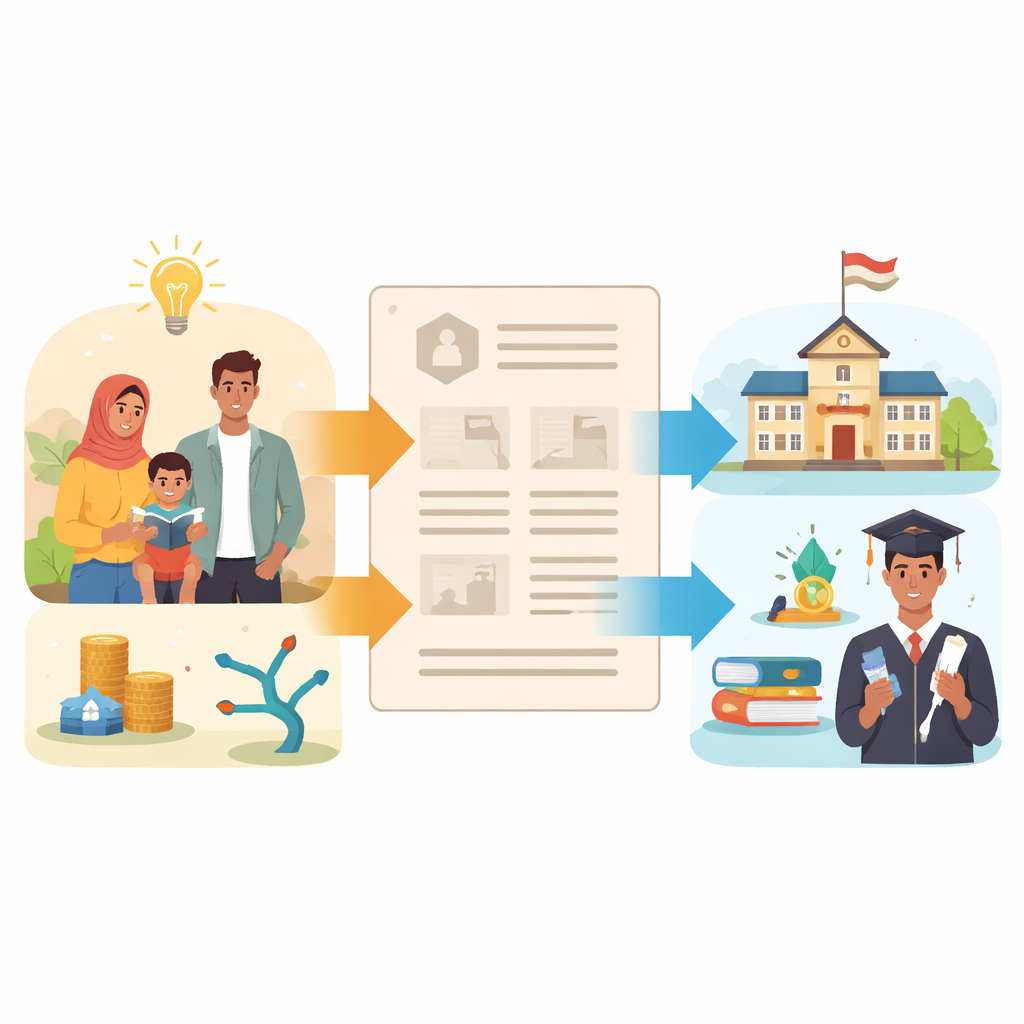
What Shapes a Family’s Education Decisions
The study focuses on three forces inside the family. First is educational awareness: how clearly parents grasp that schooling is a long-term investment, not just a short-term expense. Parents who see education as the key to a child’s future are more likely to plan ahead, follow their child’s progress, and aim for higher-quality schools. Second is socioeconomic status, captured by parents’ education and income. Families with more resources can more easily pay fees, buy books, and support extra lessons, while poorer households face harder trade-offs between daily needs and school costs. Third is rationalization of action, meaning how deliberately parents weigh risks and benefits when deciding, for example, whether a child should keep studying or start working.
Why Government Rules Still Matter
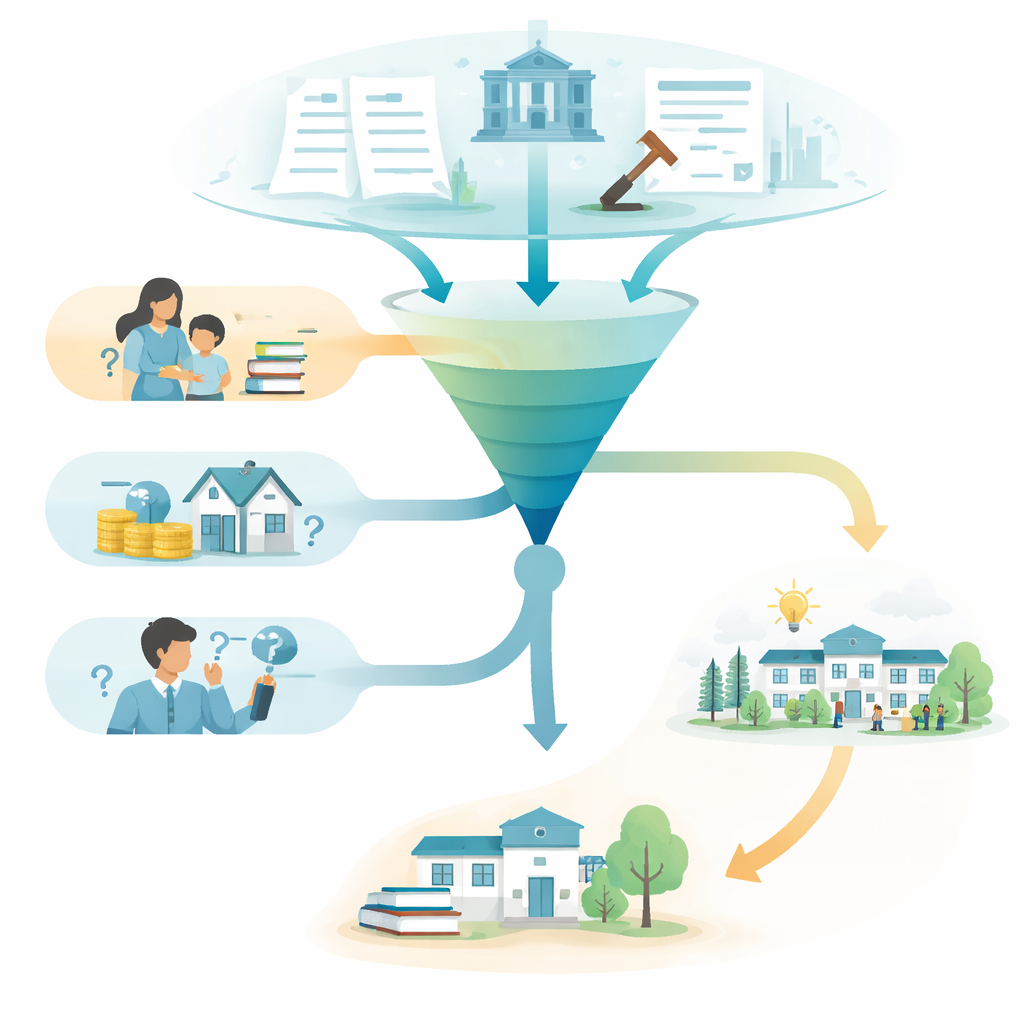
On top of family factors sits government education policy—the rules and programs that define the right to schooling, the standard of quality, and how education is delivered. In Indonesia, these policies aim not only to raise individual prospects but also to build the nation’s economic strength by developing skilled, adaptable workers. Yet uneven investment patterns and persistent dropout rates in places like Malang, East Java, suggest that policies have not fully translated into steady progress. The authors argue that policies work best when they connect to what parents are already trying to do: support their children’s potential within the limits of their finances and knowledge.
How the Study Was Carried Out
The researchers surveyed 423 parents of upper-secondary students in Malang using a detailed questionnaire. Parents rated statements about how they think and feel about schooling, their income and education levels, how they make choices, and how they perceive current education policies. The team used structural equation modeling, a statistical technique that tests how several factors interact at once, to see not only whether each family factor predicts investment in education, but also whether government policy acts as a bridge between these inner factors and the final decision to invest.
What the Results Reveal
The analysis shows that all three family forces—awareness, socioeconomic status, and rational decision-making—push parents toward investing more in their children’s education. Parents who understand the long-term payoff of schooling, have more stable incomes, and carefully consider options are more likely to keep children in school and spend on their learning. Government education policy also plays a clear mediating role. Supportive policies amplify the positive effects of family awareness and resources, helping even lower-income parents turn aspirations into action. For example, fee reductions or guarantees of access can make rational parents more willing to commit scarce funds to education because the perceived risks are lower and the potential returns more secure.
What It Means for Families and Society
In simple terms, the study concludes that children benefit most when two sides work together: parents who value education, plan carefully, and do what they can within their means; and governments that design policies making it easier and safer for families to invest in schooling. Where this partnership is strong, more young people stay in school, develop their abilities, and are better prepared for decent work and civic life. The findings suggest that improving education is not only about building schools or passing laws, but also about helping parents understand their children’s potential and giving them the financial and policy support needed to act on that understanding.
Citation: Wati, A.P., Sahid, S. The roles of educational awareness, socioeconomic status, rationalization of action, and government educational policy in enhancing parental investment in education. Humanit Soc Sci Commun 13, 574 (2026). https://doi.org/10.1057/s41599-026-06929-2
Keywords: parental investment, education policy, socioeconomic status, Indonesia schooling, family decision-making