Clear Sky Science · en
How ICT drives household carbon emissions in China: evidence on micro mechanisms, consumption pathways, and regional heterogeneity
Why your phone habits matter for the climate
From hailing a ride to stocking the pantry, many daily chores in China now run through a smartphone. This study asks a simple but important question for anyone who shops or pays by phone: do these digital conveniences quietly raise the carbon footprint of ordinary households, and if so, for whom and where are the effects strongest? 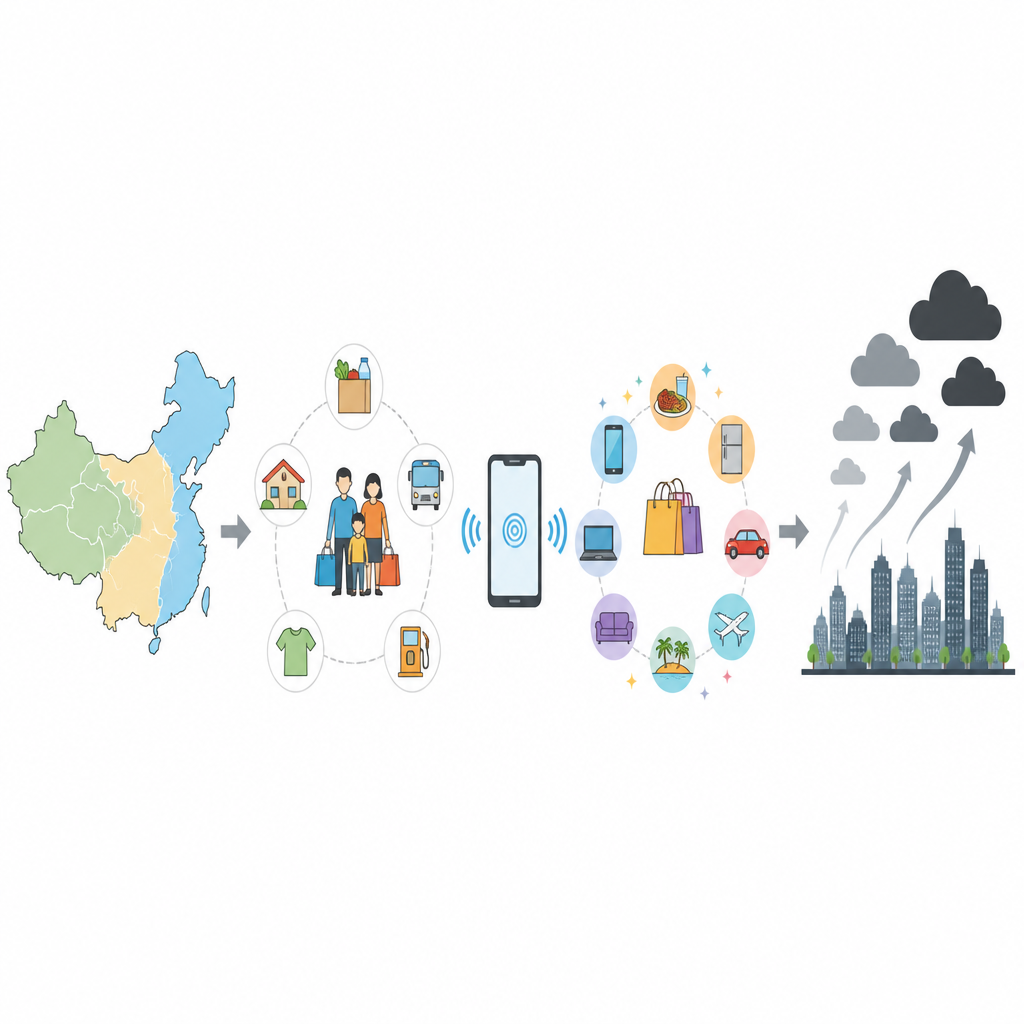
How digital payments change everyday shopping
The researchers focus on two very common digital tools: mobile payments and online shopping. Mobile payments let people pay with a quick scan or tap, while e-commerce platforms bring goods to the doorstep. Both remove the need to carry cash, reduce time spent traveling to shops, and open access to a much wider range of products. These same features can also make spending easier and more frequent, encouraging impulse buys and larger baskets of goods that all require energy to make, move, and deliver.
Following money from the store to smokestacks
To trace the climate impact of these tools, the team combined a large 2017 survey of Chinese households with an economic model that tracks how spending on food, clothing, housing, transport, health, and leisure translates into carbon emissions across different industries and provinces. This approach focuses on indirect emissions: the pollution from producing and transporting the goods and services families buy, rather than the fuel they burn directly at home. By linking household answers about payment methods, online shopping habits, income, education, age, and location to this carbon map, the authors built a picture of how digital habits ripple through the wider economy.
Who adds the most carbon through clicks and scans
The findings show that using mobile payments or online shopping at all raises a household’s indirect emissions much more than simply using them a bit more often. On average, adopting these tools increases per person emissions by roughly one third, while higher usage intensity adds about 10–15 percent. Young and better educated households are especially prone to this digital boost in consumption, likely because they adapt quickly to new apps and have more money to spend. Families that devote most of their budget to basics like food, clothing, and housing are also very sensitive: once digital tools make it easier to buy these essentials, their carbon footprint can jump sharply even without much luxury spending. 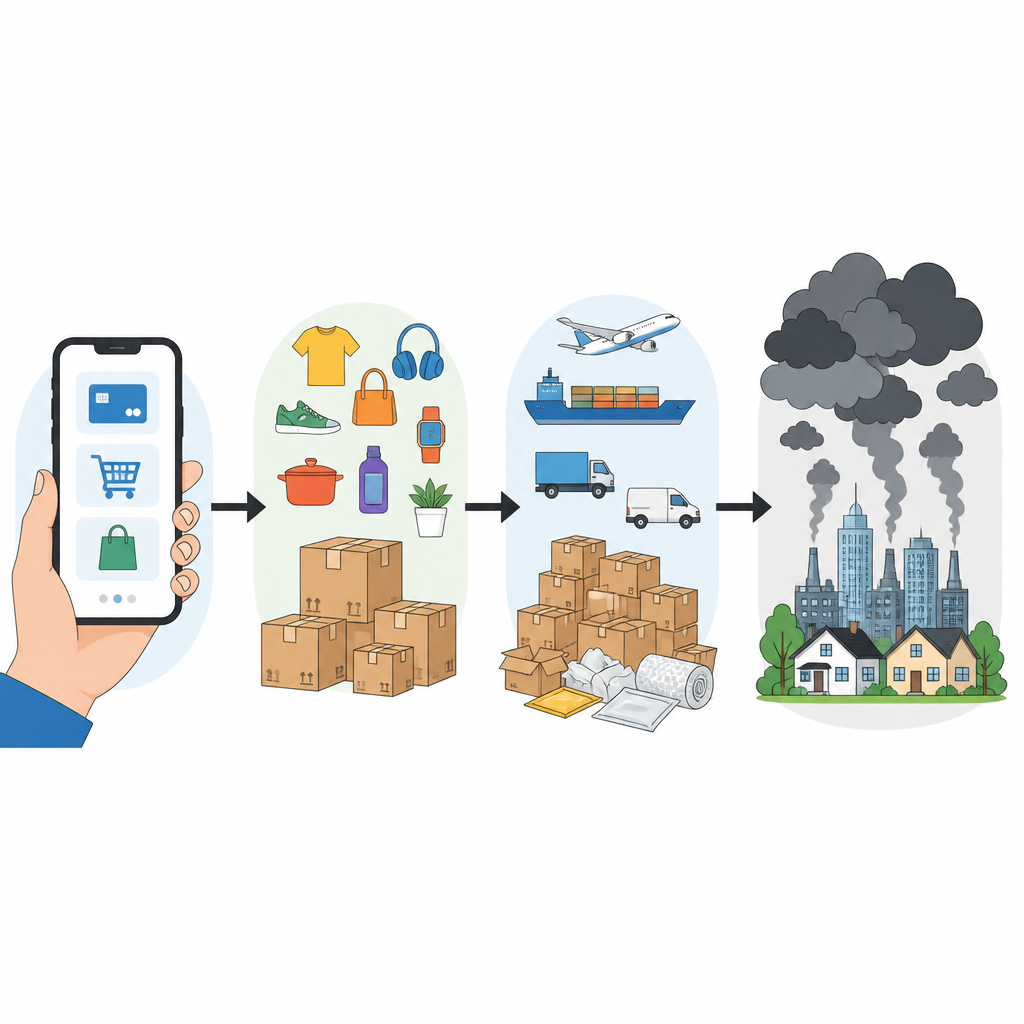
Why place and infrastructure still matter
Where people live strongly shapes these patterns. Eastern China, with its dense cities, fast delivery networks, and early adoption of services such as QR-code and face-recognition payment, shows the largest rise in household emissions linked to digital tools. Central and western regions also see increases, but the effects are smaller, partly because internet and logistics systems are less advanced and cash remains more common. Interestingly, once people are already using these tools, the extra emissions from heavier use look more similar across regions, hinting that usage styles are converging nationwide as platforms spread.
Turning smart tools into climate helpers
The authors conclude that digital technology is a double-edged sword for the climate: it can support greener choices, but in its current form it mostly makes it easier for Chinese households to consume more, driving up hidden emissions from factories, power plants, and delivery trucks. They argue that policy makers and platforms should design digital payment and shopping systems that nudge users toward low-carbon options, especially in fast-growing eastern cities, among younger and well-educated users, and in households heavily focused on basic goods. If paired with cleaner production and smarter rules, the same phones that now speed up carbon-intensive consumption could become powerful tools for everyday low-carbon living.
Citation: Zhou, J., Wu, R. & Wang, S. How ICT drives household carbon emissions in China: evidence on micro mechanisms, consumption pathways, and regional heterogeneity. Humanit Soc Sci Commun 13, 651 (2026). https://doi.org/10.1057/s41599-026-06906-9
Keywords: household carbon emissions, mobile payments, online shopping, digital consumption, China climate