Clear Sky Science · en
Using anger as a mediating role to examine how compulsory citizenship behavior relates to voice behavior and work–family conflict
When Helping at Work Stops Feeling Voluntary
Many companies encourage employees to go the extra mile—staying late, joining charity drives, or helping colleagues after hours. But what happens when these supposedly voluntary efforts start to feel forced? This study looks at how being pushed into extra work can spark anger, change how people speak up at work, and quietly strain family life at home.
Extra Favors That Don’t Feel Like a Choice
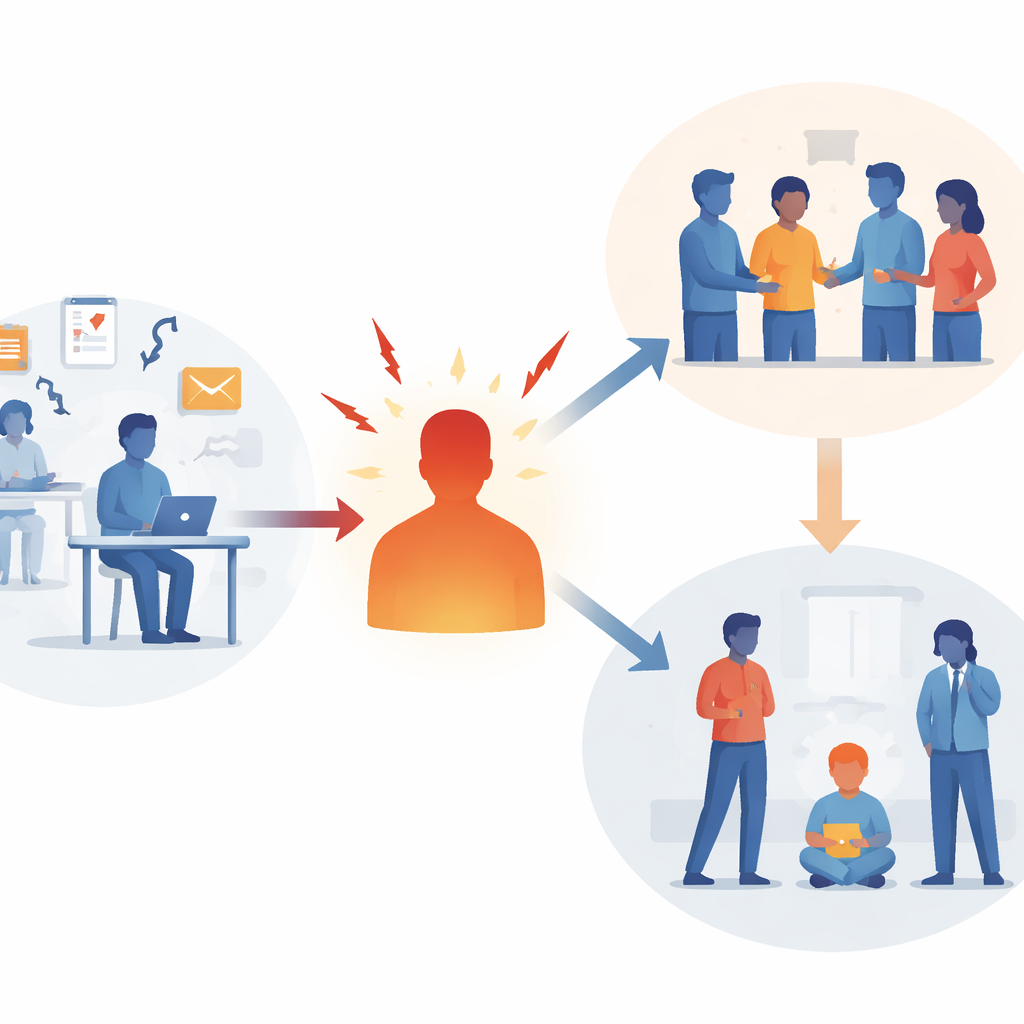
The authors focus on what they call “compulsory citizenship behavior,” meaning situations where workers feel they must take on tasks beyond their job description—such as mandatory beach cleanups or unpaid overtime. While voluntary helping can boost morale and company performance, being pressured into it is different. It eats up time and energy, can feel unfair, and may clash with family responsibilities. The study asks two main questions: do employees pushed into these extra duties become more likely to voice concerns at work, and does this pressure spill over into conflicts at home between workers and their spouses?
Anger as the Hidden Middle Link
To explain what happens inside people, the researchers draw on psychological ideas about how daily events create emotional “aftershocks.” When organizations suddenly ask employees to handle extra tasks, workers may feel their needs or expectations have been ignored. This can lead to bursts of anger—a short-lived but powerful emotion that signals blocked goals and unfair treatment. The authors propose that this anger is the key middle link between forced extra work, the decision to speak up with suggestions or complaints on the job, and rising tension in family relationships. In other words, it is not just the extra duties themselves that matter, but how resentful they make people feel.
A Closer Look at Workers and Their Spouses
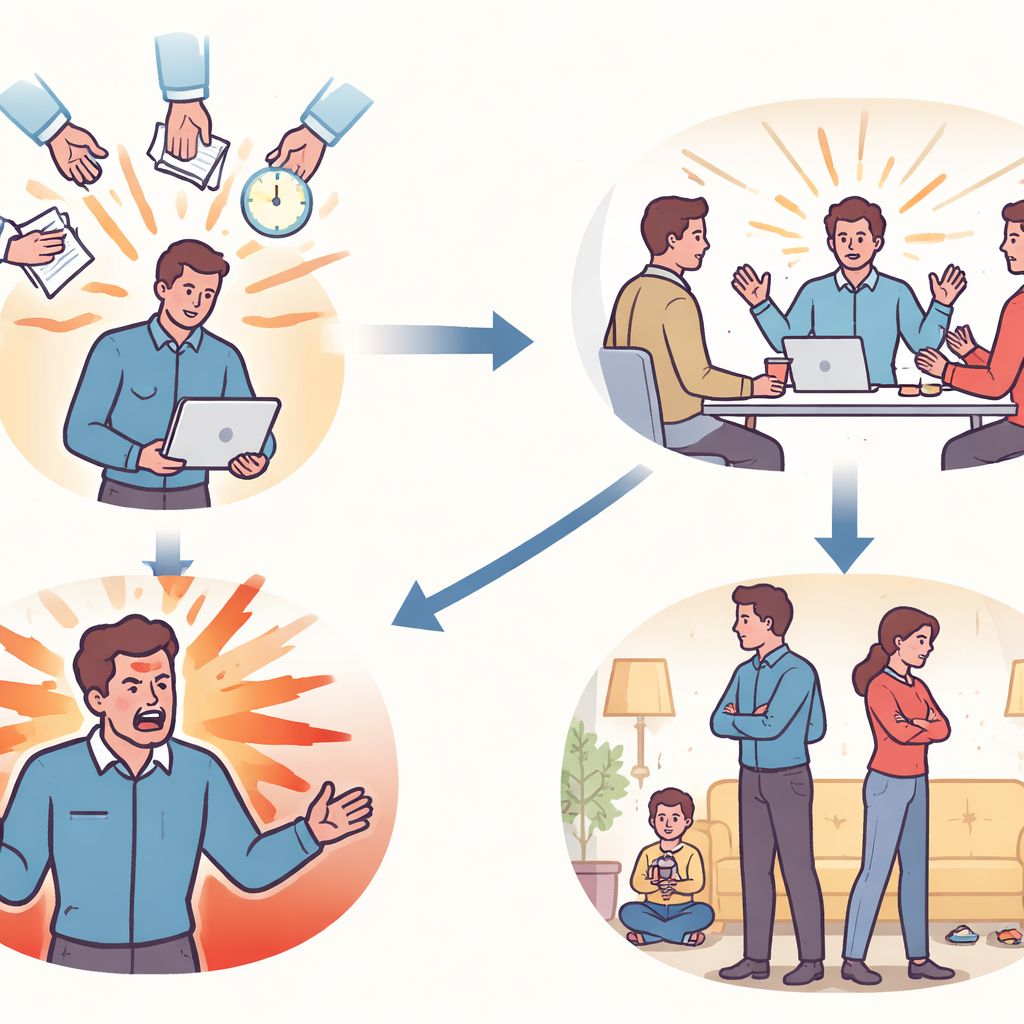
The study surveyed 450 married employees at a large manufacturing company in Taiwan, along with their spouses. Over three months, employees first reported how often they felt pressured to perform extra tasks, then how angry they felt at work, and finally how frequently they voiced ideas or concerns to supervisors. At the last step, spouses reported how much their partner’s job demands were interfering with family life, such as bringing stress home or having less time and energy for childcare. This time‑staggered design allowed the researchers to trace how workplace pressure cascaded into emotion, behavior at work, and strain at home.
From Pressure to Speaking Up and Family Strain
The results paint a clear picture. Employees who felt more compelled to do extra work also reported higher levels of anger. That anger was strongly linked to two outcomes. First, it pushed employees to engage in more “voice” behavior—sharing suggestions, criticisms, or warnings intended to improve the organization. In this context, anger did not just lead to lashing out; it often fueled constructive attempts to change how things were run. Second, the same anger crossed over into home life. Spouses of highly pressured employees reported greater work–family conflict, saying that job stress and extra duties were undermining time, energy, and patience at home. Statistical tests confirmed that anger was a key pathway connecting compulsory extra work to both increased speaking up and heightened family strain.
What This Means for Everyday Workers and Families
For readers outside the research world, the message is straightforward: when employers turn “helping” into a demand, employees are likely to get angry, and that anger does not stay at the office. It can push people to speak out in hopes of fixing unfair expectations, but it can also drain their emotional reserves, leaving less patience and warmth for family members. The study suggests that organizations should be careful not to disguise pressure as generosity, and should listen when frustrated workers raise concerns. For families, it highlights that tensions over time and energy may have roots in how workplaces treat their employees—not just in individual choices at home.
Citation: Liang, HL., Hsieh, CL. Using anger as a mediating role to examine how compulsory citizenship behavior relates to voice behavior and work–family conflict. Humanit Soc Sci Commun 13, 609 (2026). https://doi.org/10.1057/s41599-026-06904-x
Keywords: workplace pressure, employee anger, work–family conflict, speaking up at work, extra-role duties