Clear Sky Science · en
Anaerobic (gut) chambers: visible invisibles and the materiality of transparency
Seeing Inside Without Cutting Open
Modern medicine often promises to let us "see inside" the body, from X‑rays to glowing 3D scans. This article asks what that promise really means by following a less familiar but very common lab device: the anaerobic (or “gut”) chamber. By watching how scientists use this clear plastic box to imitate the oxygen‑free world of the colon, the author shows that our quest for total transparency about the body’s interior may actually flatten, distort, and even erase some of what makes living bodies alive.
A Clear Box That Imitates the Gut
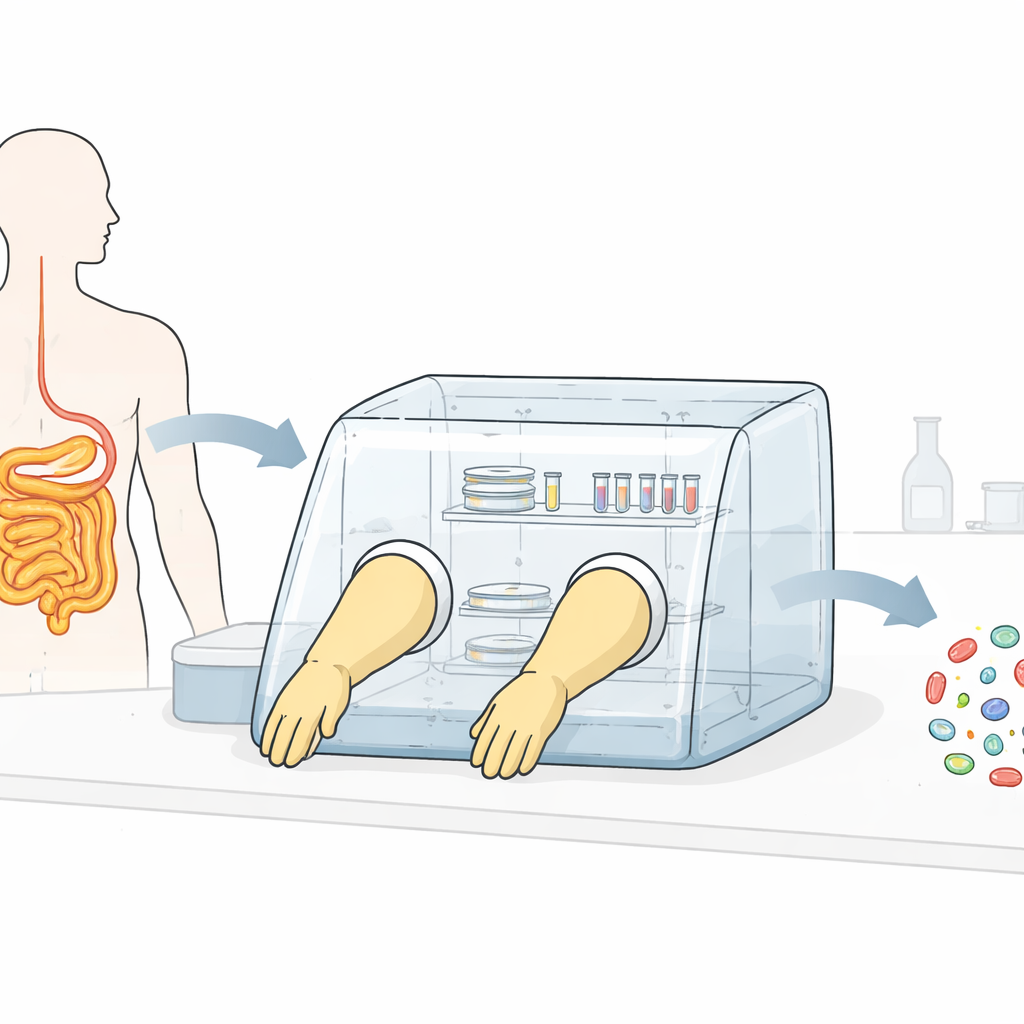
The anaerobic chamber looks like a giant see‑through belly made of flexible vinyl. Its walls bulge outward like an inflated stomach, filled with shelves, test tubes, and red agar plates where bacteria grow. Thick rubber gloves extend inward from the wall so researchers can reach “inside” without letting outside air in. The chamber is carefully tuned to match the inner environment of parts of the body such as the colon, mouth, or vagina: it is warm, at about body temperature, and its air is stripped of oxygen so that delicate microbes—like those that cause or prevent intestinal disease—can survive. In this way, the chamber brings an invisible inner atmosphere out into the open as a space scientists can work in, while still keeping that space sealed off from everyday air.
When Transparency Distorts Instead of Revealing
Spending months seated across from the chamber, the author began to notice that its transparent walls do not simply open a window onto the gut; they twist and remake what can be seen. The flexible plastic bends and warps the view, filling it with reflections from the room. When a bottle broke inside during a gas change, liquid and glass coated the inner surfaces, yet from the outside everything still looked dry. Watching the technician work, the author had to choose between looking at the plastic or trying to look through it, guessing what was really happening inside. The very material that seems to disappear—the clear vinyl—turns out to be an active surface that hides as much as it reveals. The invisible gas mixture, the microbes, and even traces of oxygen clinging to a paper towel can only be inferred indirectly, never seen head‑on.
Touching Without Ever Really Being Inside
The gloves of the chamber dramatize how modern tools reach for the body’s interior while staying firmly outside. The technician’s arms slide into thick rubber sleeves that seal tightly at the ports; his skin never touches the warm gas he is supposedly “inside.” Sweat builds up, the gloves grow slippery, and precise tasks like pipetting become awkward. The operator feels not the inner environment itself, but a mixture of heat, moisture, and resistance filtered through rubber. The chamber thus stages a strange in‑between state: the person appears to be working inside the gut‑like space, yet remains physically and sensorially cut off from it. What we get is a surface‑level contact that points to the limits of access—an interior that can only be known through traces and external signs.
Machines That Mimic Movement but Not Life
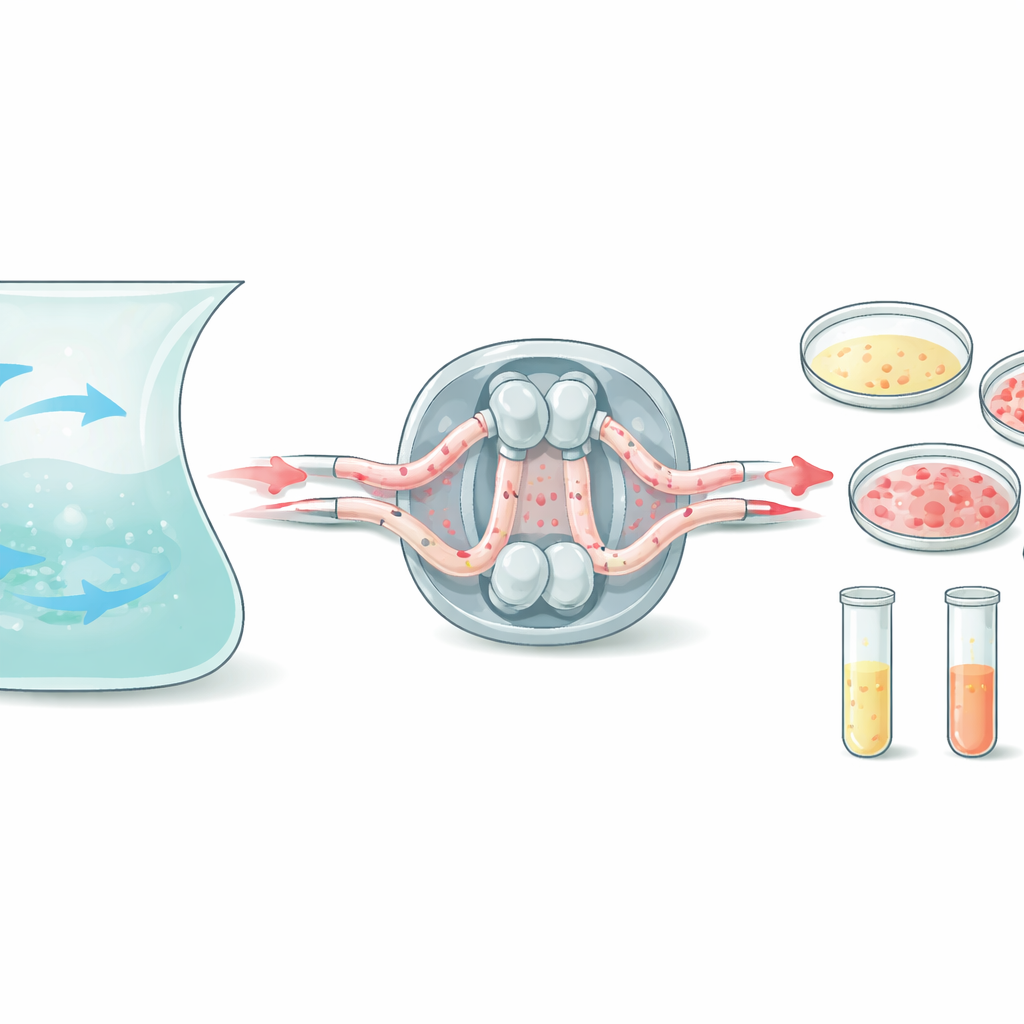
In a special version of the chamber, a mechanical peristaltic pump adds another layer to this imitation of the gut. Tubes of liquid nutrients and bacteria are squeezed in a rhythmic, wave‑like motion, echoing the natural contractions that move food along our intestines. By continuously feeding and flushing these cultures, the system can keep certain bacteria alive “indefinitely.” Yet, as the technician notes, this is not how actual bodies work. Real intestines are influenced by immune reactions, hormones, emotions, social habits, and daily routines. Anxiety, medication, work shifts, and culture‑bound eating patterns all shape how the gut moves. The pump abstracts away these messy, lived dimensions, turning a complex relationship between person, microbes, and world into a clean, regular flow through plastic tubing.
Why Surfaces Are Not the Whole Story
Across these scenes, the paper argues that the modern desire for transparency in medicine rests on a powerful but misleading idea: that if we can make the body’s interior optically clear—if we can “see through” skin and tissue—we will gain full understanding and control. By treating the chamber as an ethnographic subject, the author shows that transparency is itself a crafted effect, produced by plastic walls, gas mixtures, and instruments that translate depth into surface. These tools give us sharp images of plates, tubes, and tissues, but they risk sidelining what cannot be neatly pictured: living dynamics, subjective experience, and the social and emotional forces that shape bodily processes. The article concludes that our pursuit of a perfectly visible interior actually creates “visible invisibles”—convincing images that seem to reveal the gut’s secrets while, in fact, concealing how much remains unseen and unseeable.
Citation: Fernandez Pello, M. Anaerobic (gut) chambers: visible invisibles and the materiality of transparency. Humanit Soc Sci Commun 13, 607 (2026). https://doi.org/10.1057/s41599-026-06890-0
Keywords: anaerobic chamber, gut microbiome, medical gaze, transparency, sensory ethnography