Clear Sky Science · en
The paradox of time experience in the digital age and its roots
Why Our Days Feel So Rushed
Many people today feel that time is slipping through their fingers. Phones buzz nonstop, work follows us home, and even our rest is interrupted by glowing screens. This article explores why life in the digital age so often feels both too fast and strangely empty. Drawing on the history of philosophy and modern social theory, the authors argue that new technologies have subtly changed what time means for us, creating deep tensions in how we live, work, and make sense of our days.
How Thinkers Have Understood Time and Mind
To understand the present, the article first looks back at how major Western philosophers have thought about time and consciousness. From Aristotle and Augustine to Kant, Husserl, Bergson, and Heidegger, a common thread runs through their work: time is not just something “out there” like a ticking clock, but closely tied to how our minds experience the world. Some saw time as a stretching of the mind between past, present, and future; others treated it as the basic form through which we perceive and organize our experiences. In this long tradition, time and consciousness are two sides of the same coin, shaping how we remember, expect, and act.
When Clock Time Took Over
Modern science shifted this picture. With thinkers like Newton and the rise of precise measurement, time began to look like an external container through which objects move—a neutral background that can be divided, counted, and controlled. This “clock time” helped power industry, transport, and technology, but it also pushed aside inner, lived time. Later philosophers tried to bring the human subject back in, arguing that time still gains meaning only through our experience. Yet in everyday life, the clock increasingly ruled work schedules, factory shifts, and social routines, preparing the ground for today’s digital pressures.
Three Everyday Time Tangles in the Digital Era
Building on the theory of “social acceleration,” the authors describe three paradoxes that define time in the digital age. First is the clash between ephemerality and permanence: digital systems can store information forever, yet online trends, messages, and images vanish from attention almost instantly. Second is the tension between acceleration and scarcity: faster tools and networks promise to save time, but because they also multiply tasks and opportunities, most people feel they have less time than ever. Third is the pairing of busyness and meaninglessness: days packed with activity, notifications, and obligations do not necessarily yield a stronger sense of purpose or satisfaction. Together, these paradoxes make people feel rushed, exhausted, and strangely hollow, even as technology seems more powerful and convenient than ever.
When Social Time Overpowers Personal Time
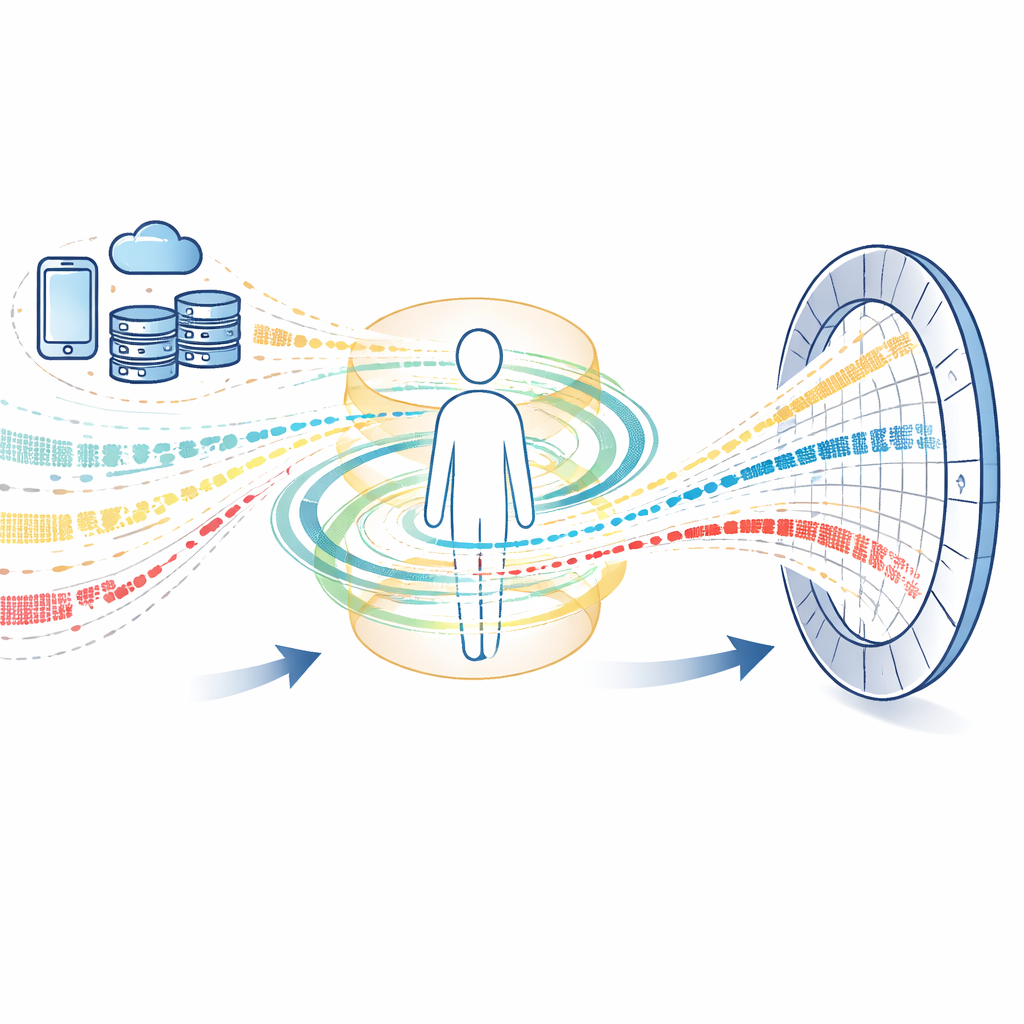
To explain the roots of these paradoxes, the article introduces a sharp divide between “individual time” and “social time.” Individual time includes our bodily rhythms—sleep, hunger, energy—as well as our psychological sense of duration, such as how quickly hours pass when we are bored or absorbed. Social time, by contrast, is the shared schedule that organizes modern life: work hours, deadlines, platforms that never sleep, and cycles of production and consumption. In earlier eras, personal and social time were more closely aligned. In the industrial and especially the digital age, social time has hardened into a powerful system that dictates when we work, learn, communicate, and even rest. Individuals increasingly adjust their bodies and feelings to fit this external tempo, sacrificing their own pace to keep up.
A Vicious Circle of Speed and Alienation
The authors argue that technology intensifies this split. Tools meant to save time—email, instant messaging, automation, smart devices—also generate more tasks, more expectations, and more ways to be constantly “on.” As the volume of possible experiences and demands grows faster than our ability to handle them, people race to close the gap between their short lives and the seemingly endless stream of social events. But this race is unwinnable. The more we accelerate to keep up, the more individual time becomes subordinated to social time, deepening feelings of exhaustion and loss of control. The result is a loop of temporal alienation in which technology, speed, and inner emptiness reinforce one another.

Finding Our Own Time Again
In simple terms, the article concludes that our time troubles are not just about being busy; they stem from a deep break between time as we live it and time as society organizes it. Digital technologies, by speeding and stretching social time, have weakened the intimate link between time and consciousness described by earlier thinkers. Escaping the paradoxes of ephemerality versus permanence, acceleration versus scarcity, and busyness versus meaninglessness will require more than better time-management tips. It will mean rebuilding a healthier relationship between shared schedules and personal rhythms, so that time once again serves human experience rather than the other way around.
Citation: Ran, L., Xie, J. The paradox of time experience in the digital age and its roots. Humanit Soc Sci Commun 13, 555 (2026). https://doi.org/10.1057/s41599-026-06889-7
Keywords: digital age, time perception, social acceleration, technology and society, temporal alienation