Clear Sky Science · en
Identifying key psychological symptoms by a higher-order network-based approach
Why Many Symptoms Matter at Once
Mental health problems like depression and post-traumatic stress disorder rarely show up as just one complaint. People often struggle with clusters of feelings—low mood, exhaustion, poor sleep, intrusive memories—that appear together and feed into one another. This study asks a simple but important question: are we missing something by looking only at pairs of symptoms, instead of the full tangle of many symptoms acting at once? By borrowing ideas from network science, the authors develop a new way to map how several symptoms can co‑emerge, with the hope of finding better targets for treatment.
From Symptom Checklists to Connection Maps
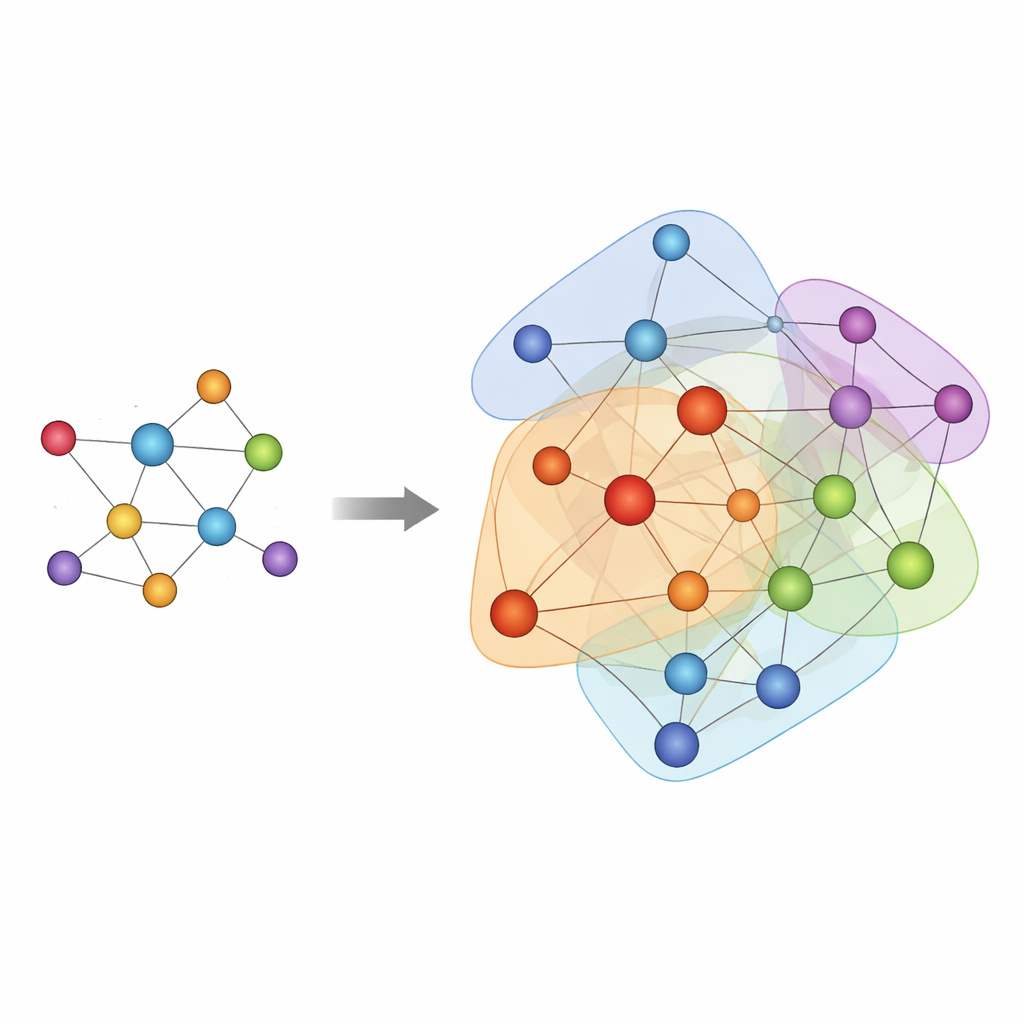
Modern mental health research increasingly treats symptoms as parts of an interacting system rather than as passive signs of an underlying disease. In this view, each symptom—such as hopelessness, poor sleep, or flashbacks—is a point in a network, and lines between points show how strongly the symptoms tend to occur together. Traditionally, these maps only use simple pairings: each line links two symptoms. The new work keeps this basic picture but asks: what if three, four, or more symptoms reliably show up together in the same people? To study this, the authors move beyond simple lines and allow “hyperedges,” connections that bind several symptoms at once.
Three Large Studies, One Common Pattern
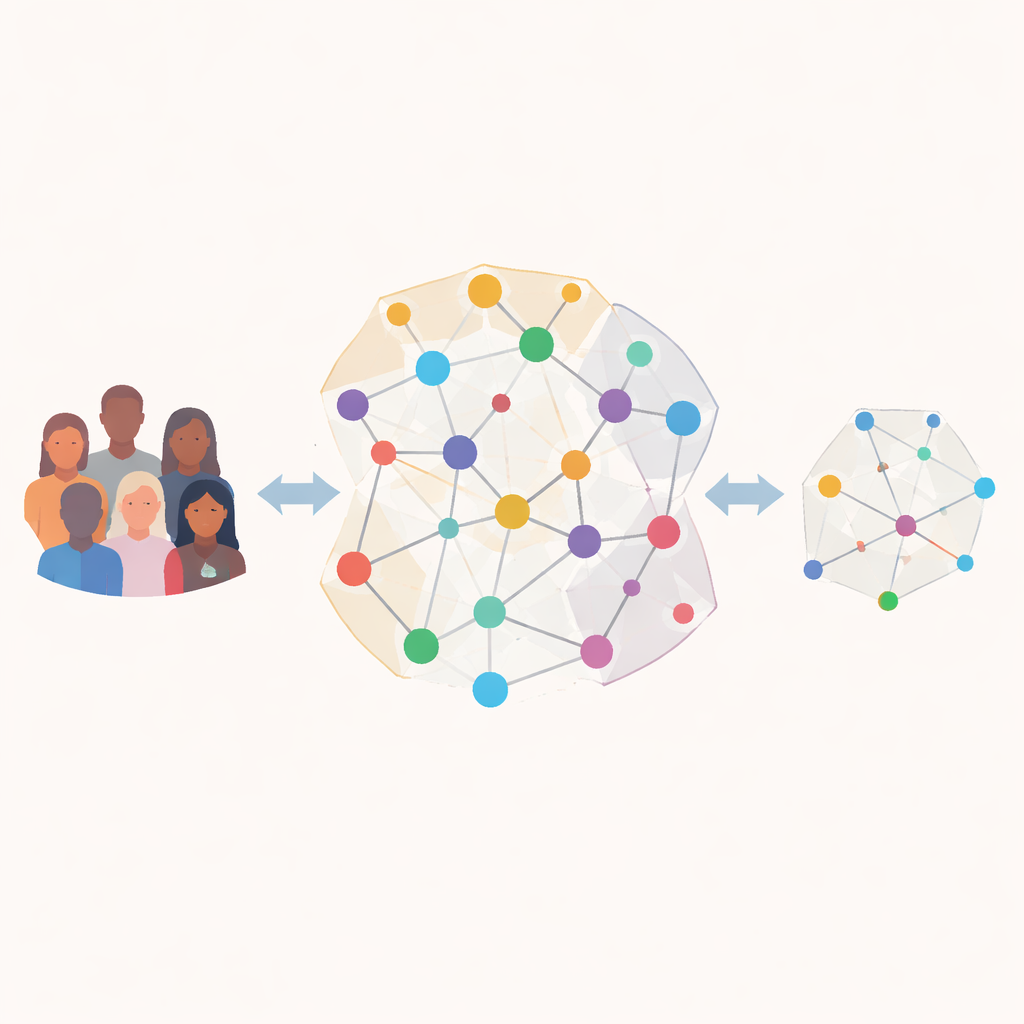
To test their idea, the researchers used data from three large surveys. One followed middle‑aged and older adults in China and measured depression symptoms. A second, from the United States, recorded depression symptoms in adults of all ages. The third focused on American military veterans and measured symptoms of post‑traumatic stress. In each case, participants filled out standard questionnaires, and the team turned these scores into either classic pairwise networks or their new higher‑order networks. They then examined how important each symptom appeared in these maps and how stable those conclusions were when the data were repeatedly re‑sampled.
Finding the Most Influential Symptoms
Across all three datasets and both types of networks, one measure stood out: a symptom’s “strength,” meaning how strongly and widely it was connected to others. When the team randomly removed portions of the data and rebuilt the networks, this strength measure changed the least, suggesting it is a dependable way to flag especially influential symptoms. Other popular measures that rely on counting shortest paths through the network were noticeably less stable. Importantly, the symptoms with the highest strength were largely the same whether the researchers used simple pairwise connections or the new higher‑order connections. Feeling depressed or low mood emerged as central in the depression surveys, and trauma‑related emotions were central in the veterans’ survey.
Zooming In on Symptom Clusters
Where the higher‑order maps revealed something new was in the way symptom clusters behaved. By allowing connections that tie together three or more symptoms, the method could highlight particular groupings—such as low mood, lack of interest, low energy, and feelings of worthlessness—that tended to appear together and occupy strategic positions in the network. These co‑emerging sets, called key clusters in plain language, may act as hinges that hold different parts of a disorder together. The study also showed that the pattern of symptom importance shifts between people with and without diagnosed problems. For example, in those with depression, difficulty getting started and suicidal thoughts carried much more weight than in those without depression, while veterans with post‑traumatic stress differed from their peers in which trauma‑related symptoms were most central.
What This Means for Care
The work suggests that focusing on how groups of symptoms rise and fall together may offer a richer picture than studying only symptom pairs. Because the same symptoms tended to be central in both simple and higher‑order networks, clinicians can be more confident that features like low mood or persistent trauma‑related emotions are durable targets for help. At the same time, the higher‑order maps point to specific clusters whose disruption might weaken the entire web of distress. While the study relies on one‑time snapshots rather than changes over time, it opens the door to more personalized maps of mental suffering, where treatments are chosen not just for single symptoms but for the interconnected bundles that keep people stuck.
Citation: Deng, L., Gu, W., Wang, Y. et al. Identifying key psychological symptoms by a higher-order network-based approach. Humanit Soc Sci Commun 13, 533 (2026). https://doi.org/10.1057/s41599-026-06887-9
Keywords: mental health symptoms, network analysis, depression, post-traumatic stress, symptom clusters