Clear Sky Science · en
The factors that influence online review quality: the example of new energy vehicle reviews
Why Online Car Comments Matter
When people in China shop for a new energy vehicle, they rarely walk into a showroom blind. Most first scroll through pages of online reviews to see what other drivers think. Yet not every comment is equally useful: some are detailed and honest, others are thin, emotional, or even misleading. This study asks a simple question with big consequences for both car buyers and car makers: what makes an online review truly high quality, and which signals can help readers quickly spot the most valuable opinions?
Looking for the Best Voices in a Crowd
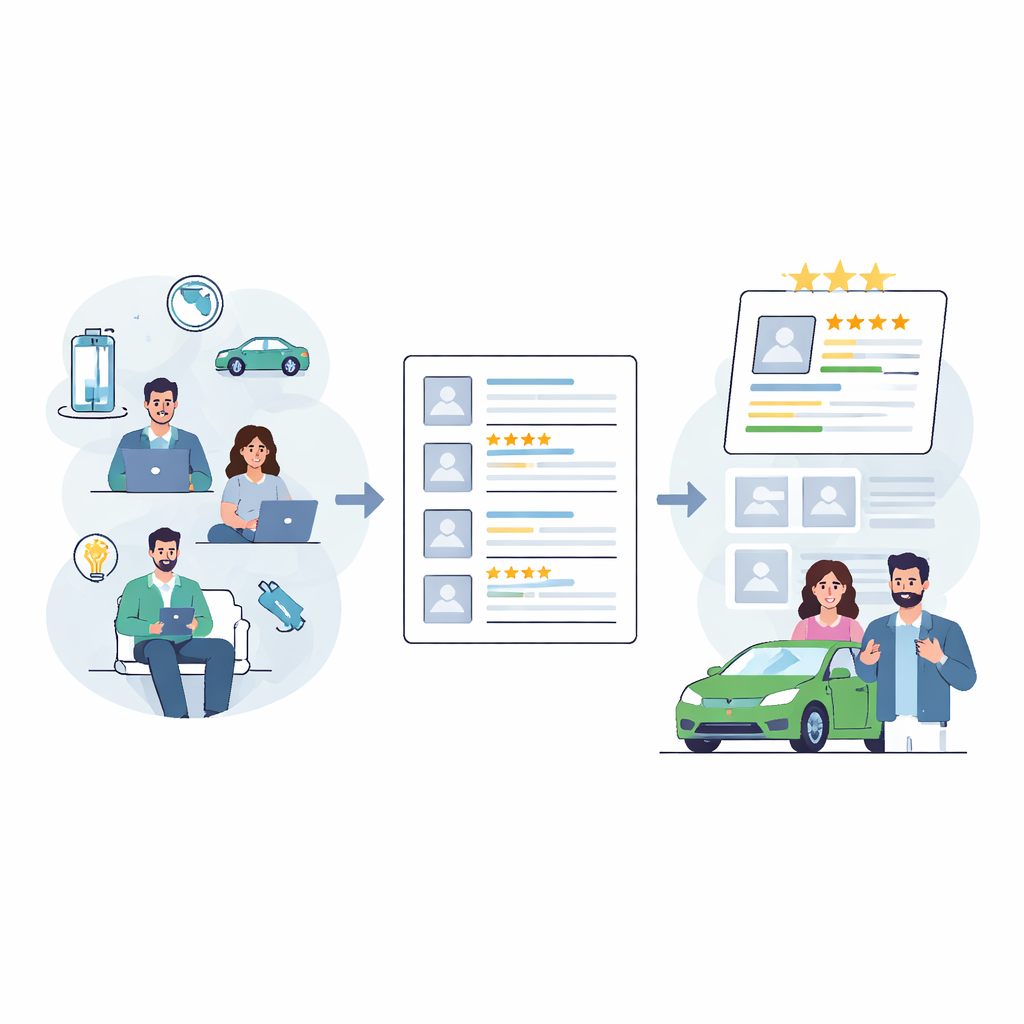
To answer this, the researchers collected tens of thousands of reviews of new energy vehicles from China’s largest automotive website. They built a special dataset and then designed a scoring system that rates the quality of each review. Instead of relying only on how many people clicked a “helpful” button, they looked inside the reviews themselves: how long the title is, whether photos are attached, how positive or negative the language is, how easy the text is to read, how consistent the ratings are with others, and how detailed the discussion of performance is. Using a mathematical weighting method, they calculated how much each of these elements contributes to overall review quality.
What Makes a Strong Review
The analysis shows that both simple statistics and deeper language features matter. Reviews that include more photos carry especially high weight in the quality score, suggesting that pictures give readers vivid evidence that text alone cannot. Clear, readable sentences and rich, meaningful descriptions of driving experience also help. Balanced emotion—both positive and negative feelings expressed with specific details—improves perceived usefulness. When many reviewers give similar scores on the same aspects of a car, their comments tend to be seen as more reliable, boosting quality further.
How Driver Experience and Timing Shape Comments
The researchers then examined which real-world factors around a review are linked to these quality scores. They focused on five: how far the car has been driven when the review is written (driving mileage), how long after purchase the review is posted (time interval), how many purposes the buyer had in mind for the car (such as commuting or family trips), whether the reviewer is a site-certified user, and how experienced the reviewer is according to platform badges. They found that reviews written after a longer time gap and those that discuss several everyday uses of the car tend to be higher quality. This fits with psychological theories: after living with a vehicle for a while, owners can step back and offer a more rounded, thoughtful evaluation that speaks to more readers.
When More Miles Don’t Help
One of the most striking results is that higher driving mileage is associated with lower review quality. As electric cars age and rack up kilometers, owners become more focused on practical headaches, especially battery range, charging convenience, and long-term reliability. These worries often produce sharper, more negative comments that, while important, may be less balanced and less informative overall. In contrast, the status of being a “certified user” on the site does not reliably signal better reviews at all. Simply put, a special badge next to a username does not guarantee that the content is detailed, fair, or well written. By contrast, reviewers recognized by the platform for consistently strong contributions—those whose posts are tagged as especially insightful—do tend to produce much higher quality reviews.

What This Means for Shoppers and Car Makers
For everyday car shoppers, these findings suggest some practical shortcuts. Reviews with photos, clear language, and discussions of several real-life uses are more likely to be worth your time, especially if they come from reviewers with a track record of strong contributions rather than just a certified status. Paying attention to when a review was written and how much the car has been driven can also help: moderate experience and some distance from the purchase date may yield the most balanced insights, while very high mileage reviews may skew toward frustration with technical limits. For car makers and review platforms, the study offers a way to automatically surface better reviews, refine recommendation algorithms, and listen more closely to the patterns in user feedback—ultimately improving vehicles, services, and the buying experience itself.
Citation: Wang, X., Gao, Y., Fan, L. et al. The factors that influence online review quality: the example of new energy vehicle reviews. Humanit Soc Sci Commun 13, 572 (2026). https://doi.org/10.1057/s41599-026-06884-y
Keywords: online reviews, electric vehicles, review quality, consumer decisions, sentiment analysis