Clear Sky Science · en
Entangled political struggles: the Anhui Consultative Council and the Anhui governor in the late Qing dynasty
Why this story of old China still matters
In the final years of China’s last dynasty, local politics in one province became a testing ground for something new: sharing power between rulers and the ruled. This article looks at how a provincial council in Anhui tried to rein in an autocratic governor, and what their tangled relationship reveals about China’s first, fragile steps toward modern representative politics. For readers today, it offers a window into how institutions meant to check power can both open space for debate and still be tightly controlled from above.
A new meeting hall for old powers
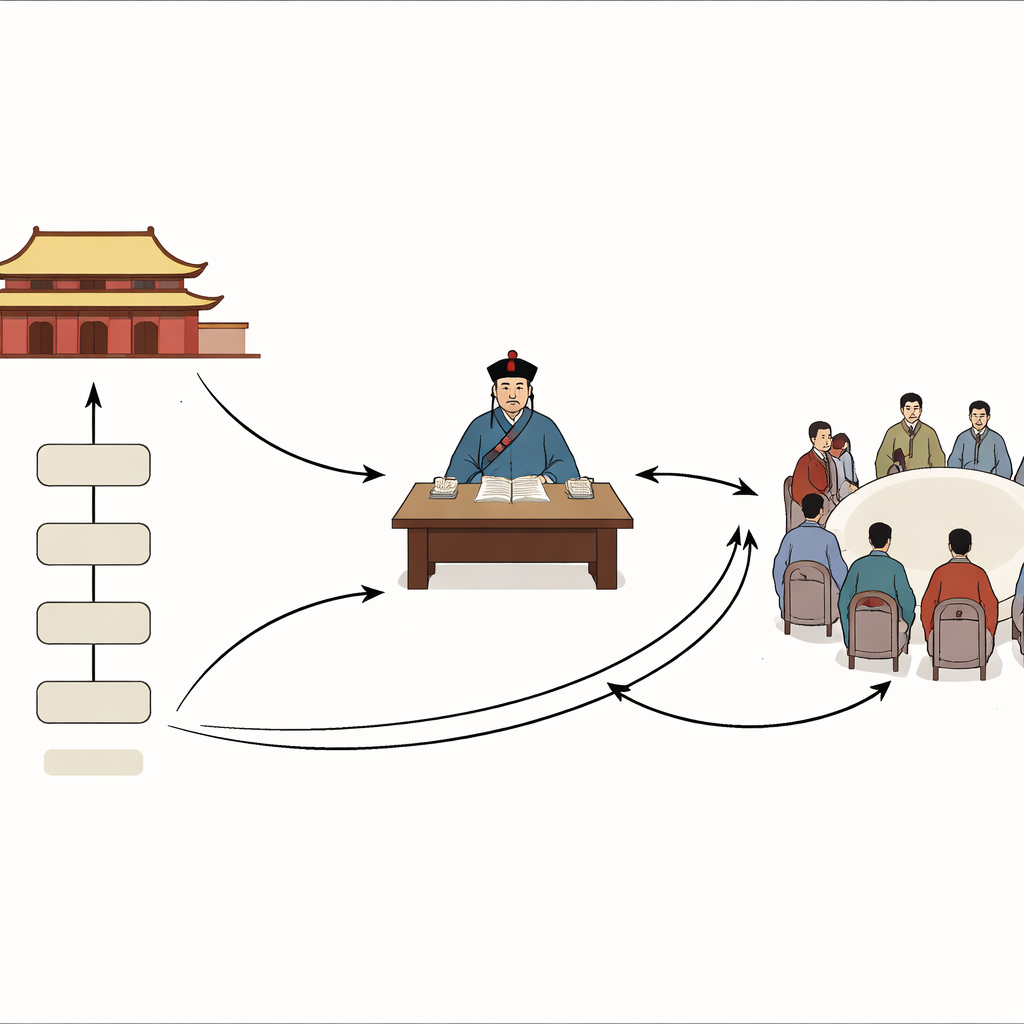
In 1906 the Qing court, facing internal crisis and foreign pressure, launched constitutional reforms and ordered provinces to set up consultative councils. These bodies were supposed to collect local opinion, discuss budgets and public projects, and train members for a future national parliament. In Anhui, many council members were traditional scholars from rural backgrounds who suddenly gained a new political platform. On paper, they could review spending, question officials, and submit proposals. In practice, the governor still held the final say over what became public policy, and the central government designed the rules to keep his authority intact.
Rules that look fair but keep control
By examining laws, decrees, and council records, the article shows how the system was stacked. The official regulations described the council as a channel for “public opinion,” but gave the governor the power to approve budgets, decide what information could be disclosed, and even suspend the council if it “overstepped.” All proposals had to pass through his office, with no time limit for response. In Anhui, Governor Zhu Jiabao used these tools skillfully: he delayed documents, labeled key financial data as “confidential,” and created a separate conference of officials to filter and weaken the council’s suggestions. The result was a formally consultative system whose levers were still firmly in bureaucratic hands.

Everyday battles over money and taxes
Despite the stacked deck, Anhui’s council members did not simply accept their role as rubber stamps. They drafted investigation rules to gather information on schools, industry, local revenues, and self-government efforts, trying to tie proposals to solid evidence. Zhu pushed back, blocking access to documents and narrowing what could be discussed. Budget debates became a centerpiece of struggle: the council insisted on its right to review the full provincial budget, while Zhu delayed and submitted an incomplete, disordered plan at the last minute, making real scrutiny impossible. On another front, when he sought to introduce new taxes and extra levies to fund local administration, the council argued that such burdens would confuse accounts and hurt ordinary people unless the division between national and local revenues was clearly set. Here they forced a rare retreat, persuading Zhu to postpone the scheme and follow proper procedures.
From cautious reformers to reluctant rebels
The council’s importance went beyond what happened inside the meeting room. Anhui’s representatives joined a wider movement across China to demand a national parliament, sending petitions and coordinating with other provinces by telegraph. When the court stalled and then cracked down on these appeals, frustration grew. Leading figures from the Anhui council helped found the Constitutional Friends Association, an early political organization that spoke in the name of “the nation” and “people’s rights” rather than imperial loyalty. They also publicly backed the Sichuan Railway Protection Movement, criticizing arrests and warning of popular anger. Step by step, local notables who had hoped to save the dynasty through reform began to doubt the system itself, making it easier for them to accept — or actively support — revolution in 1911.
What these tangled struggles tell us
The article concludes that the clashes between Anhui’s council and its governor capture a larger story: China’s attempt to graft representative bodies onto an old imperial structure without truly sharing power. The council never broke the governor’s grip on money and administration, but it did train a generation of local elites in debate, oversight, and collective action. Their partial victories, many defeats, and growing disillusionment help explain why constitutional reform under the Qing stalled, and why the political order soon collapsed instead of smoothly evolving. For a modern reader, Anhui’s experience shows how new institutions can both challenge and reinforce authority — and how the design of rules, not just the ideals behind them, shapes whether political change succeeds or unravels.
Citation: Li, H. Entangled political struggles: the Anhui Consultative Council and the Anhui governor in the late Qing dynasty. Humanit Soc Sci Commun 13, 606 (2026). https://doi.org/10.1057/s41599-026-06877-x
Keywords: late Qing constitutional reform, provincial consultative councils, Anhui politics, Chinese political modernization, Xinhai Revolution