Clear Sky Science · en
Investigating the effects of 4C teaching model on creativity and student learning in robotics education: an action research study
Why Teaching with Robots Matters
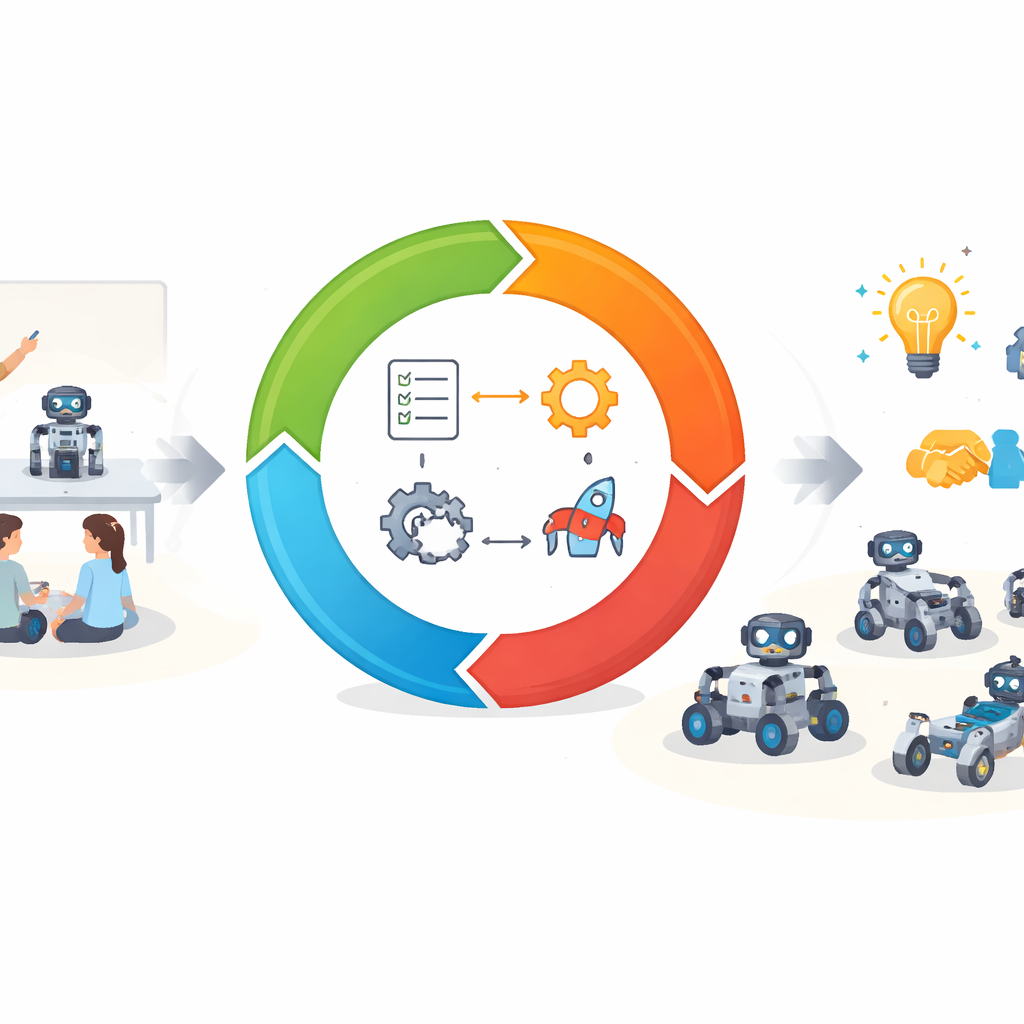
As today’s problems—from clean energy to aging societies—grow more complex, universities are under pressure to help students think creatively across many fields at once. This study looks at how teaching with educational robots can do just that. The authors designed a new classroom approach, called the 4C model, to help college students move from simply following instructions with a robot kit to inventing their own smart machines. Over three years, they tested and refined this model in a university robotics course to see whether it truly boosted creativity, teamwork, and practical design skills without overwhelming students.
A New Way to Learn with Robots
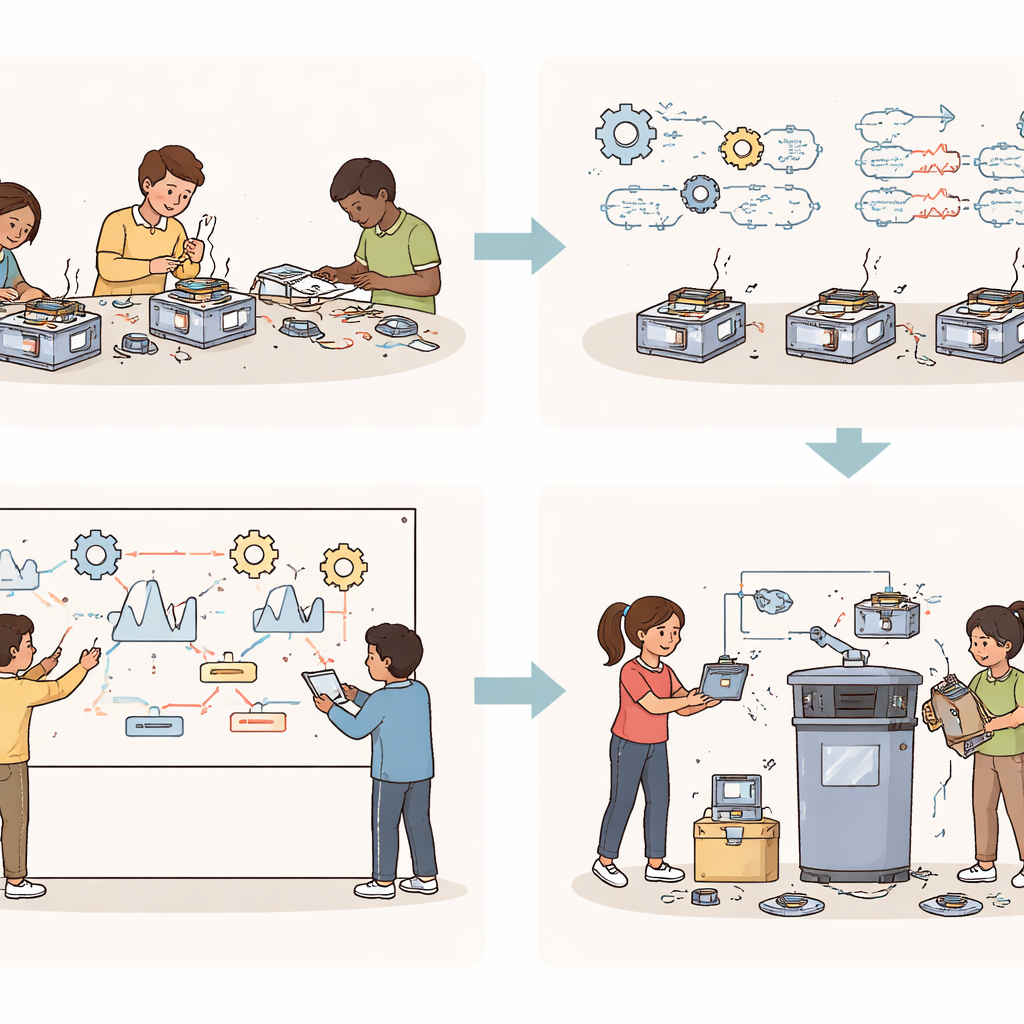
The 4C model breaks robotics learning into four repeating steps: working with clusters of similar projects, pulling out key ideas, connecting those ideas, and finally changing them into something new. In the first phase, students start with three versions of a simple “Boring Box” gadget that opens and closes a lid in quirky ways. Using a reverse-engineering style, they disassemble, repair, and slightly improve these boxes. This gives them hands-on practice with hardware, sensors, and code, but within safe, well-defined boundaries that limit frustration and keep mental effort manageable.
Finding Ideas Hidden Inside the Projects
Once students have rebuilt several boxes, they move into more reflective phases. They are guided to notice what the projects have in common and to name the underlying ideas—such as feedback loops, randomness, and how levers and angles affect motion. They discuss how these concepts cut across science, technology, engineering, and mathematics. Then they draw concept maps that link these ideas together. This step is meant to help students move beyond “this wire goes here” thinking toward a deeper grasp of how systems behave, so they can later transfer what they have learned to new situations.
From Copying Boxes to Inventing Machines
In the final phase, students are asked to design and build an entirely new robot-based device that is very different from the original boxes—for example, a smart trash can that can sort waste or an automatic game machine. Here the teaching shifts toward a more open-ended project style. Students must choose extra sensors, plan how the device should react to its surroundings, and debug both structure and code. Teachers still offer feedback and structure, but now the responsibility for decisions lies mainly with the students. The researchers see this jump—from similar, guided tasks to very different, self-directed ones—as the heart of creativity: using earlier experience to tackle unfamiliar challenges.
What Happened in the Classroom
The authors ran this 4C cycle three times between 2021 and 2023 with groups of educational technology majors. They measured changes in creativity, understanding of cross-disciplinary ideas, engineering design quality, teamwork, and how mentally demanding the work felt. Early on, gains in creativity and design skills were modest. This led the team to adjust how they formed student pairs, how roles were shared and rotated, and how they judged creative outcomes. With each round of refinement, results improved. By the third run, students showed clear advances in creative thinking, grasp of key concepts, design skills, and collaboration—although the tasks still felt mentally demanding, especially when building the final open-ended project.
What This Means for Future Learning
For a general reader, the takeaway is that simply handing students robot kits and telling them to “be creative” is not enough. This study suggests that creativity grows when teaching carefully balances structure and freedom: first giving students similar problems to build confidence and shared language, then helping them extract and connect underlying ideas, and only after that asking them to invent something new. The 4C model offers a practical roadmap for teachers who want robotics courses to develop not just technical skills, but the kind of interdisciplinary, team-based creativity that real-world problems demand. However, the authors also show that such ambitious learning will remain mentally challenging; more time and support are needed if we want students to stretch their thinking without being overloaded.
Citation: Liu, X., Zhong, B. Investigating the effects of 4C teaching model on creativity and student learning in robotics education: an action research study. Humanit Soc Sci Commun 13, 564 (2026). https://doi.org/10.1057/s41599-026-06870-4
Keywords: robotics education, creative thinking, STEM teaching, engineering design, interdisciplinary learning