Clear Sky Science · en
Rethinking energy investment policies during economic downturns using an advanced hybrid decision-making model
Why this matters when the economy slows down
When economies slip into recession, governments and companies suddenly have less money to spend, yet the need for reliable and affordable energy does not disappear. In fact, downturns can be turning points: they can either lock countries into old, polluting systems or push them toward cleaner, more resilient energy choices. This paper asks a timely question: when money is tight, which kinds of energy investments should be put first, and what lessons from past crises can guide today’s decisions?
Making tough choices with limited resources
During recessions, energy projects compete with many other urgent needs, from social spending to basic infrastructure. The authors argue that it is not realistic to try every policy idea at once; instead, leaders must rank options and focus on those that bring the greatest long-term benefit. They point out that past research often treats energy decisions in a piecemeal way, looking at regulations, finance, or technology in isolation. What is missing, they say, is a unified, data-driven way to decide which factors matter most when the economy is under stress and resources are scarce.
Learning from past energy crises
To build that unified view, the study looks back at several turning points in energy history. These include the 1973 oil crisis and the birth of modern energy security policies; the over-investment and later collapse of the 1980s; the Asian financial crisis of 1997 and its impact on regional power markets; the rise of “green” investment thinking in the 2010s; and the supply chain disruptions of the 2020s. From these episodes, the authors group the main levers that governments and markets have used into six broad types: shifting who finances energy (public vs private), altering interest rates and credit access, introducing new rules, encouraging or allowing market consolidation, promoting technological breakthroughs, and using geopolitical or trade tools to secure supplies.
A new way to weigh expert opinions
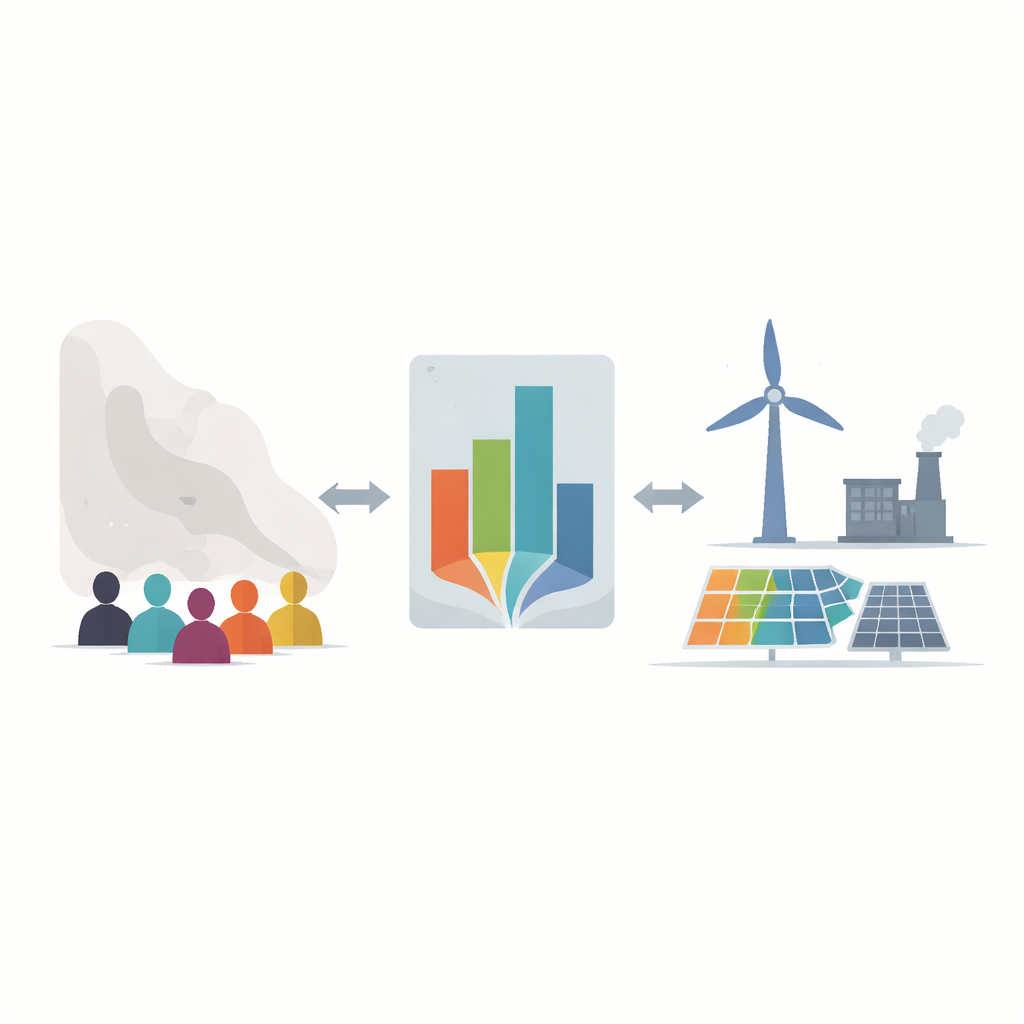
Because there is no simple formula for ranking these levers, the authors turn to a structured decision model that combines several advanced techniques. They begin by surveying experts involved in energy investment, regulation, and technology. Instead of treating all experts as equal, they use a clustering method that groups them by age, experience, and international exposure, then assigns more weight to the most consistent and informed group. They also acknowledge that experts are often unsure, especially in crises, so responses are translated into a flexible “fuzzy” scale that can capture hesitation and partial belief rather than forcing hard yes–no judgments.
From fuzzy judgments to clear priorities
Once expert views are collected, the model calculates how much each of the six criteria actually influences investment choices under recession conditions. A statistical tool sensitive to how opinions are spread out is used to assign objective weights, and another method ranks the historical periods according to how useful they are as guides for today. The results are striking: technological breakthroughs emerge as the single most important factor, closely followed by the cost and availability of credit, and by regulatory interventions. In other words, in tough times, it matters most whether new, cost-cutting or efficiency-boosting technologies are ready, whether money can be borrowed on reasonable terms, and whether the rulebook is clear and stable enough to support long-lived energy projects.

What history says about today’s choices
When the authors apply their model to the selected historical periods, two stand out. The 2010s, marked by a strong push toward renewable energy and the growth of green finance tools such as green bonds and carbon markets, rank as the most instructive era. The 2020s, with their global supply chain shocks and renewed concerns about energy security, come second. Together, these periods underline that successful recession-era energy strategies combine support for clean technologies, stable and predictable regulation, and financial instruments that attract private capital even when public budgets are tight.
Takeaway for citizens and decision-makers
Put in everyday terms, the study suggests that when economies falter, the smartest energy investments are those that back new technologies and clear, steady rules rather than short-term fixes. Recessions, the authors argue, can be used to accelerate the shift toward cleaner, more independent energy systems if leaders focus on innovation, sensible regulation, and long-term planning. By offering a transparent way to rank options and learn from past crises, their model aims to help governments and investors avoid wasteful spending and build energy systems that are both greener and more resilient to future shocks.
Citation: Aydın, F.B., Eti, S., Yüksel, S. et al. Rethinking energy investment policies during economic downturns using an advanced hybrid decision-making model. Humanit Soc Sci Commun 13, 566 (2026). https://doi.org/10.1057/s41599-026-06866-0
Keywords: energy investment, economic recession, renewable energy policy, technological innovation, decision-making model