Clear Sky Science · en
New tools drive scientific discovery: evidence from all nobel-prize and major non-nobel breakthroughs
Why New Tools Change What We Can Discover
Why do truly game‑changing scientific discoveries sometimes arrive in bursts, as if the world suddenly becomes clearer through a new pair of glasses? This article argues that those glasses are very real: they are the methods and instruments scientists build. By tracing more than 750 of the most important discoveries in history—from cells and galaxies to DNA and exoplanets—the author shows that breakthroughs consistently appear only after someone invents, upgrades, or borrows a powerful new tool that lets us see or measure something we could not reach before.
Looking Across Centuries of Big Discoveries
The study assembles an unusually broad dataset: every Nobel‑prize‑winning discovery from 1901 to 2022 plus hundreds of other landmark findings listed in major science history textbooks. For each discovery, the author goes back to the original research paper and identifies the central method or instrument that made the work possible, then records when that tool was created. This painstaking approach reveals a sharp pattern: from the late 1500s to today, major breakthroughs almost always rely on a new method or device applied to a question for the first time. The year a tool appears is strongly tied to the year discoveries using it follow, far more than factors such as prestige of the university, size of the team, or level of funding.
How Tools Open New Worlds
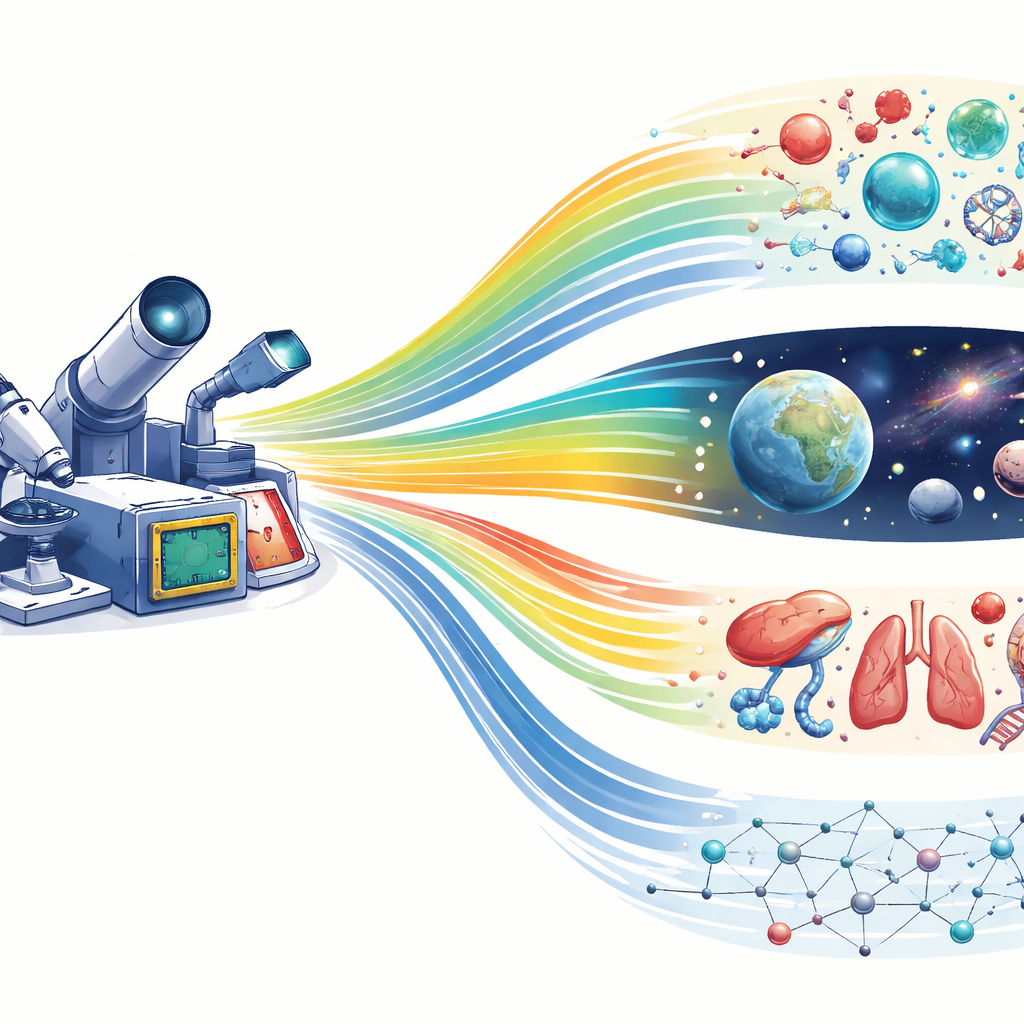
When we think of discovery, we often picture brilliant ideas or sudden insights. But again and again the decisive step is a tool that extends human senses and brainpower. Microscopes revealed cells, bacteria and mitochondria long before anyone thought to imagine them. Telescopes took us from wandering stars to the realization that our universe is filled with galaxies. X‑ray techniques exposed the internal structure of crystals, proteins and DNA; particle accelerators and detectors uncovered entire families of subatomic particles; statistical methods and computers made it possible to find patterns in massive datasets about economies, diseases and climates. In many cases, these devices were not even built with the later discoveries in mind. Yet once they existed, multiple breakthroughs in very different fields became almost inevitable.
Three Routes From Method to Breakthrough
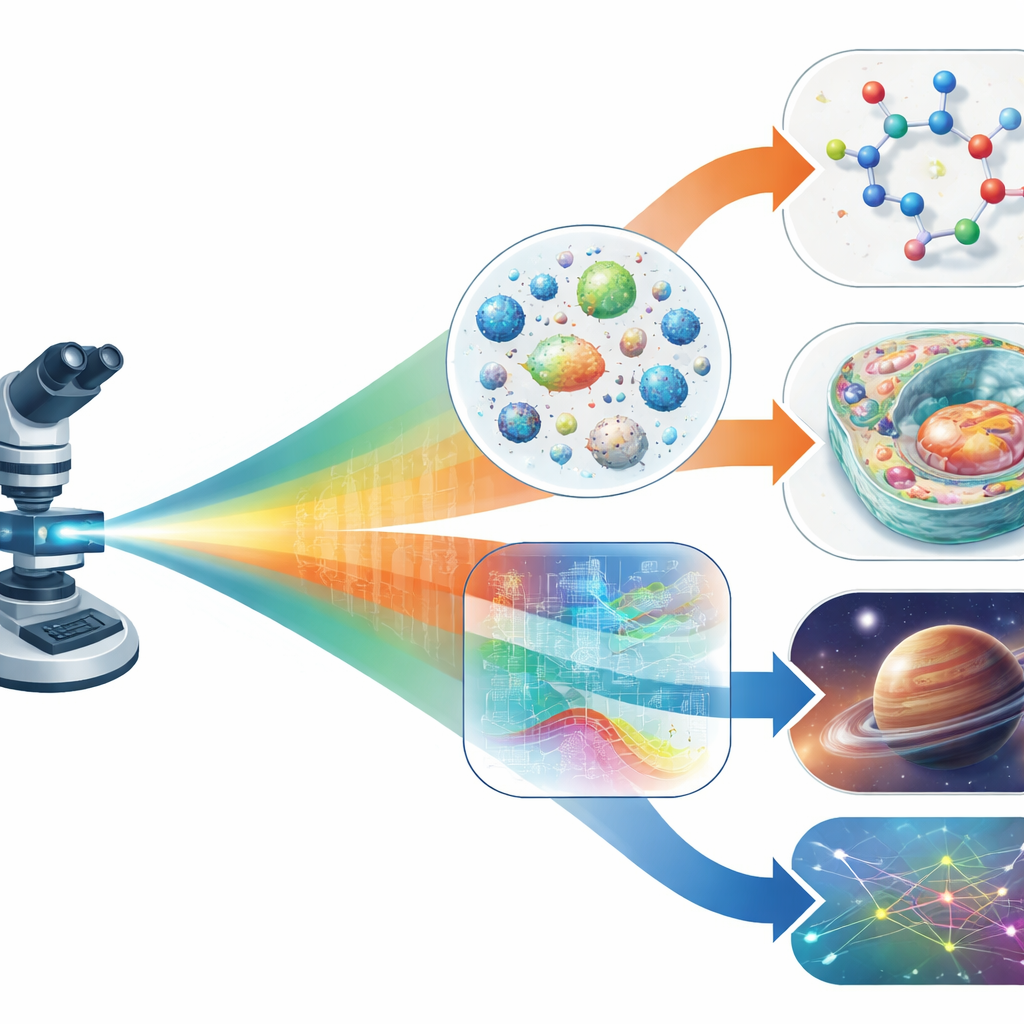
By sorting Nobel‑winning work, the author finds three main pathways linking tools to discovery. In roughly a quarter of cases, the same person creates a new method and then uses it to uncover something new—such as inventing an ultra‑cold apparatus and immediately finding a new state of matter. In nearly half of cases, a method invented by one researcher is later picked up by others, sometimes in other disciplines, to crack problems its inventor never anticipated; think of physicists’ lasers enabling advances in chemistry, biology and medicine. In about a third of Nobel cases, the method itself is judged the breakthrough: examples include randomized controlled trials, new kinds of microscopes, and genome‑editing techniques. Across physics and chemistry, more than a third of Nobel prizes have gone to such method‑centered advances, underscoring that tools are often more foundational than any single result they enable.
Timing, Delays, and Missed Opportunities
Another striking finding concerns time. Over the past two centuries, the delay between creating a new method and using it for a major discovery has steadily shrunk—from about 30 years in the 1800s to just a few years today. Since the mid‑1970s, over half of big discoveries appear within four years of the enabling tool, and about 70 percent within a decade. Yet the study also documents painful lags where methods existed for years before anyone applied them to the right problem, often because tools were developed in one discipline and remained unknown or underused in another. Each such delay—whether for exoplanet‑hunting spectrographs or medical imaging techniques—represents lost time in curing diseases, understanding our planet, or improving society.
A New Way to Think About Scientific Progress
Drawing these strands together, the article proposes a "methods‑driven" theory of discovery: if we want more breakthroughs, we should focus less on chasing individual big ideas and more on designing, refining and spreading powerful tools. Broad conditions like funding, collaboration and education matter, but they mainly help to create and deploy new methods. The work suggests a kind of coming "method revolution" in which scientists, universities and funders treat tool‑building as a central scientific goal rather than a side activity. Because major discoveries tend to follow soon after major methods, tracking where the most transformative tools are emerging may be our best guide to where the next great leaps in knowledge will come from—and how soon.
Citation: Krauss, A. New tools drive scientific discovery: evidence from all nobel-prize and major non-nobel breakthroughs. Humanit Soc Sci Commun 13, 500 (2026). https://doi.org/10.1057/s41599-026-06865-1
Keywords: scientific discovery, research tools, Nobel prizes, scientific methods, innovation