Clear Sky Science · en
Impacts of metro network configuration on on-road traffic intensity in Chinese cities
Why Metro Design Matters for City Traffic
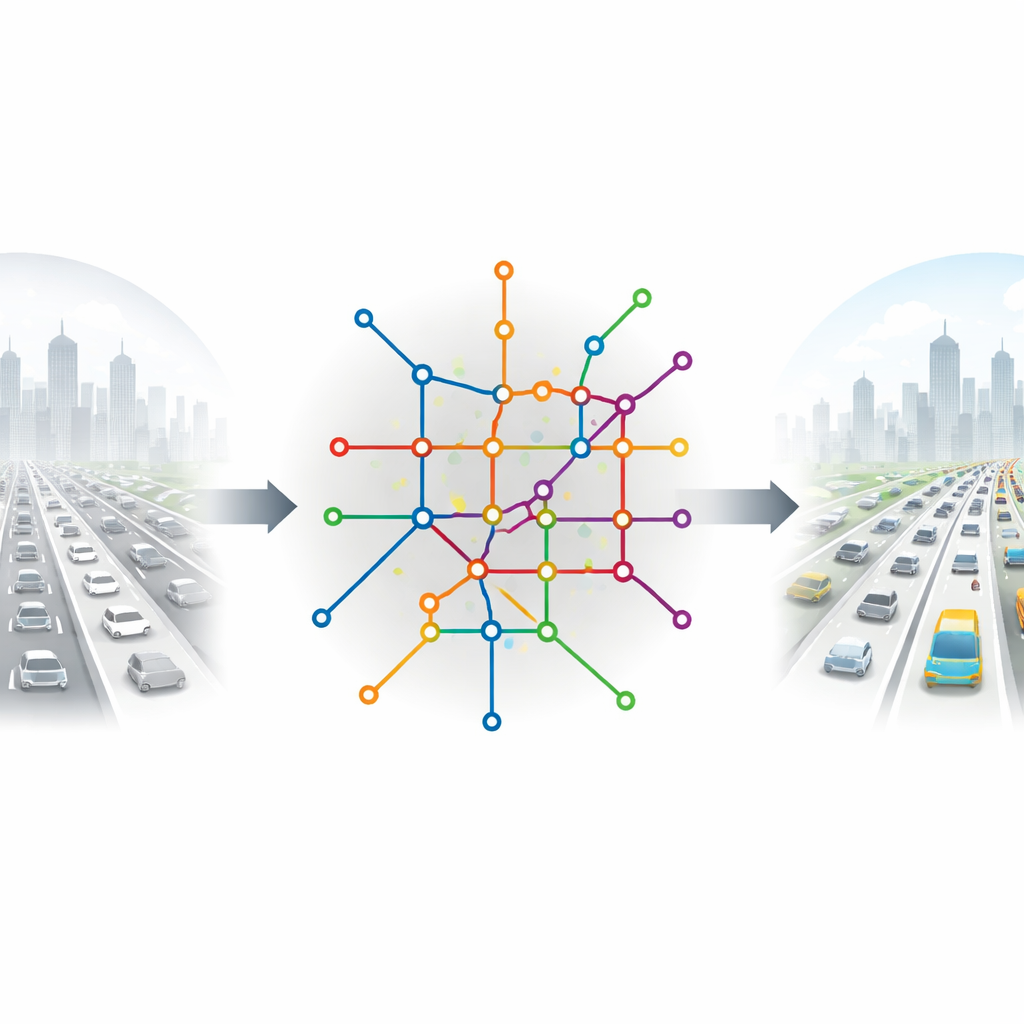
Anyone who has sat in a traffic jam has probably wondered whether building more subway lines would really clear the roads. This study takes that everyday question and gives it a careful, data-driven answer for Chinese cities. Instead of asking only whether metros reduce car use, the authors look inside the rail systems themselves, asking how the way metro networks are laid out—their shape, reach, and efficiency—changes how much people drive.
The Problem of Growing Cars and Crowded Streets
Over the past two decades, car ownership in China has exploded, bringing with it more congestion, more air pollution, and greater climate-warming emissions. City governments have tried both to limit car use directly, through license controls and driving restrictions, and to offer alternatives by rapidly expanding metro systems. Yet studies around the world have found mixed results: in some cities new rail lines clearly ease road traffic and pollution, while in others they appear to make little difference or even coincide with dirtier air. The authors argue that this inconsistency may come from overlooking how each city’s metro network is actually put together.
Looking Under the Hood of Metro Networks
To probe this idea, the researchers assembled a snapshot of 112 Chinese cities in 2018, 29 of which already had metro systems. They estimated total driving in each city using vehicle-kilometers traveled, a standard measure of how far all vehicles move on the road network. Because official traffic and mode-share data are limited, they combined national statistics, road measurements, and survey-based figures to reconstruct how much people drive and how much they ride metros. Then they translated each metro map into a graph made up of nodes (stations) and links (tracks) so they could calculate measures of how connected the network is, how far apart stations tend to be, and how easily residents can reach a station from where they live.
How Network Shape Changes Driving Habits
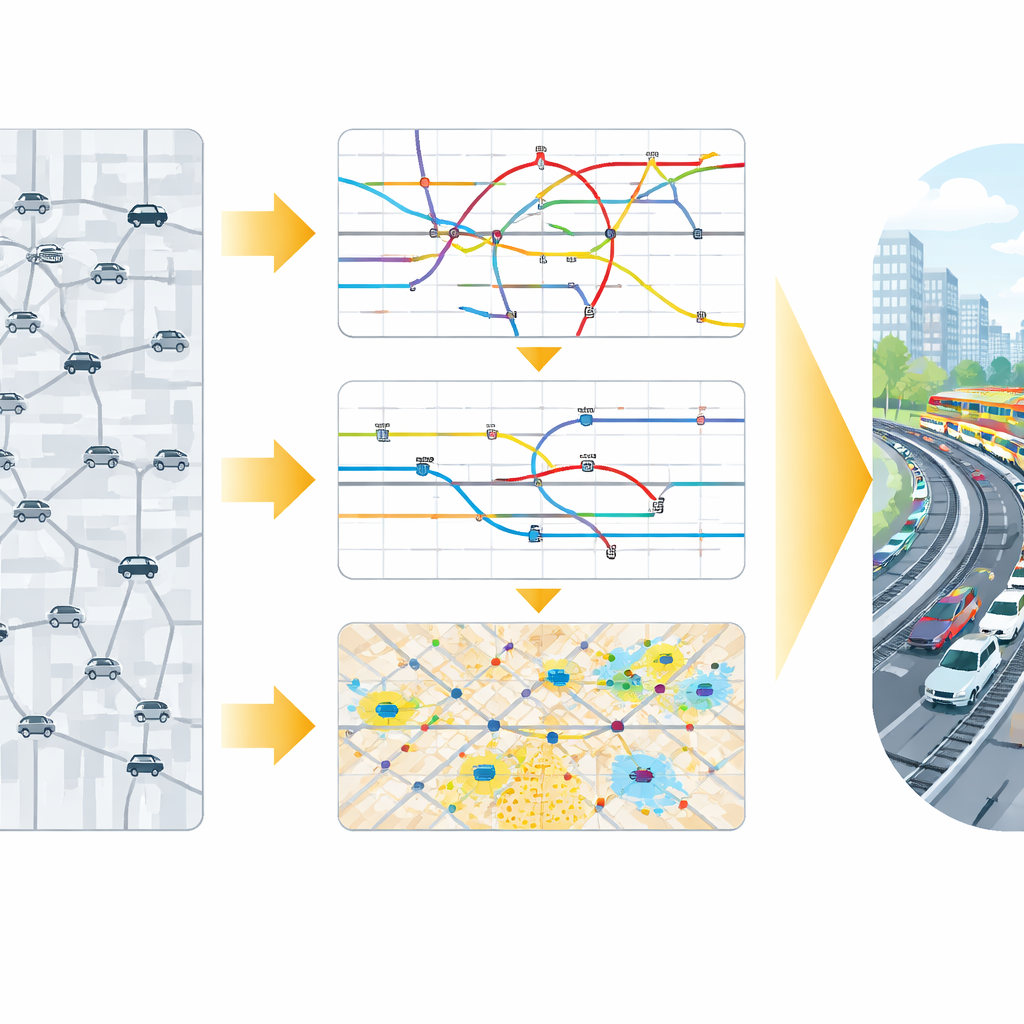
The heart of the analysis is a statistical framework that traces not just direct effects but also chains of cause and effect. In plain terms, the authors asked: if a city extends its metro system, does that change the network’s layout, does that layout change how many people choose rail over cars, and does that in turn change total driving? Their results show that, on balance, metro expansion in Chinese cities does reduce car use. A 10 percent increase in metro rail length is linked to roughly a 3 to 4 percent drop in vehicle travel. Crucially, this is not just because there is “more metro.” Specific design features amplify the shift away from road traffic. More tightly connected networks with many alternative routes, somewhat wider spacing between stations that speeds up long-distance trips, and better overall access from neighborhoods to stations all push more travelers toward rail and away from driving.
When Rail Growth Also Fuels More Driving
The story is not one-sided. Building metros can also make cities more attractive places to live and do business, encouraging new housing and jobs to spread along rail corridors and on the urban fringe. The study finds evidence for this “growth effect”: longer metro systems are associated with higher economic output and larger populations, and these in turn can increase the total demand for travel. In some cases development driven by new rail lines lowers average population density, which tends to lengthen trips and raise car use. Even so, in the Chinese cities examined, the car-reducing impact of better-designed metro networks is strong enough to outweigh the extra traffic generated by growth.
Why These Findings Matter for Future Cities
For a layperson, the takeaway is that metros are not magic by themselves; it is how they are woven into the city that really matters. This research suggests that well-connected lines, smart spacing between stations, and easy access from homes and jobs to platforms can significantly cut driving and the pollution that comes with it. At the same time, city leaders need to guide new development toward compact, transit-oriented neighborhoods and pair rail investment with sensible traffic management, such as parking limits or driving restrictions. Done together, these steps can help ensure that metros fulfill their promise as tools for cleaner air, lower carbon emissions, and less time stuck in traffic.
Citation: Ou, Y., Nam, KM. Impacts of metro network configuration on on-road traffic intensity in Chinese cities. Humanit Soc Sci Commun 13, 521 (2026). https://doi.org/10.1057/s41599-026-06820-0
Keywords: urban rail transit, traffic congestion, metro network design, public transport planning, China cities