Clear Sky Science · en
Shaping sustainable future through green technology investment and digital trade in South Asia: a novel approach of GMM-PVAR
Why this matters for everyday life
South Asia is home to nearly a quarter of the world’s population, and what happens to its air, energy systems, and economies directly shapes global climate risks. This study asks a pressing question with very down-to-earth consequences: can growing online trade, smarter use of money, and investment in clean technology help South Asian countries cut pollution without stalling development? By tracking how these forces interact over twenty years, the authors reveal which levers are actually cleaning the air—and which may be quietly making things worse.
How the digital shift can clean the air
The rise of digital trade—everything from online marketplaces to cross-border data services—has transformed how goods and services move in South Asia. On one hand, doing business online can trim emissions by reducing paperwork, shipping, and commuting, while improving supply-chain efficiency. On the other, data centers, electronic devices, and delivery networks consume a lot of energy. Using data from 2003 to 2023, the study finds that, overall, digital trade in South Asia tends to nudge carbon emissions downward, though the effect is modest. When digital platforms are paired with efficient infrastructure and cleaner power, they help shrink the region’s environmental footprint instead of enlarging it. 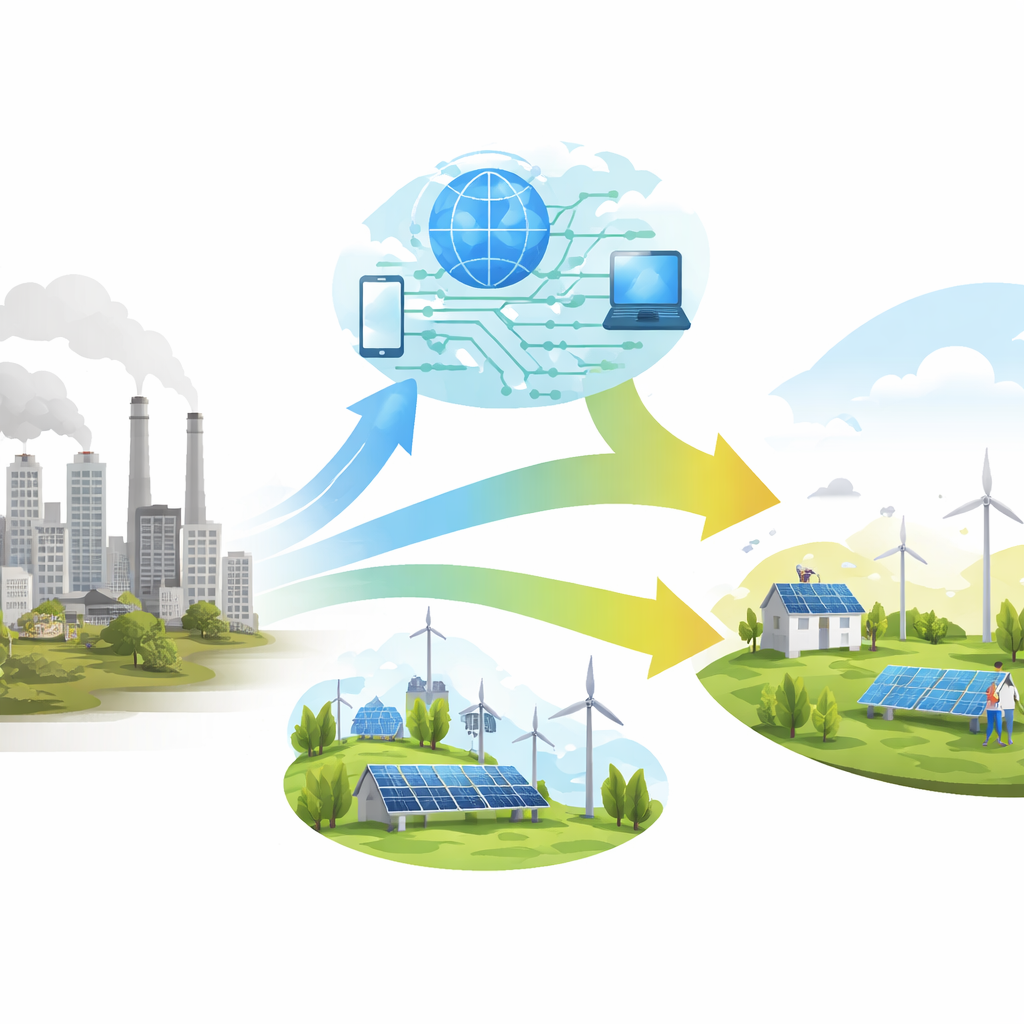
Betting on green technology
The strongest good news comes from money spent on green technology. The authors build an index capturing investment in renewable power such as solar and wind, along with other low-pollution technologies. They show that when South Asian countries channel more resources into these areas, carbon emissions fall noticeably. These investments work through several channels at once: they replace coal and gas with cleaner energy, improve the efficiency of factories and buildings, and encourage firms and consumers to adopt more careful, low-waste habits. Over time, shocks that boost green investment continue to push emissions down, suggesting that today’s projects keep paying off for years in cleaner air and more resilient economies.
When more finance means more fumes
Access to bank accounts, credit, and digital payments has expanded rapidly across South Asia, often celebrated as a path out of poverty. Yet the study uncovers a sobering twist: broader financial inclusion is currently linked to higher carbon emissions. As more people and businesses gain credit and other services, many channel this support into activities that still rely heavily on fossil fuels—such as traditional manufacturing, transport, or small-scale industry using diesel generators. Unless rules and incentives steer this new financial power toward clean energy and low-carbon enterprises, the growth of banking and fintech risks locking the region into dirtier development paths instead of greener ones.
Natural resources, jobs, and the growth puzzle
The study also examines how earnings from natural resources—like fossil fuels, forests, and minerals—fit into the picture. Surprisingly, these resource rents do not show a clear direct effect on carbon emissions in the statistical model, likely because outcomes depend heavily on how governments manage and reinvest this income. Labor and capital tell a more familiar story: more workers in energy-hungry sectors tend to raise emissions, while the impact of investment depends on whether it flows into clean or dirty projects. Overall, the authors find a kind of “self-correction” in emissions over time: periods of very high pollution are often followed by reductions, reflecting regulatory responses, economic adjustments, or public pressure for cleaner growth. 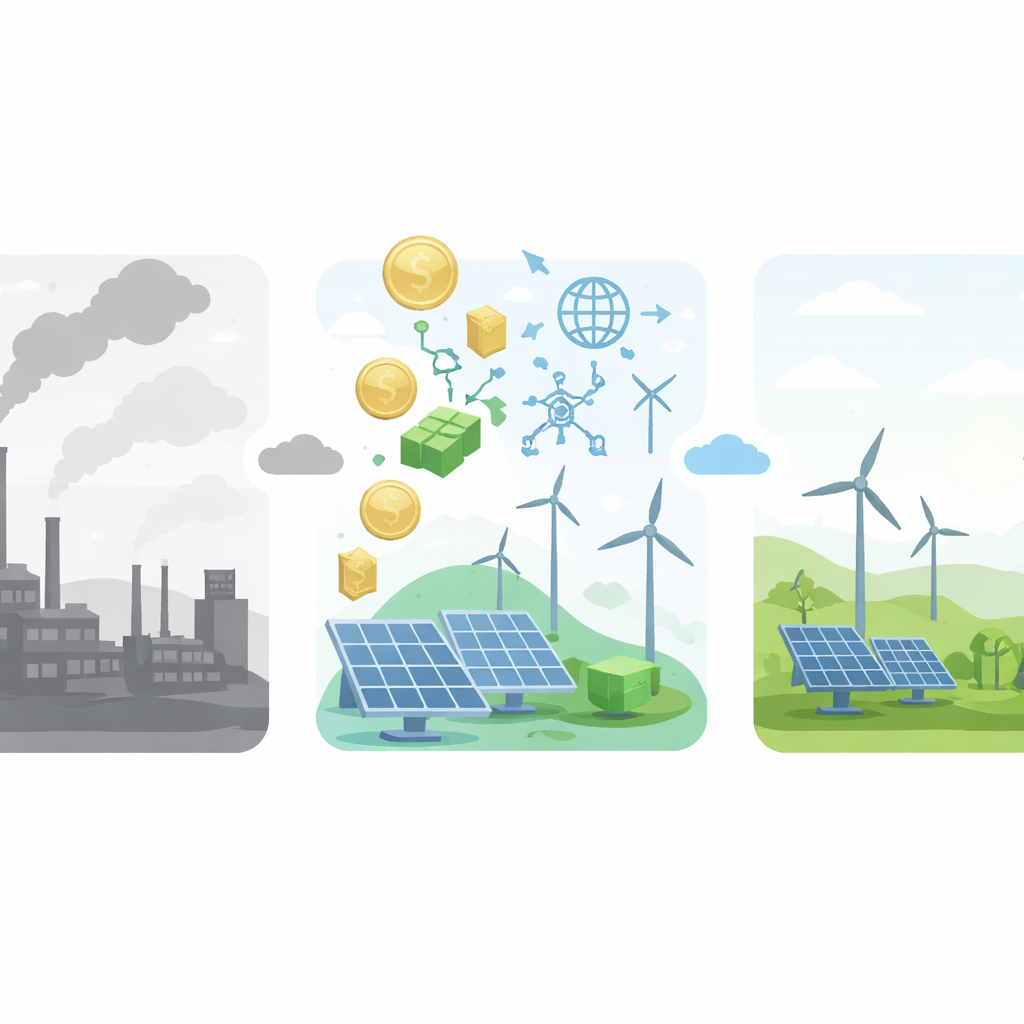
What the study suggests for a cleaner future
To a lay reader, the main takeaway is simple: not all growth is created equal. Online trade and green technology are emerging as tools that can help South Asia grow while polluting less, but only if digital systems are powered and built sustainably. At the same time, expanding access to finance without environmental safeguards can unintentionally fuel more smoke and smog. The authors argue that policymakers should push hard on three fronts: scale up investment in green technologies, ensure that digital expansion is backed by clean energy and efficient infrastructure, and align financial inclusion with environmental goals through incentives and standards. Done together, these steps can help the region pursue jobs, prosperity, and cleaner air at the same time, rather than forcing a choice between them.
Citation: Yang, W., Rani, T. & Wang, F. Shaping sustainable future through green technology investment and digital trade in South Asia: a novel approach of GMM-PVAR. Humanit Soc Sci Commun 13, 452 (2026). https://doi.org/10.1057/s41599-026-06783-2
Keywords: digital trade, green technology investment, financial inclusion, South Asia climate policy, carbon emissions