Clear Sky Science · en
Self-monitoring and social goals: how a gamified online system shapes reading behavior and foundational self-regulation in elementary students
Why Kids’ Reading in the Digital Age Matters
Today’s children are growing up surrounded by screens, games, and constant online distractions. Parents and teachers worry that this digital world may be pulling attention away from deep, focused reading, even though reading for pleasure is strongly linked to better thinking skills and emotional health later in life. This study asks a timely question: can we use some of the appeal of games and apps to nudge young children toward reading more—and reading more broadly—while also helping them build the basic habits of managing their own learning?
A Game-Like World Built Around Books
To explore this question, the researcher created “MyReadscape,” a web-based system for second- and third-graders in an experimental school in Taiwan. Instead of turning reading itself into a game, the system wraps children’s regular book reading in a game-like structure. Every time students finish a book, they log it in the system. In return, MyReadscape shows their progress through 100 colorful “levels,” awards badges for different kinds of reading, and posts a small weekly ranking that highlights top readers in the class. A central feature is a personal dashboard, where children can see at a glance how many books they have read, how difficult those books are, and how their reading is spread across storybooks, science, and social topics. 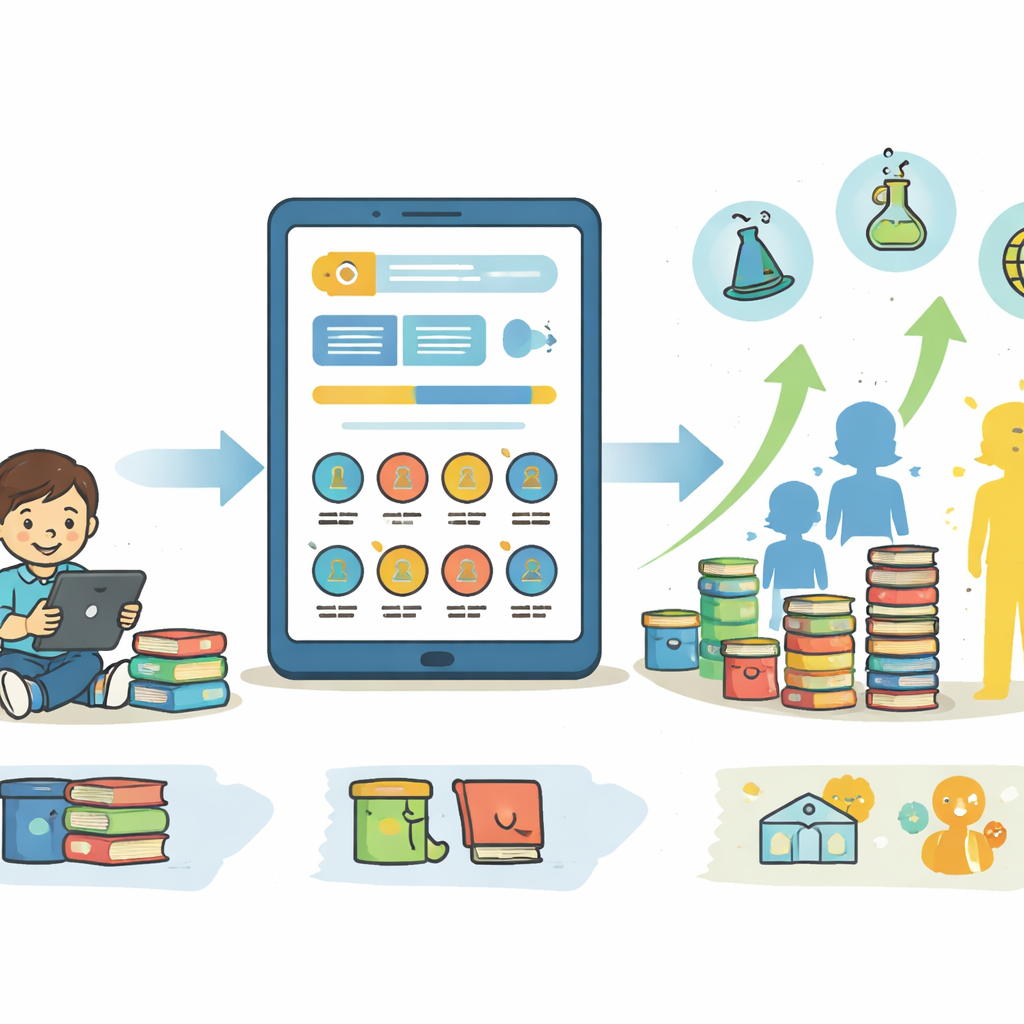
Kids Read More, and in New Directions
The digital system clearly changed what children did. Over the course of the eight weeks, the average number of books read by each child rose steadily, and by the final phase they were reading almost twice as many books as at the beginning. Just as important, their choices broadened. At first, most of what they read were familiar storybooks. As time went on, their reading of science and technology titles almost doubled as a share of their total reading. The dashboard’s colorful bars, which showed an imbalance when storybooks crowded out other genres, nudged students to “try a science one sometimes,” as one child put it. In other words, simple visual feedback about their habits helped children notice patterns they would not otherwise see and gently pushed them to explore new areas.
Social Goals and Quiet Self-Control
Behind the scenes, different game-like pieces of MyReadscape played very different roles. The personal dashboard became a practical self-check tool: students used it to see whether they had finished the books needed for the next level, how far they were from a goal, and what types of books they tended to favor. This built an early form of self-monitoring, a core skill for managing one’s own learning. The weekly leaderboard, by contrast, tapped into social feelings. Many students—especially those who were not highly engaged at the start—said they pushed themselves to read more so they could appear on the ranking. Reading became not just a private activity but a visible achievement in front of classmates. Surprisingly, the badge collection, which quietly rewarded specific reading milestones, mattered much less; children cared more about seeing their names rise in the group than about private token rewards. 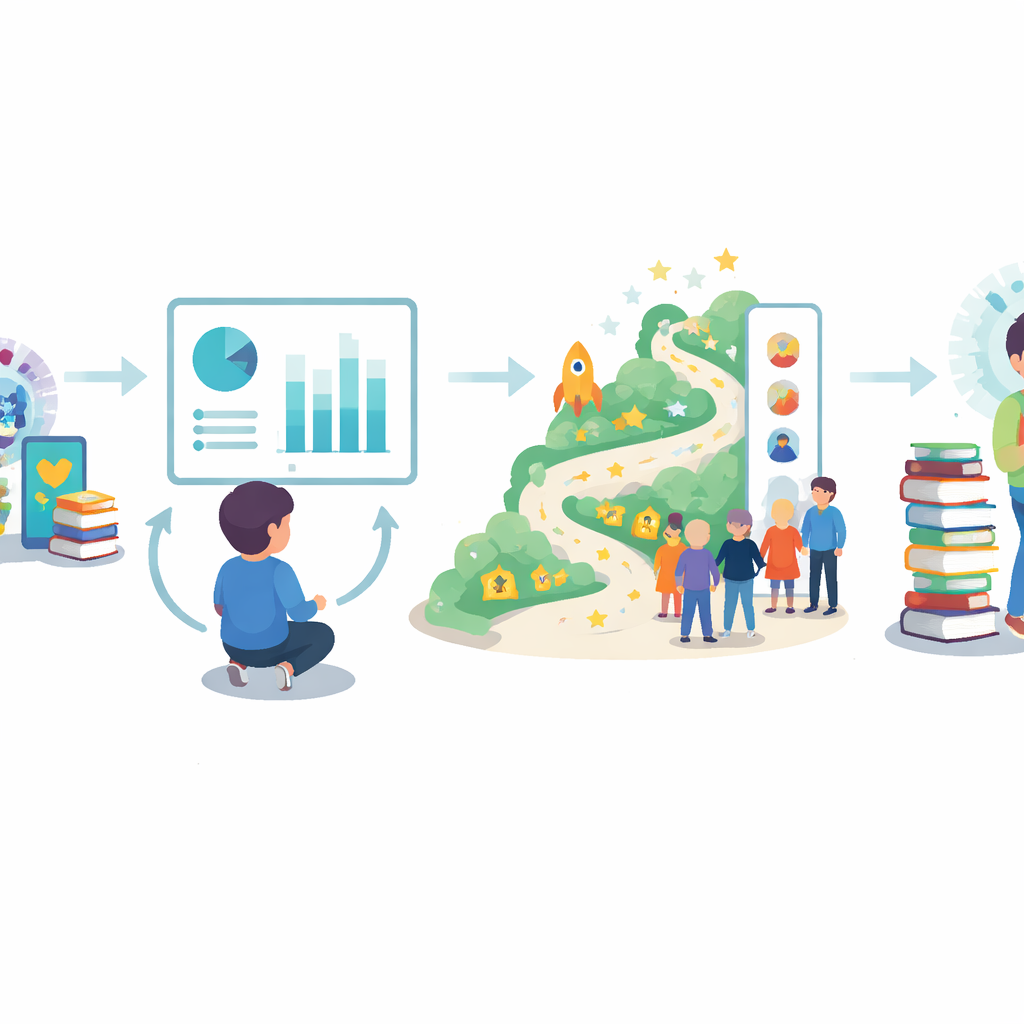
How Game Design Shaped Motivation
These findings reveal a subtle shift in how children understood their own reading. The level system broke a big, vague goal—“read a lot”—into many small, clear steps, so finishing each “island” felt like a concrete success. Seeing their own path unfold on the screen helped students think of themselves as progressing readers. At the same time, social comparison through the leaderboard pushed effort upward, without necessarily making reading itself more fun. Throughout, personal interest in particular books still guided many of their choices: if suggested books did not look appealing, several students simply chose something more interesting instead, even if that slowed their progress toward a level or badge. This suggests that game structures can boost effort and help children organize their reading, but they work best when they sit alongside, rather than replace, a genuine curiosity about what they read.
What This Means for Parents, Teachers, and Designers
For families and schools, the study offers both encouragement and caution. A thoughtfully designed online system can indeed help young children read more and stretch into new topics, while also teaching simple but important habits like checking one’s own progress and working steadily toward a goal. Visual dashboards and clear levels seem especially powerful tools for building these skills. However, flashy rewards alone are not enough, and competitive features like leaderboards must be used carefully so they motivate without discouraging those who struggle. Most importantly, the research shows that even when a digital tool successfully increases reading volume and helps children see reading as personally valuable, it does not automatically deepen their love of reading itself. Nurturing that deeper attachment still depends on engaging stories, supportive adults, and time away from screens to enjoy books for their own sake.
Citation: Liao, CY. Self-monitoring and social goals: how a gamified online system shapes reading behavior and foundational self-regulation in elementary students. Humanit Soc Sci Commun 13, 473 (2026). https://doi.org/10.1057/s41599-026-06750-x
Keywords: gamified reading, elementary education, self-regulation, digital learning tools, reading motivation