Clear Sky Science · en
Institutional prestige, geographic embedding, and competitiveness: a comparative analysis of research ecosystems in California and Texas
Why Where Universities Sit on the Map Matters
When we think about scientific breakthroughs, we often picture individual geniuses or famous campuses. But behind the scenes, it is the web of universities within a region—and their connections beyond it—that shapes which ideas thrive. This study asks how the position and prestige of research universities in California and Texas influence the impact of the science they produce, and what that means for regional economic strength and opportunity.
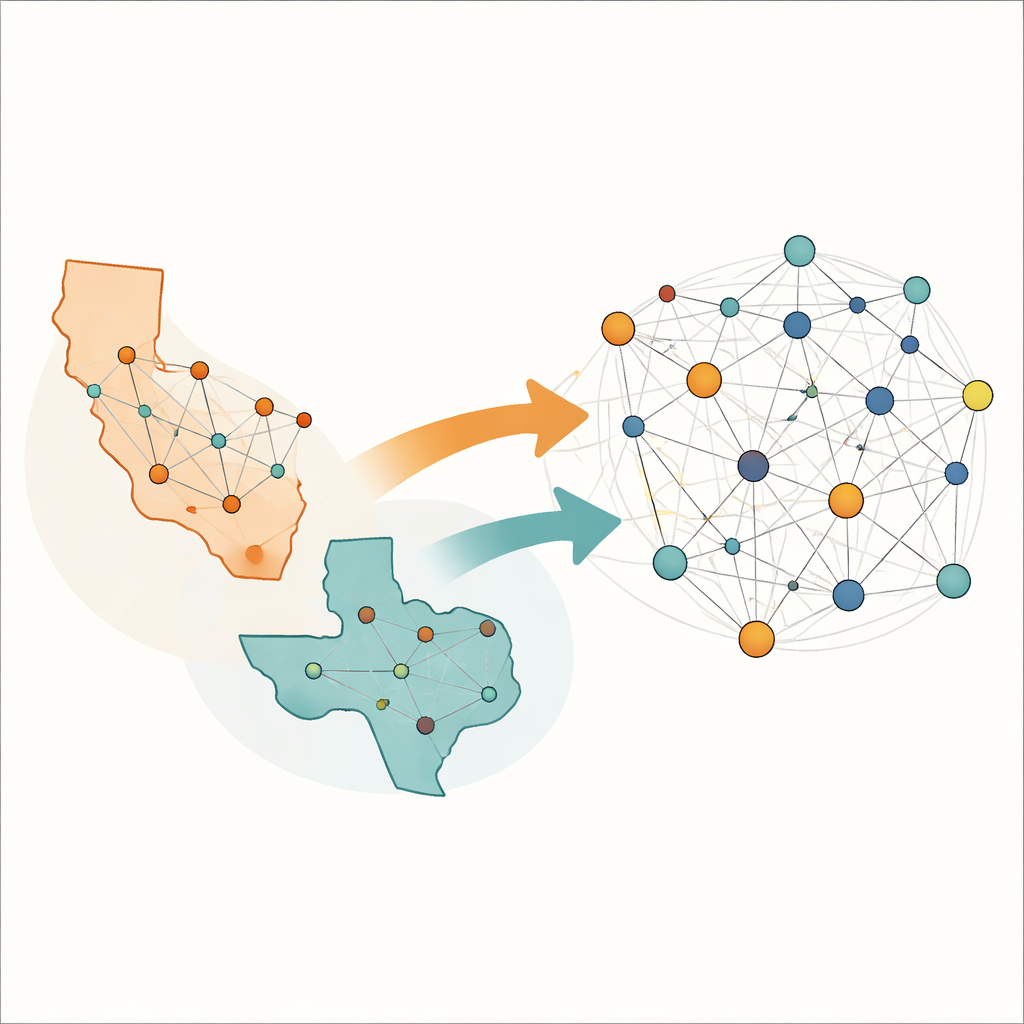
Two Big States as Living Laboratories
California and Texas are ideal places to explore how research systems work. Both host sprawling public university networks, major medical centers, and elite private campuses, together producing a large share of U.S. scientific papers. The author assembled data on about 800,000 research articles published between 1998 and 2013 by 28 major universities in these two states. Each paper was tagged by where its coauthors were based (within the same state, across U.S. states, or across countries), how many institutions were involved, and whether any partner was a highly ranked, widely recognized university.
Local Teams, Distant Partners, and Citation Rewards
The study examined how often different types of collaboration occur and how much scientific attention they attract, measured by citations, after carefully adjusting for field and year. Most U.S. research—including in California and Texas—is still produced by teams whose authors all reside within the same state. Yet papers that combine forces across state lines or across national borders often earn more citations than those that stay entirely local. In Texas, even work done by a single university tends to receive somewhat more citations than comparable multi-university projects constrained within the state, hinting that strong institution-specific environments matter there. In California, by contrast, multi-university collaboration within the state is already so well developed that single-campus work has a citation disadvantage.
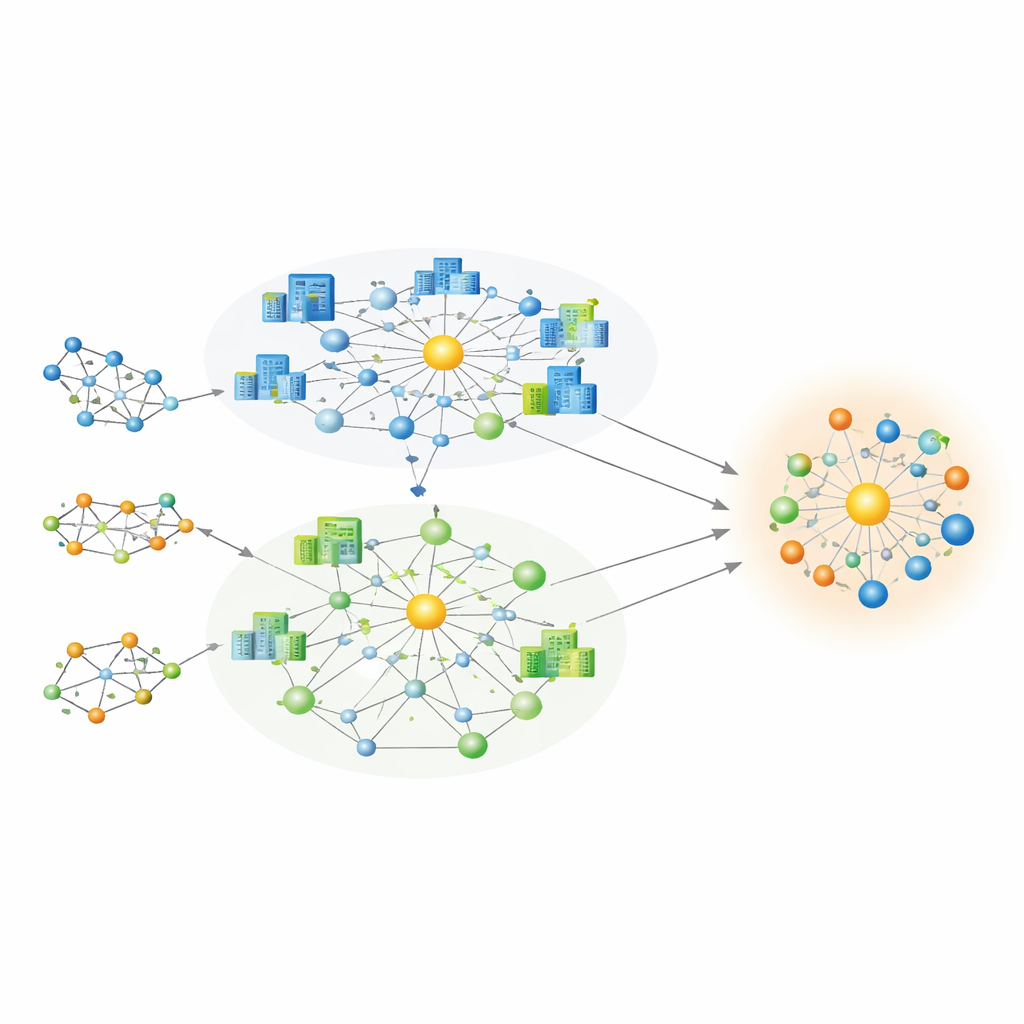
The Extra Boost of Star Institutions
Not all universities play the same role in this ecosystem. The study identified a subset of “premier” campuses—public and private institutions that both publish heavily and consistently rank among the world’s top research universities. Collaborations that link other universities to one of these premier partners enjoy a clear citation premium, even after controlling for the baseline performance of each institution. Within the same state, coauthoring with a premier campus is associated with roughly a 7 percent citation gain in California and 15 percent in Texas. When those same collaborations also span national borders, the advantage grows larger: about 21 percent in California and 25 percent in Texas compared with comparable regional collaborations that do not involve such a partner.
Changing Patterns Over Time
The influence of both international collaboration and institutional prestige has grown markedly over the 16-year period studied. By 2013, internationally coauthored papers carried a substantially higher citation bonus than they did in 1998, particularly in California. Likewise, the added impact of working with a premier university roughly doubled over time in both states. These trends suggest that, in an increasingly global and competitive research landscape, who you work with and how far your partnerships stretch are becoming ever more important signals of quality and generators of attention.
What This Means for Regions and Their Residents
From a layperson’s perspective, the study’s message is that regions benefit when they both strengthen their internal university networks and connect those networks to prestigious partners around the world. Flagship campuses act as magnets, drawing in talent, funding, and high-profile collaborations that spill over to nearby institutions and industries. At the same time, too narrow a focus on local ties may leave regions cut off from valuable expertise elsewhere. For policymakers and university leaders, the findings support investments in strong public university systems, targeted support for top research hubs, and initiatives—such as consortia and satellite campuses—that knit regions into national and global research circuits. For residents, these choices can translate into better education, more innovative local industries, and more resilient regional economies.
Citation: Petersen, A.M. Institutional prestige, geographic embedding, and competitiveness: a comparative analysis of research ecosystems in California and Texas. Humanit Soc Sci Commun 13, 348 (2026). https://doi.org/10.1057/s41599-026-06697-z
Keywords: regional innovation, research universities, scientific collaboration, institutional prestige, California and Texas