Clear Sky Science · en
Identifying gender inequalities in pathways to political participation: a large-N QCA framework
Why This Story About Voting Paths Matters
At first glance, it might seem that gender gaps in voting are a thing of the past: young women in the United States have turned out to vote at higher rates than young men in nearly every presidential election since the early 1970s. This article asks a deeper question: even when women vote more, do they have to work harder to get there? By tracing how different combinations of family background, schooling, and social experiences lead young people toward or away from the ballot box, the study uncovers hidden forms of inequality in the paths that young women and men travel to become voters.
The Big Picture: Same Ballot, Different Journeys
Using data that followed American high school seniors from the mid-1960s into the 1972 presidential election, the author compares how young women and men ended up voting—or not voting—for president. Instead of only asking who voted, the study looks at which mixes of advantages and influences tend to produce politically active youths. Four ingredients are central: family economic standing, college education, political messages absorbed at home and with friends, and early forms of civic involvement. A method called Qualitative Comparative Analysis (QCA) is used to map out the most common “recipes” of conditions that lead to voting, and to see whether those recipes look different for young women and men.
Resources That Open Doors—or Don’t
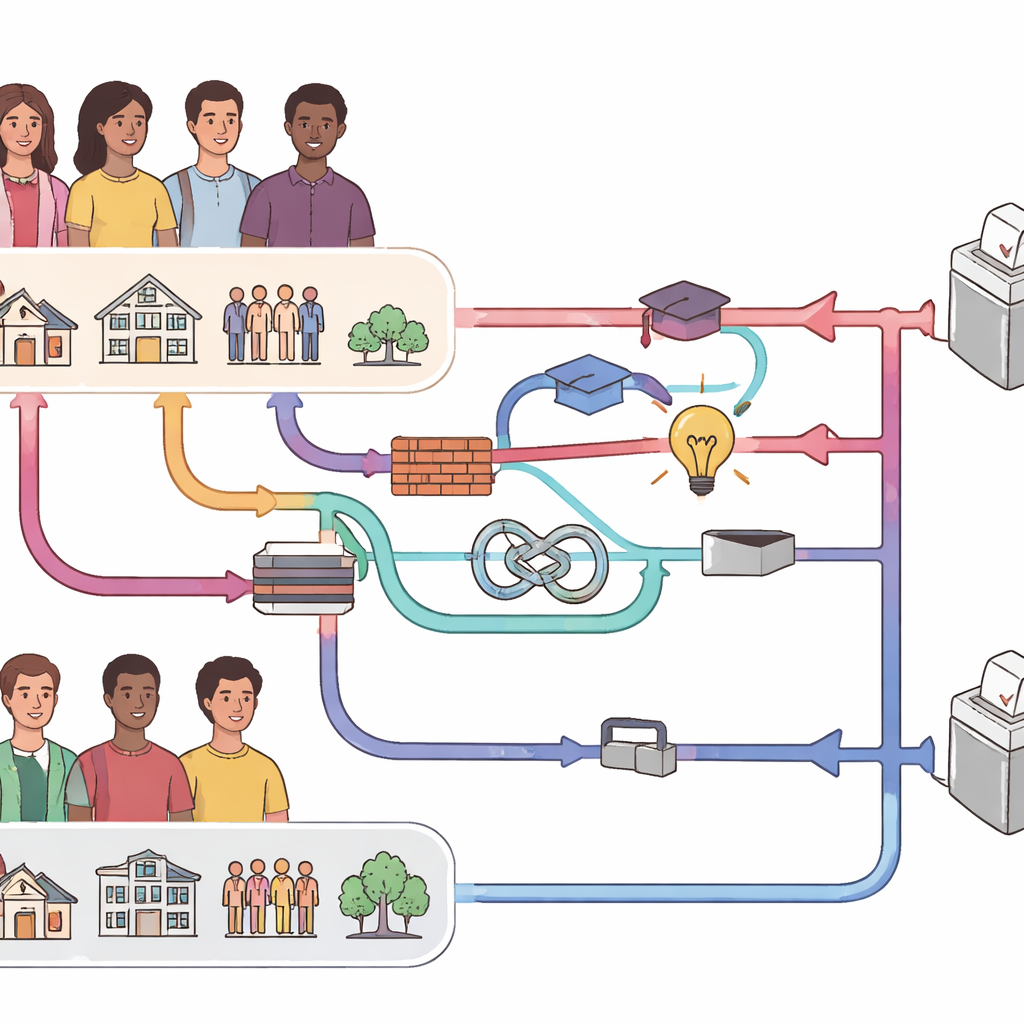
The study brings together two major ways of thinking about political engagement. One stresses structural resources such as money, time, and organizational backing; the other emphasizes “capabilities,” like confidence, strong beliefs, and a sense of being entitled to take part in public life. Family income and access to college shape the first kind of resources, while family encouragement, peer discussions, and a habit of volunteering build the second. The analysis shows that for young men in 1972, structural advantages—especially going to college—were usually enough to predict voting. For young women, in contrast, similar structural advantages did not reliably translate into participation unless they were paired with favorable non-structural supports such as empowering family environments or strong personal convictions.
Hidden Hurdles in Young Women’s Paths
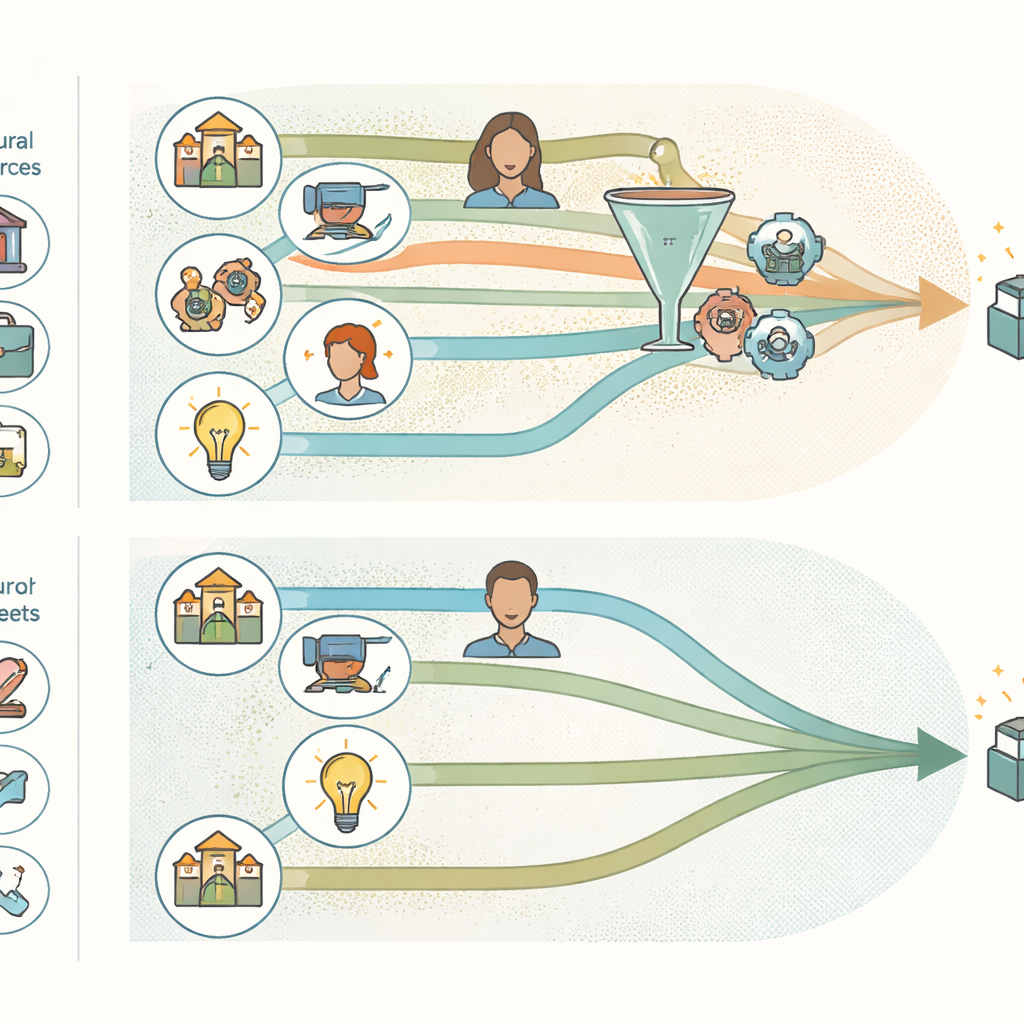
When the different combinations of conditions are laid out, three patterns of inequality stand out. First, the pathways that lead young women to become voters are consistently more demanding than those for young men. The typical male pathways require roughly two favorable conditions, such as high family status and college. The female pathways require those same structural benefits plus at least one extra boost from non-structural resources—for example, strong opinions about issues or supportive but not discouraging peer networks. Second, there are simply fewer distinct social settings in which young women become politically active. Some combinations that are sufficient to pull young men into voting—like high college involvement combined with lively political talk among friends—do not work for women, suggesting that peer environments may often sideline or discourage them. Third, the gender gap is widest among socially disadvantaged youths: when family income, schooling, and support networks are thin, young men still sometimes find a route to the polls, but young women with similar disadvantages almost never do.
Beyond the 1970s: Do These Gaps Persist?
The article then asks whether these hidden inequalities were unique to the 1972 election or have continued into more recent times, when women’s public roles have visibly expanded. Looking at survey data from youths in the 2004 and 2012 presidential elections, the author finds similar patterns. Again, non-structural resources such as family backing and activist experiences matter more for young women than for young men. In 2012, for example, young men could reach the ballot box through several relatively simple combinations of conditions, while the pathways for young women remained more demanding and less varied. Notably, when both genders enjoyed a rich mix of advantages—supportive families, college education, engaged friends—young women’s turnout could even exceed that of young men, underscoring that the main problem lies in unequal access to the right bundle of supports.
What These Findings Mean for Democracy
For a general reader, the study’s key message is that equal or even higher turnout among women does not automatically signal that gender inequality has vanished. Young women often have to assemble more resources and push through more barriers than young men to arrive at the same act of voting. This has several implications. Policies that simply raise overall turnout may leave these unequal pathways untouched. Instead, efforts are needed to remove structural obstacles that weigh more heavily on women—such as limited access to higher education, caregiving burdens, and unequal access to political careers—and to actively build non-structural supports, including gender-sensitive civic education and welcoming peer and community networks. The study also suggests that similar “hidden” inequalities may affect racial minorities and other groups whose participation rates can mask the extra hurdles they face. By shifting attention from turnout totals to the different routes that citizens must take to reach the polls, the article offers a new lens for diagnosing and addressing inequality in democratic participation.
Citation: Huang, Q. Identifying gender inequalities in pathways to political participation: a large-N QCA framework. Humanit Soc Sci Commun 13, 365 (2026). https://doi.org/10.1057/s41599-026-06616-2
Keywords: youth voting, gender inequality, political participation, socialization, elections