Clear Sky Science · en
Effective competency enhancement in agricultural research institutions- an E-governance model
Why smarter training for farm science matters
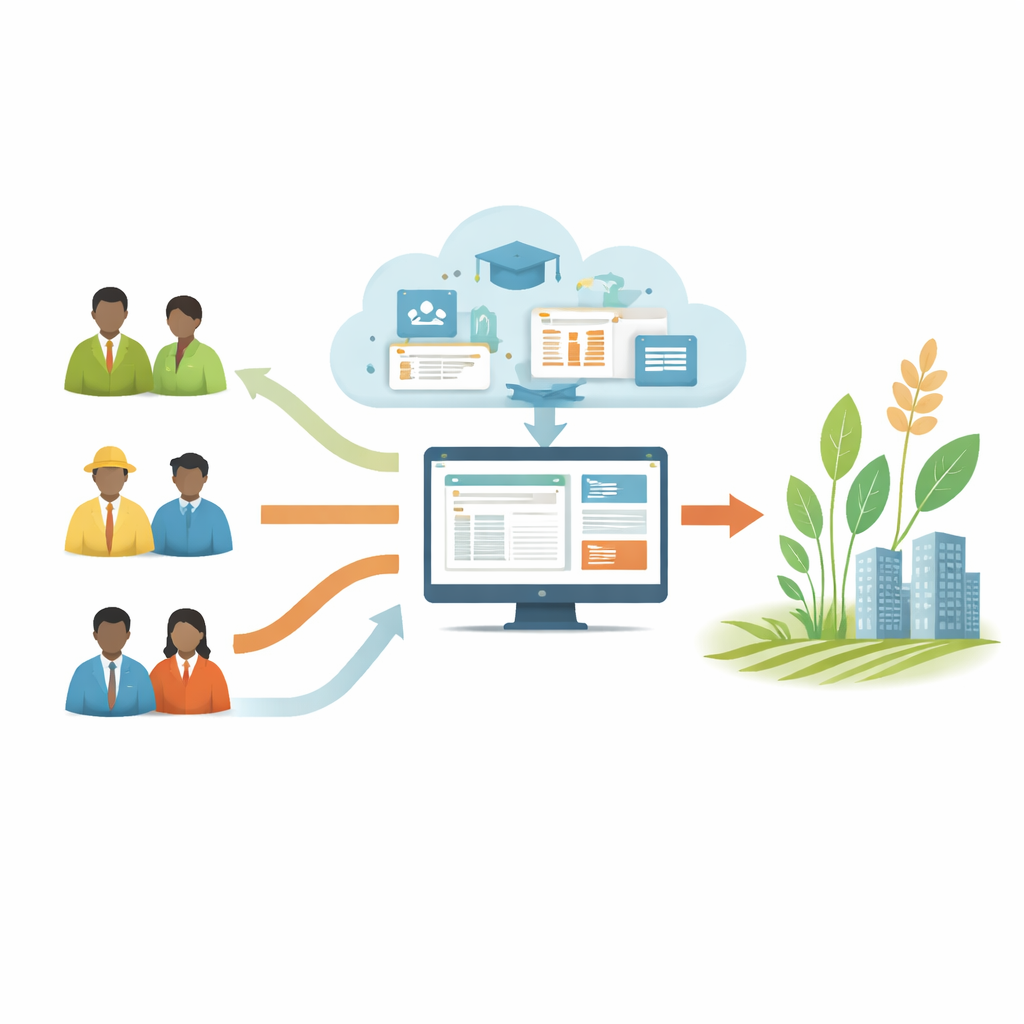
Behind every bumper crop and new farming technique are thousands of people working in agricultural research institutions. Keeping this workforce up to date is a huge challenge: staff are spread across the country, work in very different roles, and have limited time for courses. This article describes how India’s main agricultural research body built a simple, nationwide online system to manage staff training. By moving from paper files to a carefully designed e-governance platform, the organization shows how digital tools can boost skills, morale, and performance in the public sector.
Bringing government training into the digital age
The Indian Council of Agricultural Research (ICAR) oversees more than 115 research institutes and a large, diverse workforce, from scientists and technicians to administrative and support staff. The government now requires such organizations to ensure that every employee receives a minimum amount of training over their career. Previously, identifying who needed which course, approving applications, and tracking results were mostly manual processes, making it hard to plan fairly or efficiently. The authors set out to create an online platform that could handle this entire cycle: collecting training needs, routing applications for approval, capturing feedback after courses, and assessing whether training actually improved people’s skills.
How the new online system is built
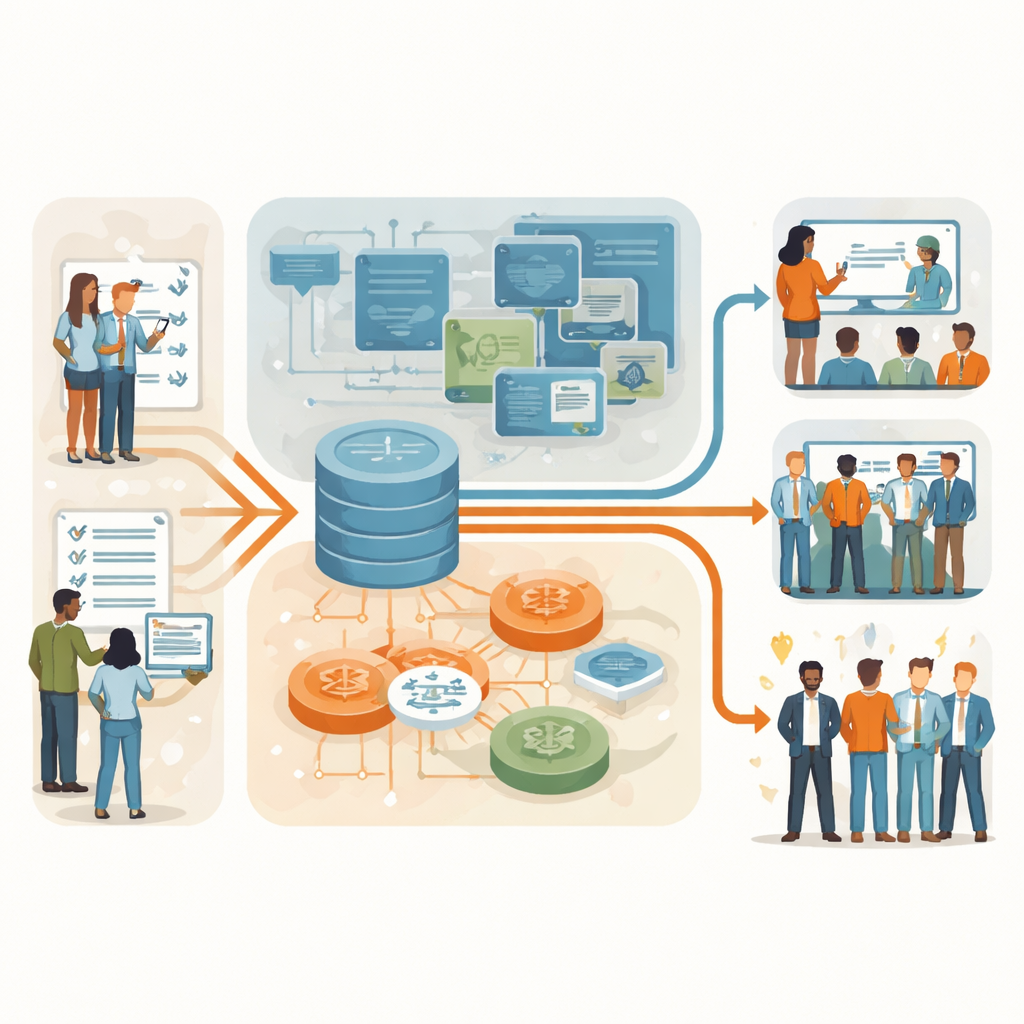
To do this, the team designed a modular e-governance model. Different pieces of the system focus on specific steps—gathering staff training needs, submitting applications, recording feedback, and evaluating performance—yet all share a common database. A web interface built with standard tools allows staff across India to log in, request trainings, and track their status. Behind the scenes, a central data layer stores information securely and makes it easy to generate summaries for managers. The design deliberately follows well-known ideas from technology adoption and social–technical theory: the software is kept straightforward so people of varying digital comfort can use it, and workflows mirror existing reporting lines so that approvals feel familiar rather than disruptive.
What changed when everything went online
Once deployed across all ICAR institutes, the platform quickly became the main route for training activities. Analysis of 10,000 employees’ data shows that scientists, who make up 28% of staff, generated about 60% of all training needs and applications through the system. Technical staff used it in proportion to their numbers, while administrative and especially skilled and support staff used it far less. Feedback surveys revealed that scientists were the most satisfied users, and support staff the least, often because of weaker computer skills. Even so, the system pushed all groups to become more familiar with basic digital tasks, and managers responded by arranging extra help and, in some cases, having supervisors assist support staff with data entry so their training needs were not ignored.
Turning training data into better decisions
Because every request and completed course flows into a shared database, the platform doubles as a decision-support tool. Managers can now see which topics are most in demand for each staff group, how long employees prefer trainings to last, and which institutes are most sought after as training providers. For example, scientists often ask for longer, two- to three-week courses in specialized technical areas, while administrative and support staff tend to favour shorter programs focusing on computer literacy, office procedures, and practical skills. A handful of training centres emerged as especially popular across cadres. These patterns help leaders design future annual training plans, choose course durations, and allocate limited slots to the institutes where they will have the greatest impact.
Where this approach could go next
The authors argue that their e-governance model has already transformed how ICAR manages capacity building: it has made approvals faster, improved oversight, and provided clear evidence of which trainings help different employee groups. At the same time, low use by some support staff highlights ongoing inequalities in digital readiness. Looking ahead, the team suggests adding artificial intelligence tools that could analyze past data to suggest tailored courses to each employee and answer routine questions through chatbots. In plain terms, the study shows that a thoughtfully designed online platform can turn a complex, paper-heavy government training system into a living, data-rich service that steadily raises the skills of the people who keep agricultural research running.
Citation: Dahiya, S., Marwaha, S. & Jain, N.K. Effective competency enhancement in agricultural research institutions- an E-governance model. Humanit Soc Sci Commun 13, 507 (2026). https://doi.org/10.1057/s41599-026-06572-x
Keywords: e-governance, human resource development, agricultural research, training management, capacity building