Clear Sky Science · en
Emerging technologies for STEM education: global evidence on learning, equity, and SDG4
New Tools Shaping Tomorrow's Classrooms
From child-friendly robots to virtual reality headsets and smart sensors, a wave of new technologies is quietly reshaping how young people learn science, technology, engineering, and mathematics (STEM). This review article pulls together nearly two thousand studies from around the world to ask a simple but urgent question: can these tools not only boost learning, but also open doors for girls and underrepresented students while advancing global education goals? 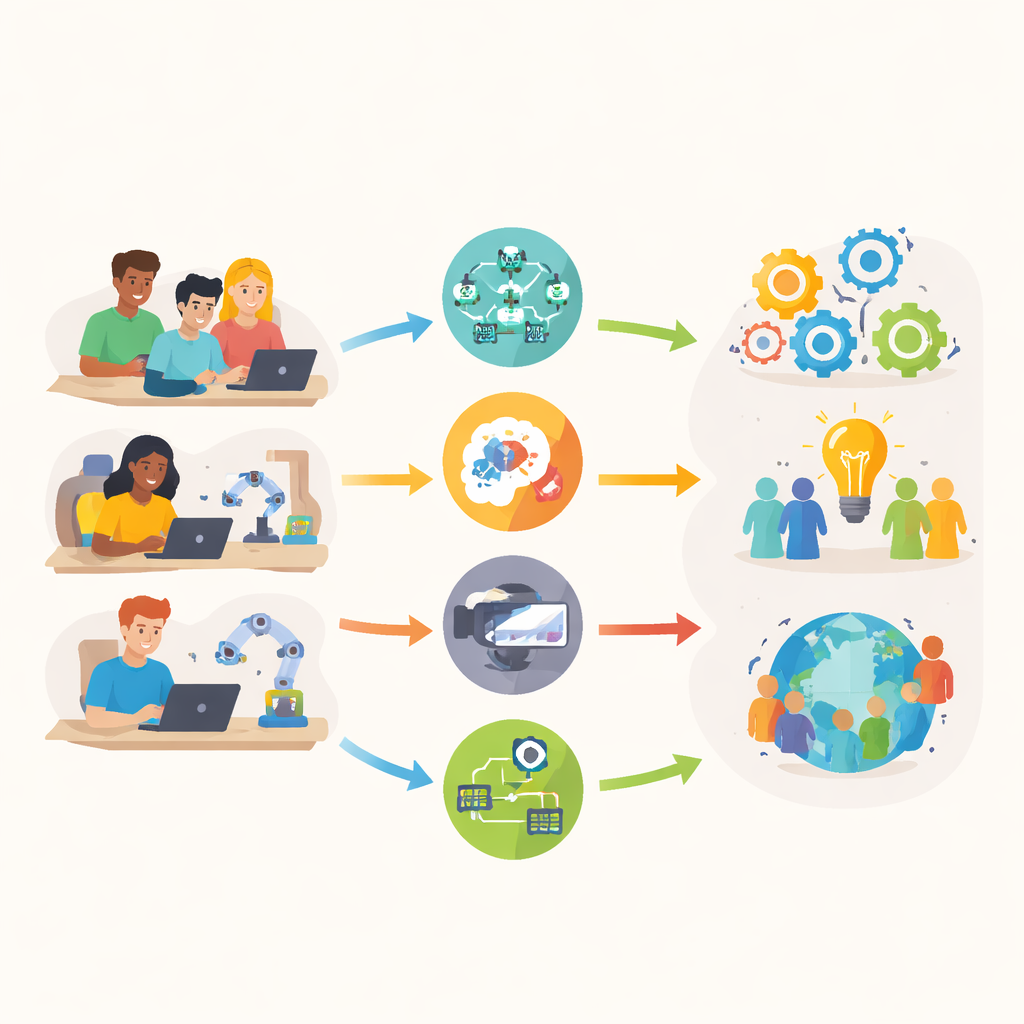
Four Families of Technology Changing How Students Learn
The authors identify four especially influential technologies in STEM education: robotics, artificial intelligence (AI), extended reality (XR, which includes virtual and augmented reality), and smart connected systems such as the Internet of Things. Across many classrooms and age groups, robots turn abstract ideas into hands-on projects that build problem-solving, teamwork, and computational thinking. AI systems quietly personalize lessons, flag students who may be struggling, and power intelligent tutoring that can adapt to each learner. XR immerses students in 3D worlds where they can explore molecules, electric circuits, or ecosystems as if they were physically present, often improving understanding and motivation. Smart connected systems link low-cost devices, remote labs, and fabrication tools, allowing students to experiment with real data and equipment that once lived only in advanced research facilities.
How These Tools Affect Skills, Motivation, and Access
Across the studies reviewed, these technologies consistently help students develop both technical and “thinking” skills. Robotics and IoT projects support design thinking and real-world problem solving; XR tends to strengthen spatial reasoning, persistence, and curiosity; AI supports timely feedback and more efficient practice. Importantly, these gains are not limited to elite universities. Well-designed online courses, cloud-based labs, and fabrication-as-a-service platforms let schools with limited budgets share equipment and expertise. Pilot projects show that even primary schools can introduce concepts like digital twins or cybersecurity through playful, age-appropriate activities. At the same time, the authors flag practical hurdles: the cost of hardware, the need for teacher training, and ethical questions around data privacy and algorithmic bias.
Closing the Gender Gap and Reaching Global Education Goals
One of the most pressing issues in STEM is gender equity. The review finds that girls remain a minority in many advanced programs and competitions, and their participation often drops with age. However, targeted interventions—such as robotics camps designed for girls, mentorship programs, and culturally responsive teaching—can boost confidence, interest, and persistence. Emerging tools can help when they are used thoughtfully: inclusive digital forensics games have raised girls’ interest in cybersecurity, and generative AI can tailor examples and content to different cultures and backgrounds. The authors connect these efforts to the United Nations’ Sustainable Development Goal 4 (SDG4), which calls for quality education for all. Most of the research they map focuses on SDG4.4, which stresses practical skills for the modern workforce, but there is also growing work on teacher training and equity. 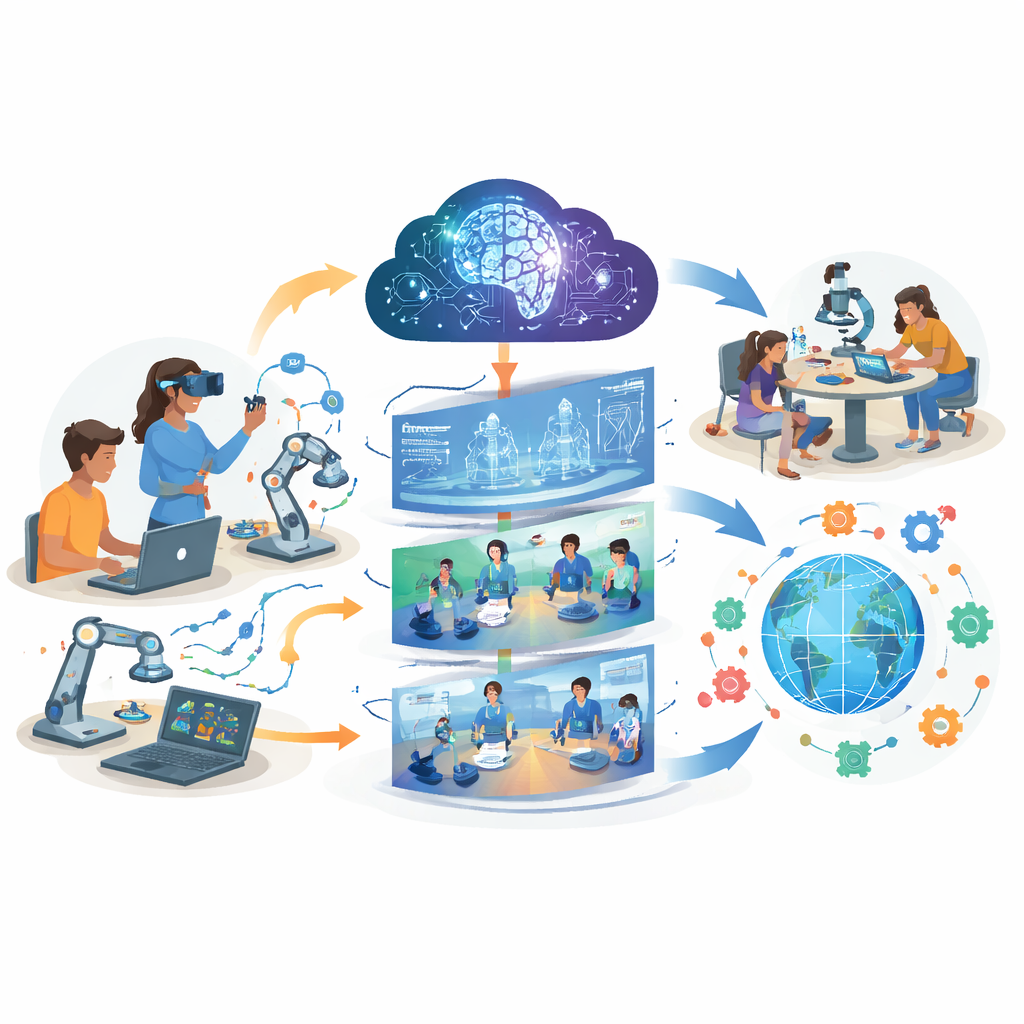
Why Learning Theories Still Matter Behind the Screens
Although the tools are new, the underlying question is old: how do people learn best? The review notes that surprisingly few studies make strong use of established learning theories. When they do, the results are more coherent and easier to apply. For instance, constructivist and experiential models guide the design of VR labs where students actively manipulate objects and reflect on what they see. Social and cultural theories help researchers understand who speaks up on robotics teams and who is left on the margins, revealing that technology alone cannot fix deep-seated inequities. Universal design for learning provides principles for making activities accessible to students with different abilities. The authors argue that adapting and testing such theories for each new technology is essential if schools are to move beyond flashy demonstrations to lasting change.
What This Means for Teachers, Policymakers, and Families
In plain terms, the article concludes that emerging technologies can indeed make STEM learning more engaging, more practical, and more connected to real jobs—while also offering powerful tools to tackle gender gaps and other forms of exclusion. But these benefits are not automatic. They depend on careful design grounded in learning science, sustained teacher development, affordable access, and strong ethical safeguards. Looking ahead, the authors see promise in generative AI and metaverse-like environments to deliver highly personalized, multilingual, and collaborative learning spaces. To realize that promise fairly, they call for policies that support under-resourced schools, protect student data, and deliberately foster inclusion, so that the next generation of STEM innovators truly reflects the diversity of the world they will help shape.
Citation: Nedungadi, P., Thushara, M.G., Veena, G. et al. Emerging technologies for STEM education: global evidence on learning, equity, and SDG4. Humanit Soc Sci Commun 13, 522 (2026). https://doi.org/10.1057/s41599-026-06565-w
Keywords: STEM education, educational technology, gender equity, virtual and augmented reality, artificial intelligence in learning