Clear Sky Science · en
Mapping the landscape of China’s outward foreign direct investment research: insights from a bibliometric overview
Why this global money story matters
When Chinese companies invest abroad—building factories, buying mines, or financing railways—it can reshape jobs, politics, and the environment from Africa to Europe. This paper doesn’t study one project or one country; instead, it steps back and asks: how have scholars around the world tried to understand China’s outward foreign direct investment, or OFDI, over nearly four decades? By tracing who researches what, where, and with whom, the authors offer a map of ideas that helps citizens, journalists, and policymakers see how thinking about China’s global reach has changed over time.
Taking the measure of a research boom
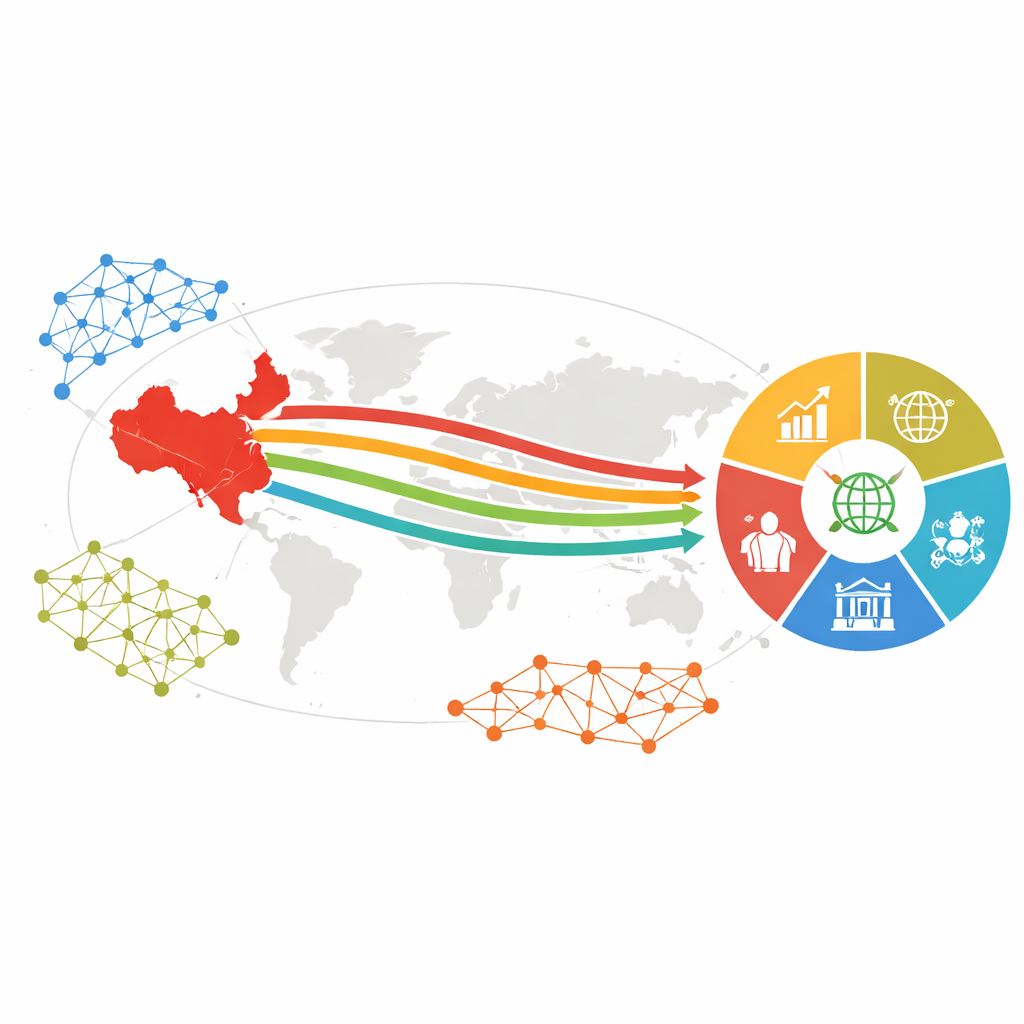
The authors collected 1,717 peer‑reviewed studies on China’s overseas investment, published between 1987 and 2023 in major academic databases. Using bibliometric tools—essentially statistics and network maps for publications—they tracked how often papers are cited, which countries collaborate, and which topics cluster together. Early on, only a handful of studies appeared, reflecting China’s tight controls on overseas ventures and its focus on attracting foreign money rather than sending it out. Interest exploded after two big policy pushes: the “Going Global” strategy around 2000, which encouraged Chinese firms to expand abroad, and the Belt and Road Initiative in 2013, which tied overseas investment to huge infrastructure corridors.
Who writes about China’s money, and from where
The mapping shows that China sits at the center of a dense international research web. Chinese universities and institutes work closely with partners in the United States, the United Kingdom, Australia, and several Asian hubs such as Hong Kong, Singapore, and South Korea. These countries form the core of the conversation about China’s OFDI. By contrast, many regions that receive large inflows of Chinese money—especially parts of Africa and Eastern Europe—play a much smaller role in shaping the academic debate. This imbalance means that much of what we “know” about Chinese investment is filtered through the lenses of researchers in China and richer economies, rather than through the voices of local scholars in host countries.
Eight big themes behind China’s overseas push
By examining which keywords tend to appear together, the authors identify eight broad themes that structure the field. One group of studies looks at business strategy: why firms go abroad, which sectors they choose, and how state‑owned and private companies differ. Another explores diplomacy and power, asking how loans and infrastructure deals intersect with political influence and worries about “debt traps.” A third theme focuses on the economic effects on host countries, from new trade routes to fears that local companies could be squeezed out. Additional strands examine legal rules and regulation, social and cultural frictions, technology transfer and innovation, environmental impacts, and the policies used to steer or restrain investment. Together, these areas show that China’s OFDI is no longer seen simply as money chasing oil or markets; it is intertwined with questions of fairness, transparency, and long‑term development.
How research topics have shifted over time
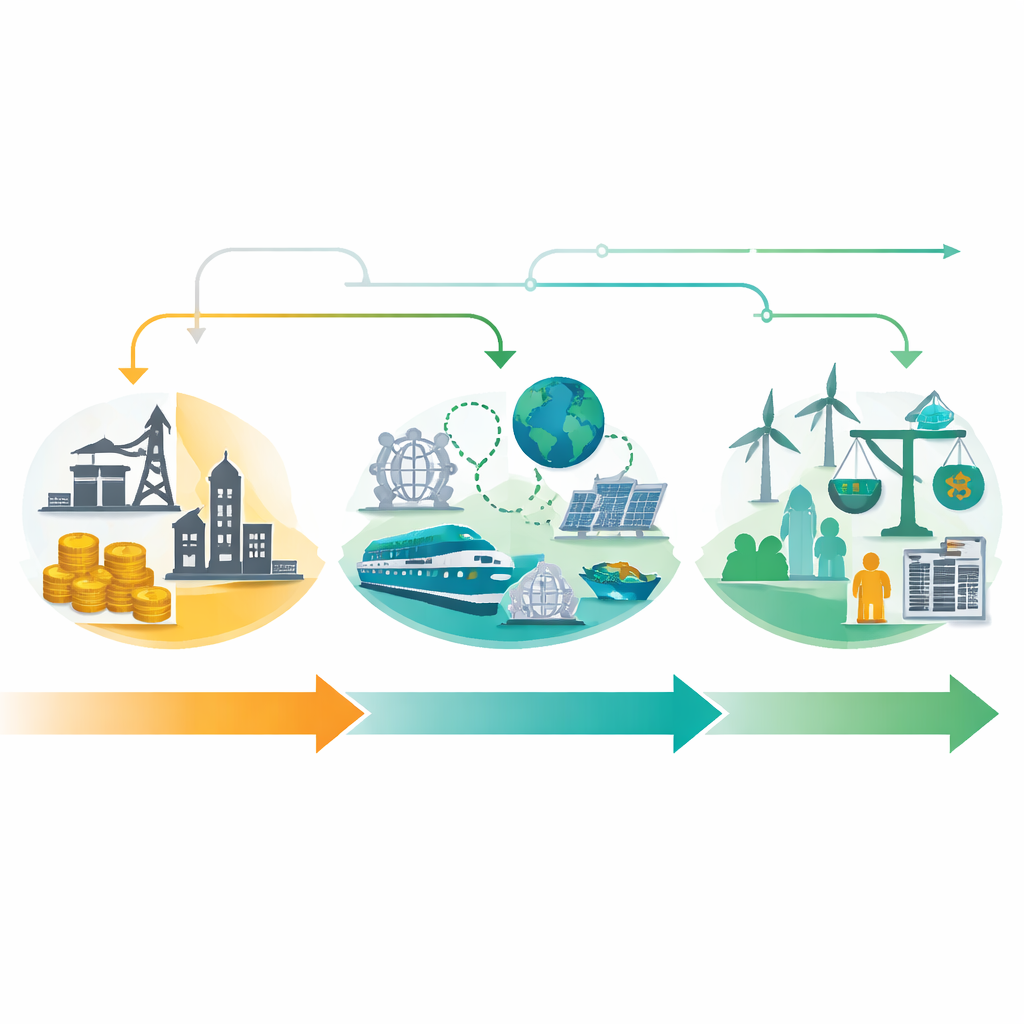
The timeline of keywords reveals a clear evolution. Early work concentrated on the basics: where Chinese money goes, how capital moves, and how firms secure resources and industrial footholds overseas. With the rise of the Belt and Road, attention shifted to connectivity—roads, ports, and pipelines—and to cooperation between governments and companies. More recent studies widen the lens further, probing environmental side‑effects, such as carbon emissions and deforestation, as well as social issues like jobs, inequality, and labor conditions. Scholars are increasingly asking whether Chinese projects help countries upgrade their industries and move toward cleaner energy, or whether they lock them into risky debts and polluting activities.
Where tomorrow’s questions are pointing
Using gaps in the existing literature, the authors outline five paths for future work. They call for closer study of how overseas investment reshapes China’s own industrial mix at home; how culture and informal rules in host countries affect deals on the ground; how projects influence poverty, wages, food security, and everyday life; how environmental harm beyond climate change—such as water quality or biodiversity loss—plays out; and why some regions and sectors remain understudied despite receiving growing Chinese capital. They also stress the need for more voices from host countries themselves, and for richer data in languages other than English, to fully grasp what these investments mean for ordinary people.
What this map of ideas tells non‑specialists
For lay readers, the study’s main message is that debate over China’s overseas investment has matured from narrow questions about profit and resources into a wide‑ranging conversation about responsibility. Researchers now weigh economic gains against social and environmental costs, and they increasingly see China not just as a rising investor but as a key player in global efforts to build—or undermine—sustainable and inclusive growth. By showing how research has followed China’s policy shifts and where blind spots remain, this paper offers a guide for anyone trying to make sense of the stories behind the ports, railways, and factories that link China to the rest of the world.
Citation: Yang, B., Ebn Jalal, M.J., Sarkar, M.A.R. et al. Mapping the landscape of China’s outward foreign direct investment research: insights from a bibliometric overview. Humanit Soc Sci Commun 13, 371 (2026). https://doi.org/10.1057/s41599-026-06559-8
Keywords: China outward investment, Belt and Road, foreign direct investment, global development, sustainability