Clear Sky Science · en
Securing space domain awareness overview: decisions in the nick of time
Why watching space matters to life on Earth
Everyday technologies—from GPS navigation and weather forecasts to global banking and internet links—depend on satellites quietly circling our planet. As orbits grow crowded and digital threats multiply, keeping track of what happens in space, and deciding how to respond, has become a race against the clock. This article explains how experts are rethinking “space domain awareness,” the art and science of knowing what is going on in space, so that critical decisions can still be made in time when something goes wrong.
From empty sky to busy neighborhood
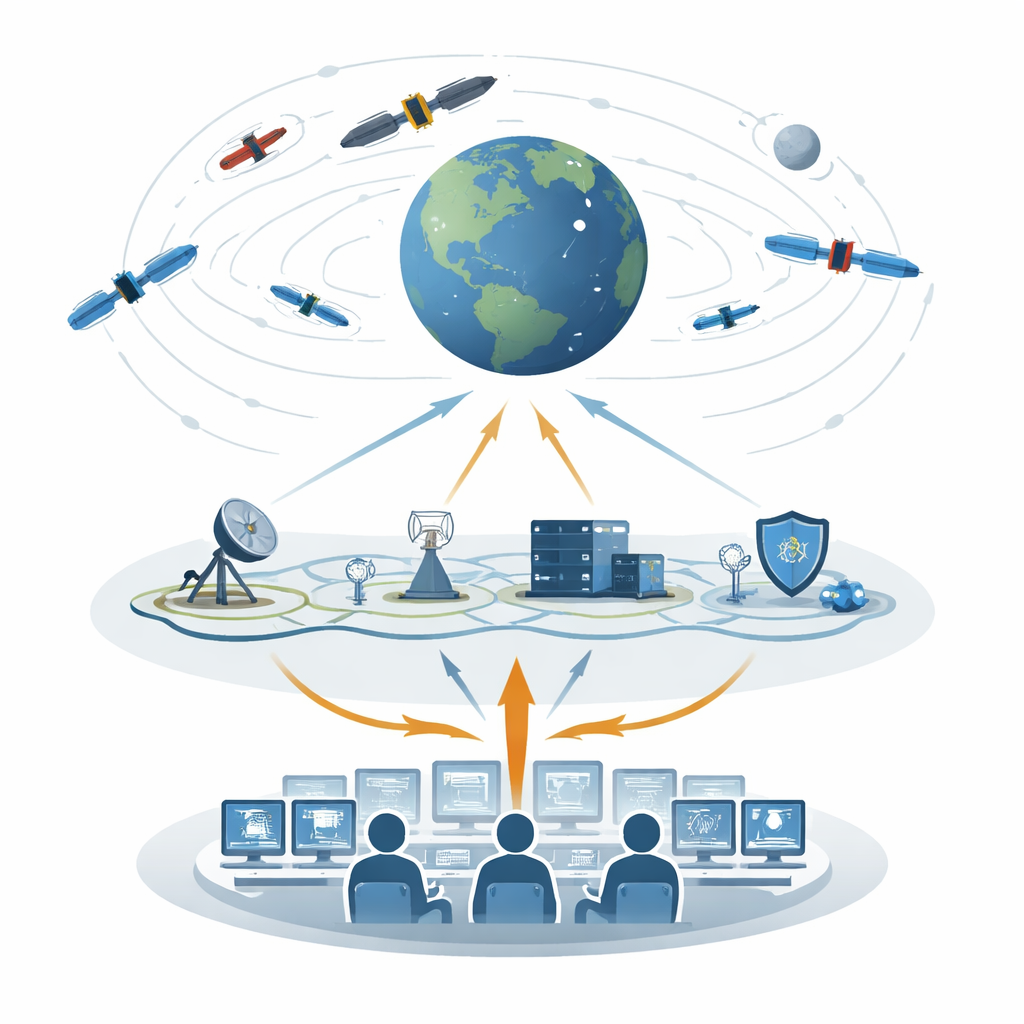
Space used to seem like a vast and nearly empty arena reserved for a few national space programs. Today it is a bustling neighborhood. Thousands of working satellites and many more pieces of debris circle Earth in different orbital “layers,” from very low paths skimming the atmosphere to high orbits that hover over the same point on the globe. Private companies now launch large groups of small, inexpensive satellites, and future plans extend activity into the region between Earth and Moon. This explosive growth brings benefits such as better communications and Earth imaging, but also makes it harder to track objects, avoid collisions, and understand other actors’ intentions in orbit.
Seeing the whole picture, not just the dots
For years, the main focus in monitoring space was simply to detect and track objects—a task known as space situational awareness. The review explains that modern space domain awareness must go further. It must combine information about orbits with knowledge about space weather, traffic management, and intelligence on what satellites can do and why they might move. It must also recognize that space does not stand alone. Every satellite depends on radio and optical links through the electromagnetic spectrum, and on computers and networks in cyberspace. As a result, awareness today is about fusing many streams of data across these physical and non-physical realms to answer a simple but demanding question: what is happening, and what does it mean?
Decisions under pressure and the race against time
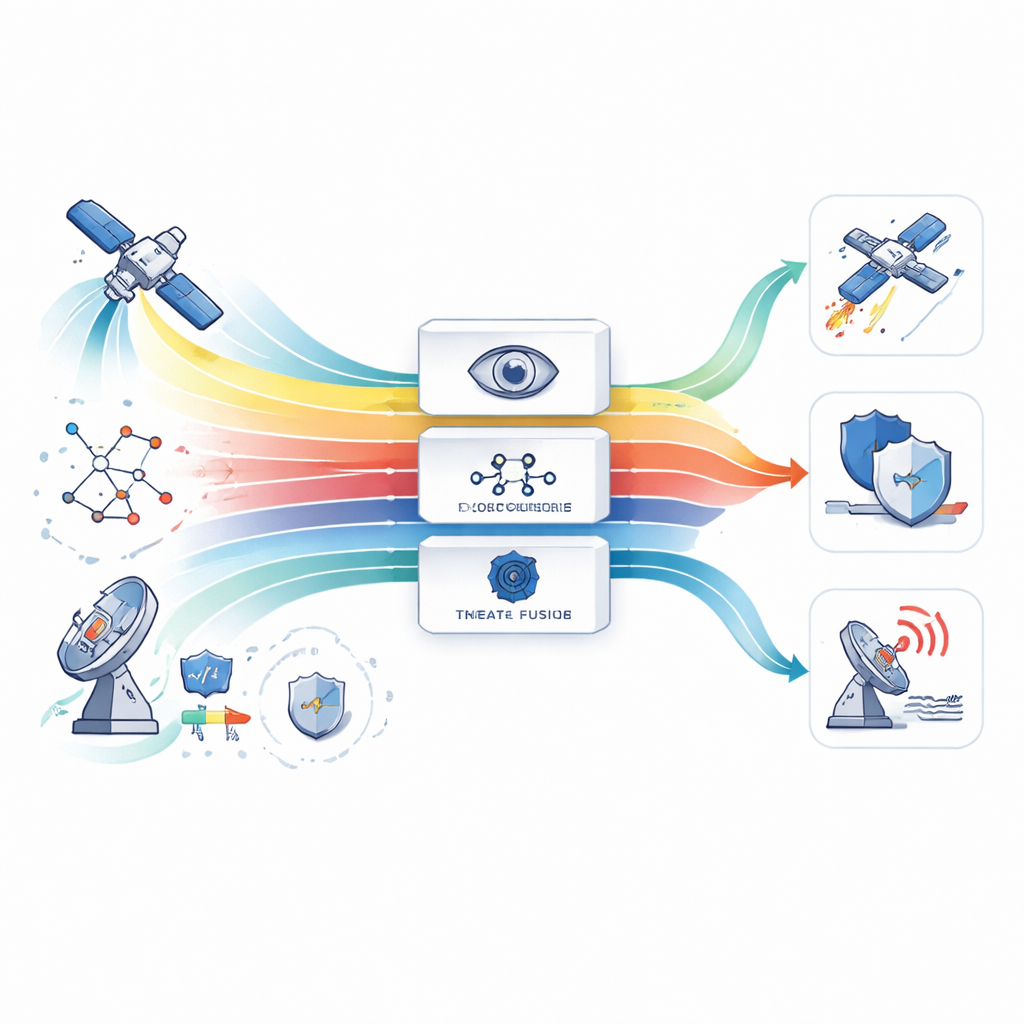
The authors describe space domain awareness as a decision chain with five steps: observing, fusing data, drawing conclusions, planning actions, and carrying them out. Traditionally, most of the heavy thinking happened on the ground in centralized centers. That approach is now straining under the weight of more satellites, longer communication paths, and faster-moving threats. To cut delays and avoid single points of failure, emerging designs push more processing and decision power into space itself and spread it across many nodes. At the same time, cyberattacks and intentional interference over radio and optical links are rising sharply. Attacks may aim not only to disrupt operations but to sow doubt and erode trust in the information that supports decisions. Protecting the chain therefore means guarding both the data and the timing: who sent which data, whether it has been altered, whether it arrived in time to be useful, and how quickly a reliable response can be mounted.
Rules, trust, and shared stewardship of the skies
Technical fixes alone are not enough. The article shows how international treaties, new guidelines on sustainable use of orbit, and emerging standards for space cybersecurity and traffic coordination shape what space domain awareness can achieve. Because commercial companies now operate many of the satellites and provide key tracking and analysis services, governments increasingly depend on shared data and interoperable systems. Efforts at the United Nations, in national space agencies, and in telecommunications bodies are working to balance commercial growth, scientific needs, national security, and the long-term health of the orbital environment. Underneath these debates lies a fragile ingredient: trust among nations, companies, and other stakeholders.
What it means for our future in space
The review concludes that securing space domain awareness is essential for keeping space usable and peaceful. As space activity spreads toward the Moon and beyond, decisions will need to be based on information that is not only accurate and secure, but also delivered fast enough to matter. Building more resilient architectures, strengthening cyber and spectrum protections, and updating global rules can turn awareness itself into a form of deterrence, helping discourage reckless or hostile actions. For everyday life on Earth, this means a better chance that satellites will continue to deliver the services we rely on—and that humanity can expand its presence in space without losing control of the risks that come with it.
Citation: Benchoubane, N., Karabulut Kurt, G. Securing space domain awareness overview: decisions in the nick of time. npj Wirel. Technol. 2, 15 (2026). https://doi.org/10.1038/s44459-025-00020-z
Keywords: space domain awareness, satellite security, cyber threats in space, orbital traffic, space governance