Clear Sky Science · en
Geopolitical and geoeconomic risks overtake climate narratives in Arctic coverage
Why the far north matters now
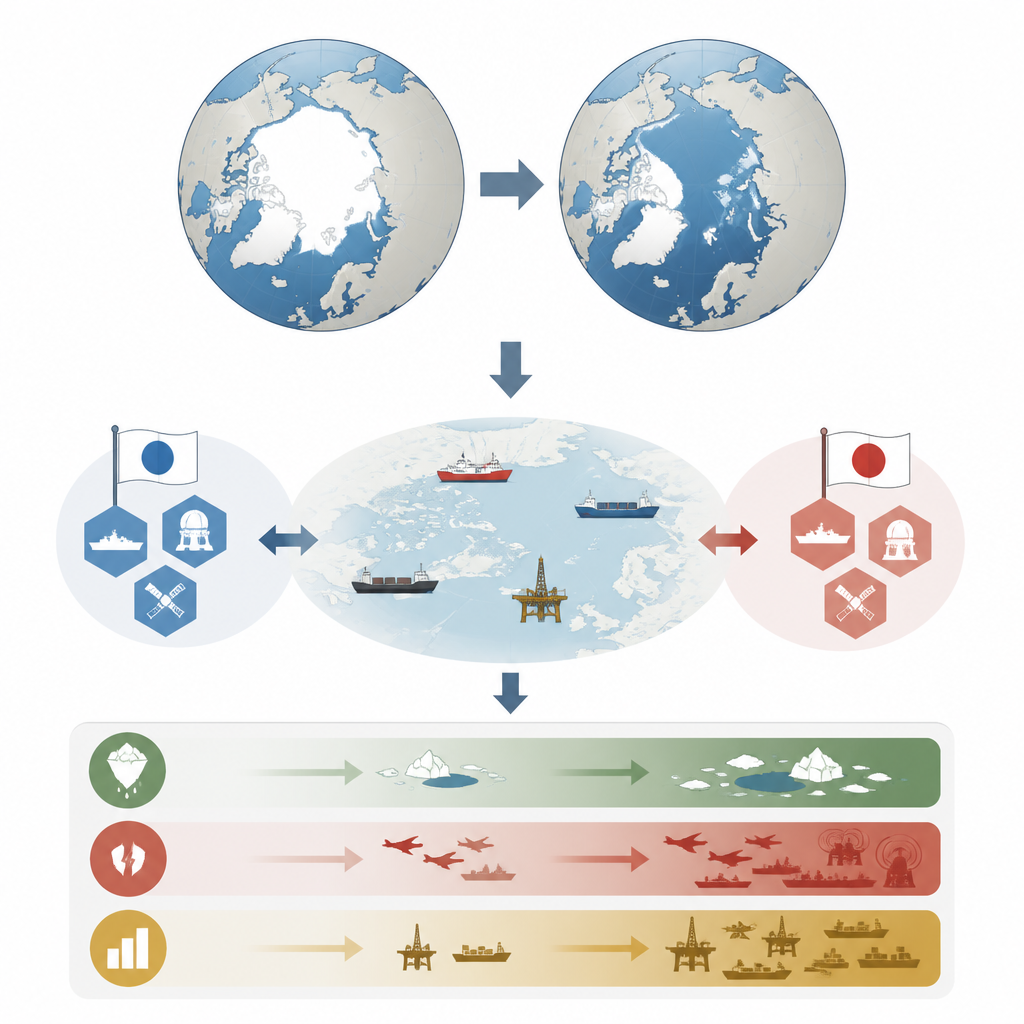
The Arctic is often pictured as a remote land of ice and polar bears, but it is rapidly becoming a stage for global power struggles and new business plans. As warming temperatures thin the sea ice, the region is opening to shipping, mining and oil and gas extraction. This study asks a simple question with big consequences: when newspapers talk about the Arctic, are they still mainly talking about climate change, or have security and money moved to the center of the story?
From frozen backwater to hot topic
For much of recent history, the harsh Arctic climate kept large scale conflict and industry at bay. The region was sometimes even described as a “zone of peace.” Climate change has altered that picture. As summers grow warmer and sea ice shrinks, the Arctic’s vast reserves of oil, gas and minerals are becoming easier to reach. New shipping routes that cut days off journeys between Europe and Asia are starting to attract traffic. These shifts have drawn in major powers such as Russia, the United States and China, each trying to secure access, influence and advantages in the far north.
Measuring tension through news stories
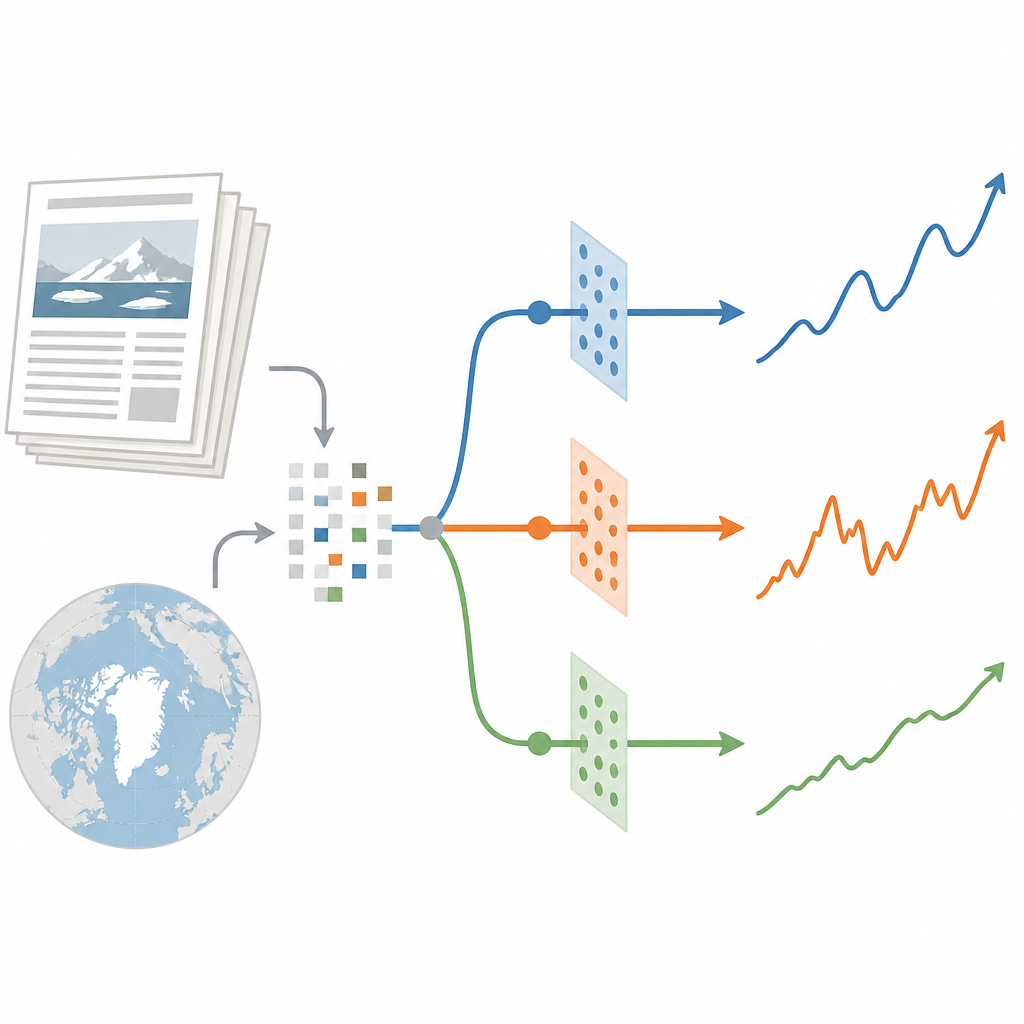
While scientists closely track Arctic temperatures and ice loss, political and economic tensions are harder to measure. The authors tackle this by turning to newspaper coverage from around the world. Building on an existing “geopolitical risk index,” they scan English language newspapers for articles that mention the Arctic and then sort them into three groups: climate change, traditional geopolitical risk, and what they call geoeconomic tension, which covers pressure applied through trade, sanctions, control of shipping lanes and access to resources. By counting how often each type of story appears relative to all Arctic articles, they build three time series that run from 1990 to 2025, at both yearly and monthly scales.
Climate stories fade as power games grow
The results reveal a clear shift. In the early 2000s, articles that linked the Arctic to climate change dominated coverage. Over time, and especially after Russia’s annexation of Crimea in 2014 and the later invasion of Ukraine, stories about military moves, regional security and strategic competition rose sharply. Articles about economic pressure and resource control also increased, reflecting interest in new sea routes, energy projects and mining. Although climate related stories remain common, their share has fallen compared with geopolitical and geoeconomic themes. Statistical tests show that the upward trend is strongest for political and economic tensions, particularly in the last decade.
Different rhythms of climate and conflict
The way these three types of coverage fluctuate over time also differs. Climate related stories tend to rise and fall more smoothly, mirroring the steady, ongoing nature of warming and ice loss. In contrast, reports of geopolitical risk spike when conflicts or confrontations erupt, such as major military exercises, new national strategies or diplomatic breakdowns. Geoeconomic tension shows a mix of both patterns: it responds to sudden events like new sanctions, but also builds more gradually as investment and competition in Arctic shipping and resources increase. This suggests that news audiences experience climate change as a persistent backdrop, while security and economic risks feel more like shocks layered on top of that background.
What this means for the Arctic and beyond
The authors conclude that the Arctic is no longer just a symbol of global warming but is now widely seen as a key arena of strategic and economic rivalry. Their newspaper based indices cannot capture every risk on the ground, and they reflect public perception rather than direct measurements of military deployments or investments. Yet they provide a consistent way to track how attention to different Arctic issues changes over time. For a lay reader, the takeaway is that melting ice is not only an environmental warning sign. It is also helping to turn the top of the world into a crossroads where climate change, great power politics and the race for resources all meet.
Citation: Rischer, C., Rickels, W. Geopolitical and geoeconomic risks overtake climate narratives in Arctic coverage. Commun. Sustain. 1, 80 (2026). https://doi.org/10.1038/s44458-026-00083-1
Keywords: Arctic politics, geopolitical risk, geoeconomics, climate change media, Arctic shipping