Clear Sky Science · en
Sustainable development and technological innovation evolve unevenly in the Central Guizhou Urban Agglomeration
Why This Matters for Growing Cities
As cities swell and new technologies promise cleaner air and better lives, a key question looms: do innovation and sustainability actually move forward together? This study looks for answers in the Central Guizhou Urban Agglomeration in southwest China, a fast-urbanizing cluster of 33 districts and counties. By tracking how local economies, societies, environments and technology have changed over a decade, the authors show that high-tech progress does not automatically translate into greener, fairer development—and explain what must change for innovation to truly support long-term well-being.
Where Growth and Innovation Are Out of Sync
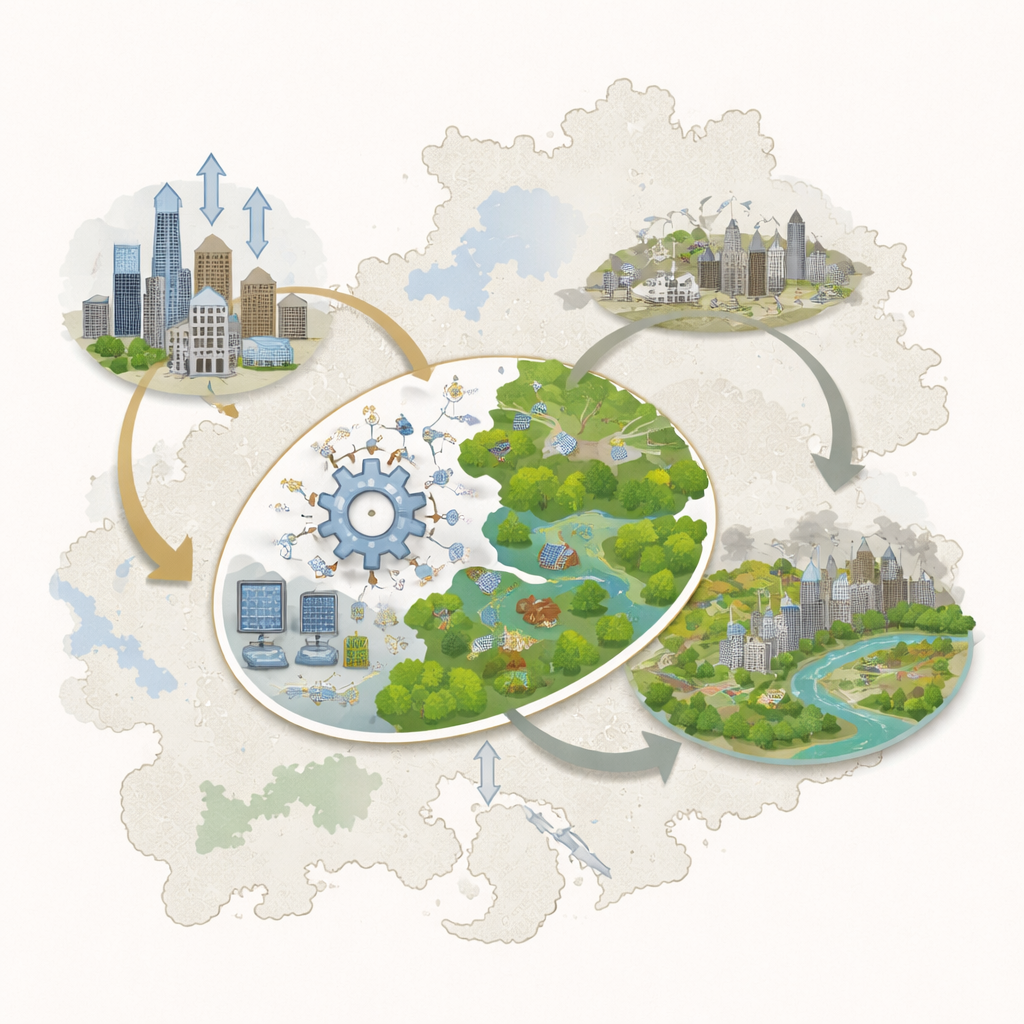
The researchers analyse data from 2013 to 2022 on income, jobs, education, pollution, public services and more, along with measures of technological innovation such as research spending, patents and numbers of high-tech firms. They find that both sustainability and innovation levels are generally low across the region, and that development is patchy. Big-city districts around Guiyang and Zunyi tend to score higher on economic strength and living conditions, while many outlying counties lag behind. Technological innovation is even more uneven: it clusters in a few core areas that attract investment, talent and cutting-edge firms, leaving large parts of the region with only modest gains in new technology.
Uneven Progress on People and Planet
Over the decade, indicators of sustainable development—such as incomes, access to services and treatment of pollution—creep upward in most places, suggesting slow but steady improvement. Yet these gains are not evenly spread. Some cities, like Renhuai with its thriving liquor industry and strong local policies, move rapidly into higher tiers of development, while others fall behind. Environmental challenges remain stubborn, and some districts see setbacks when shocks like the COVID-19 pandemic hit. Meanwhile, the geography of innovation shifts in a different pattern: high-tech activity becomes more concentrated in a handful of urban districts, producing a kind of "innovation island" effect that does not automatically lift surrounding areas.
When Technology and Sustainability Fail to Work Together
To understand how these trends relate, the authors use a "coupled coordination" approach that looks not just at how strong each system is, but how well they move in step. They discover that the relationship between innovation and sustainability is weak and unstable. Many districts sit in a zone where more innovation does not necessarily bring better environmental or social results—in some cases, rising technology is associated with stagnant or even worsening sustainability. By mapping how different factors interact, the study highlights key players: urbanisation, economic growth and household incomes sit at the center of the network, while innovation indicators like patents and artificial intelligence firms are becoming more influential but still do not reliably translate into cleaner air, greener land or more equal opportunities.
Why New Technology Often Stalls at the Last Mile
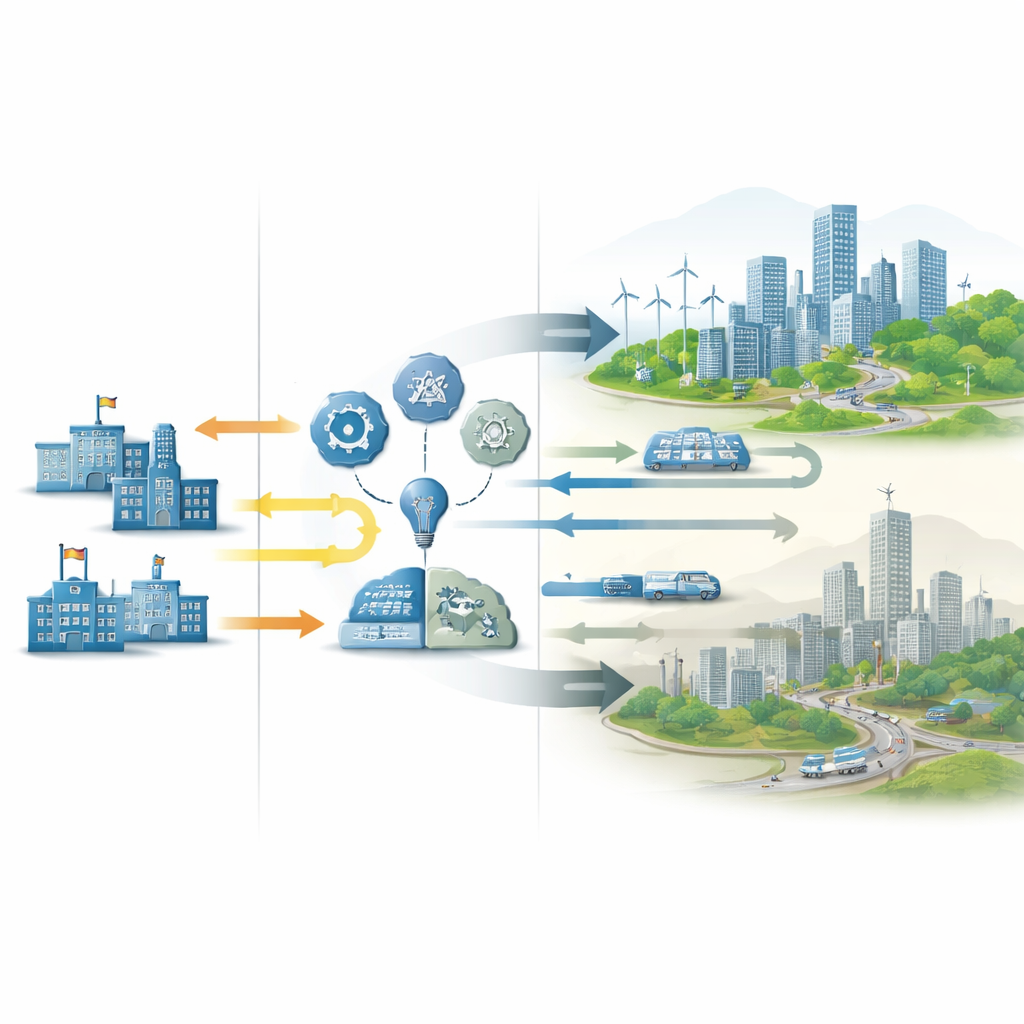
The analysis points to a core bottleneck: conversion. Investments in research and high-tech facilities are growing, but many places lack the institutions, skills and market systems needed to turn inventions into widely used, sustainability-enhancing solutions. Some districts have stronger ecosystems for testing and spreading green technologies—such as efficient public transport, cleaner industry and better waste treatment—while others struggle to adopt them. This leads to a pattern where innovation benefits accumulate in already-advantaged areas, and where environmental pressure can even increase if new technologies boost production without improving efficiency or cutting pollution.
What It Means for Future City Planning
For non-specialists, the message is clear: simply pouring money into high-tech projects will not guarantee cleaner, fairer cities. The authors argue that urbanisation, economic policy and innovation strategy must be aligned so that new technologies are designed, funded and rewarded for delivering real environmental and social gains, not just higher output. That means strengthening local governments and firms so they can absorb and apply new ideas, nurturing innovative enterprises in lagging counties, and building market and policy tools that reward low-carbon, resource-saving solutions. In essence, innovation must be steered and supported to serve sustainable development—otherwise, growing cities risk becoming smarter without becoming more liveable.
Citation: Zhang, Y., Kong, L. Sustainable development and technological innovation evolve unevenly in the Central Guizhou Urban Agglomeration. Commun. Sustain. 1, 66 (2026). https://doi.org/10.1038/s44458-026-00074-2
Keywords: urban sustainability, technological innovation, China urbanization, regional inequality, green development policy