Clear Sky Science · en
Microbial electrochemical technologies can support sustainable energy, waste treatment, and resource recovery
Living Wires for a Cleaner Future
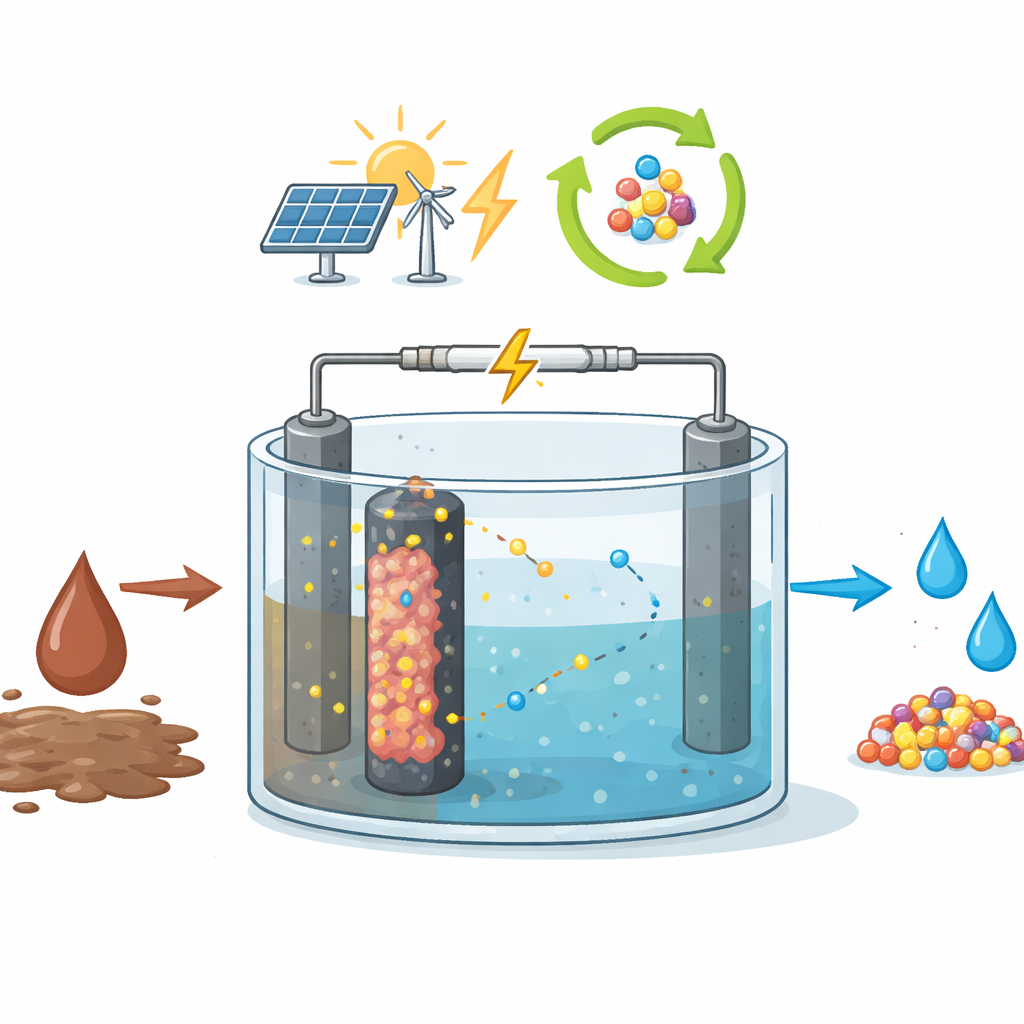
Most of us think of electricity and microbes as belonging to very different worlds: power lines in the sky, bacteria in the ground or in our gut. This article shows how those worlds are being deliberately connected. By letting certain microbes plug into electrodes like tiny living wires, scientists are building systems that turn dirty water into cleaner water, waste into energy and chemicals, and pollution into recovered resources. These “microbial electrochemical technologies” could become part of tomorrow’s toolkit for tackling climate change, water scarcity, and resource shortages.
How Tiny Organisms Talk to Metal
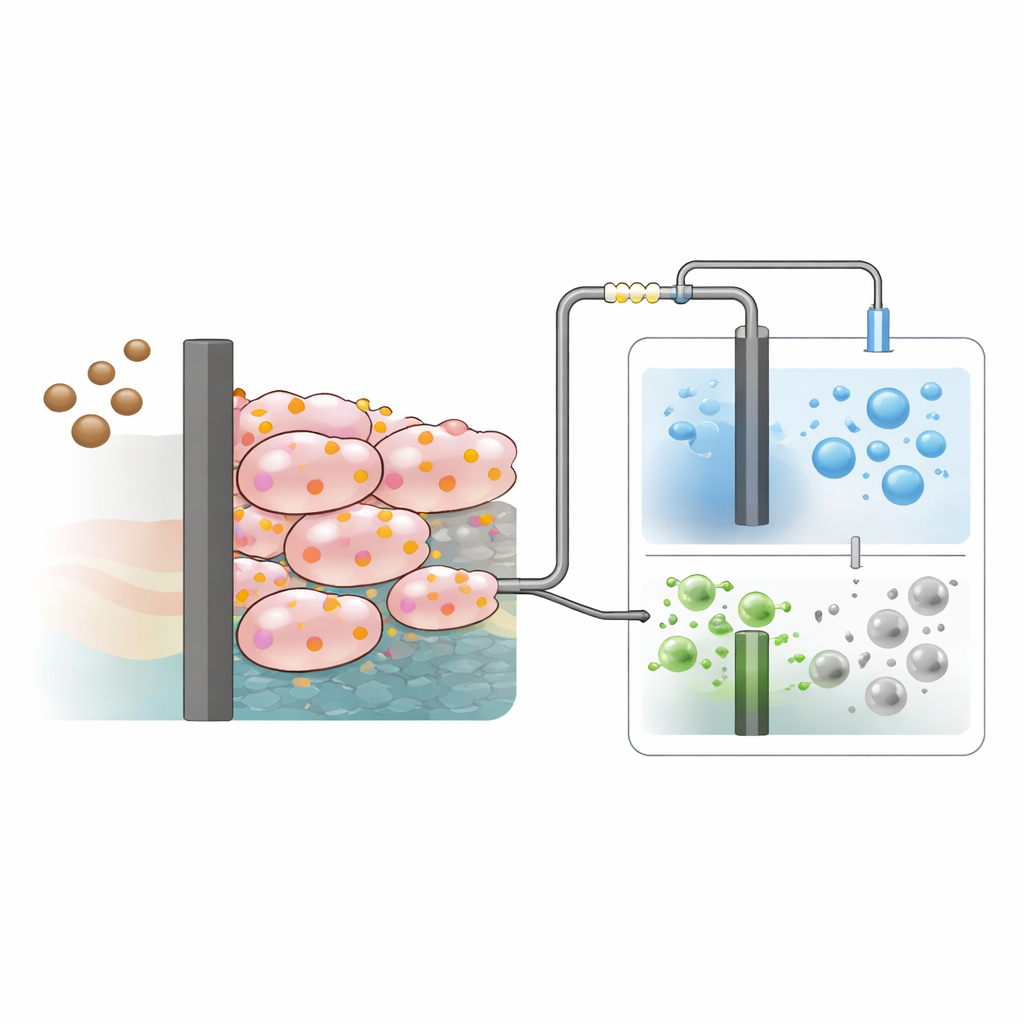
Some microorganisms naturally move electrons across their cell walls to solid materials such as minerals. In specially designed devices, those minerals are replaced by electrodes, and the microbes form dense films on their surfaces. When the microbes eat organic matter in wastewater, they push electrons into an anode (one electrode), and those electrons then flow through a circuit to a cathode (the other electrode), where a useful reaction takes place. This ability to shuttle electrons outside the cell is called extracellular electron transfer. It lets living cells and electrical hardware form a single hybrid system in which biology handles complex chemistry and the circuit handles energy flow.
From Dirty Water to Power and Clean Water
The most established application of this approach is the microbial fuel cell, where communities of microbes growing on an anode break down organic pollutants in wastewater and send electrons to a cathode. In principle this can generate electricity while treating water, turning a treatment plant from an energy user into an energy saver. Pilot-scale systems have already run on real sewage streams, showing that these devices can cut the power needed for aeration and other steps, even if today they still make only modest amounts of electricity. A related setup, the microbial electrolysis cell, uses a small amount of external power along with the same microbial breakdown of waste to produce hydrogen or methane gas at the cathode, creating storable fuels from streams that would otherwise be a burden.
Cleaning Up Pollution and Salt with Microbial Help
Because the electrodes can act as bottomless sources or sinks of electrons, they can drive clean-up reactions that are hard to manage with added chemicals. In microbial electrochemical systems for bioremediation, microbes at anodes help break down stubborn organic pollutants such as chlorinated solvents and fuel components, while cathodic communities use incoming electrons to remove nitrate, sulfate, or dissolved metals from groundwater. The same principles extend to microbial desalination cells, where current generated by wastewater oxidation pulls salt ions out of a central chamber to yield fresher water. These devices have produced desalinated water using less energy than standard methods in early prototypes, though materials and design need improvement before they can spread widely.
Making New Products from Carbon and Electricity
Microbial electrochemical systems are not only about cleaning; they can also manufacture. In microbial electrosynthesis, cathode-grown microbes are fed carbon dioxide and electrons and then assemble more complex molecules such as acetate, longer-chain organic acids, or even microbial protein. Researchers use both naturally electroactive species and familiar workhorse microbes that have been genetically equipped with electron uptake pathways. These systems could convert surplus renewable electricity and waste gases into fuels, plastics building blocks, fertilizers, and even food ingredients. The article envisions “electrobiorefineries” in which electrochemical and microbial steps are combined in modular, often decentralized process lines tuned to local sources of carbon and power.
Engineering Hurdles and Path to Real-World Use
Despite their promise, microbial electrochemical technologies still struggle with practical challenges. Electrodes and membranes can be expensive, current outputs are much lower than in conventional batteries or solar panels, and thick microbial films can develop internal bottlenecks that limit performance. Scaling up requires clever reactor designs that offer large surface areas for microbes while keeping distances short and costs low. For environmental clean-up and resource recovery, low-tech reactors packed with inexpensive carbon granules may be preferable to high-performance lab devices. For chemical production, carefully controlled bioreactors and possibly engineered microbes will be needed to reach industrial rates and product purity.
Why These Living Circuits Matter
In plain terms, the article concludes that wiring microbes to electrodes is no longer a scientific curiosity: it is emerging as a flexible platform that can help society use waste streams and carbon dioxide more wisely. While only a few niche applications have reached pilot or commercial scale, the range of possible uses is broad, from cutting the energy bill of wastewater plants to recovering metals, removing farm-derived nitrate from groundwater, and turning excess renewable electricity into valuable products. To move beyond the current “valley of death” between lab success and market impact, researchers and policymakers will need to refine designs, agree on common standards, and properly value environmental benefits that do not show up directly on a balance sheet. If that happens, microbial electrochemical systems could become quiet, unseen infrastructures that help close loops in energy, water, and materials cycles.
Citation: Korth, B., Harnisch, F. Microbial electrochemical technologies can support sustainable energy, waste treatment, and resource recovery. Commun. Sustain. 1, 69 (2026). https://doi.org/10.1038/s44458-026-00073-3
Keywords: microbial electrochemical technologies, wastewater treatment, resource recovery, microbial electrosynthesis, environmental remediation