Clear Sky Science · en
Monthly national water and carbon accounting of desalination-linked balance closure in the Maldives
Why island water and climate are linked
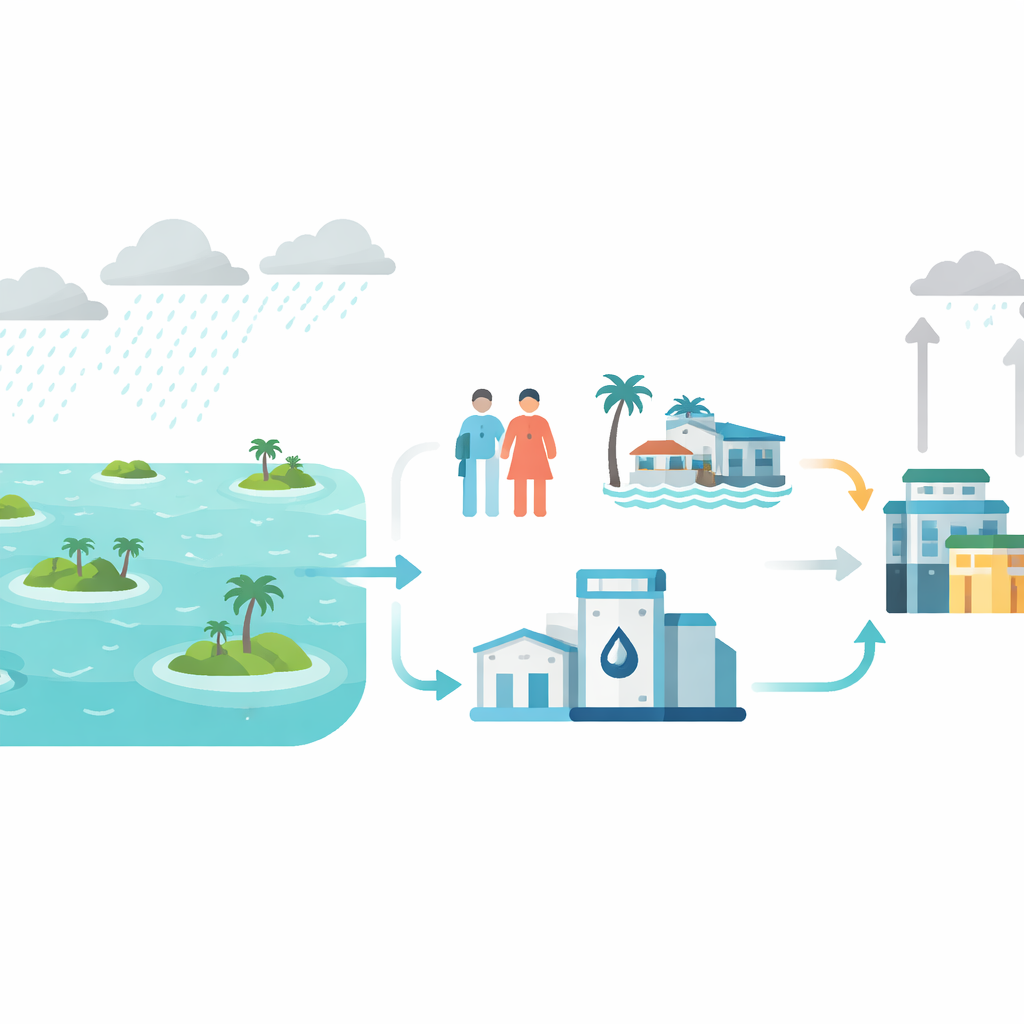
For many people, tropical islands evoke images of endless blue seas and gentle rain showers. Yet for low-lying nations like the Maldives, getting enough safe drinking water is a constant challenge. Thin freshwater lenses under the islands, salty intrusion from the ocean and wildly shifting monsoon rains mean that nature alone cannot be trusted to fill the taps. This study shows, month by month, how the Maldives now depends on seawater desalination to meet national water needs—and what that dependence costs in terms of carbon emissions that drive climate change.
How the national water ledger works
The author builds a kind of national “checkbook” for water and carbon, updated every month. On the water side, the ledger combines satellite-based rainfall data, corrected against ground stations, with an indicator of how dry the climate feels once evaporation is taken into account. It then reconstructs how much water people need by combining population statistics with tourism arrivals, using simple assumptions about how many litres of water residents and visitors use each day and how long tourists stay. On the supply side, it tallies up water that could, in theory, be captured from rain on rooftops, plus water produced by desalination plants scattered across the islands.
Turning patchy records into a full picture
Because not every desalination plant reports its output every month, the framework has to fill in the gaps carefully. When real production numbers are missing, the study estimates desalinated volumes based on each plant’s installed capacity and a typical range of how hard it is likely to be run. Those “inferred” months are clearly flagged, and uncertainty is carried through into all later calculations. Crucially, the ledger tracks only national totals and does not try to simulate how water is stored, moved between islands or rationed. Instead, it focuses on whether, on paper, desalination and potential rainwater together are enough to balance the reconstructed national demand under transparent assumptions.
From rain-fed surplus to desalination dependence
Using this ledger, the paper compares three time periods: 2005–2010 before widespread desalination, 2018–2020 as desalination expanded and 2021–2024 as it became central. In the early years, the national balance shows consistent shortfalls if only rainfall and an upper limit on rooftop harvesting are counted, signalling that non-conventional sources must already have been vital. As desalination capacity grows, the monthly gap between demand and modelled supply narrows and often flips into surplus on the ledger, meaning desalination volumes are large enough—on paper—to close the books. Even under optimistic assumptions about how much rain can be captured, desalination provides most of the modelled potential supply in the recent era, especially during dry months with strong tourism-driven demand.
The hidden carbon bill of fresh water
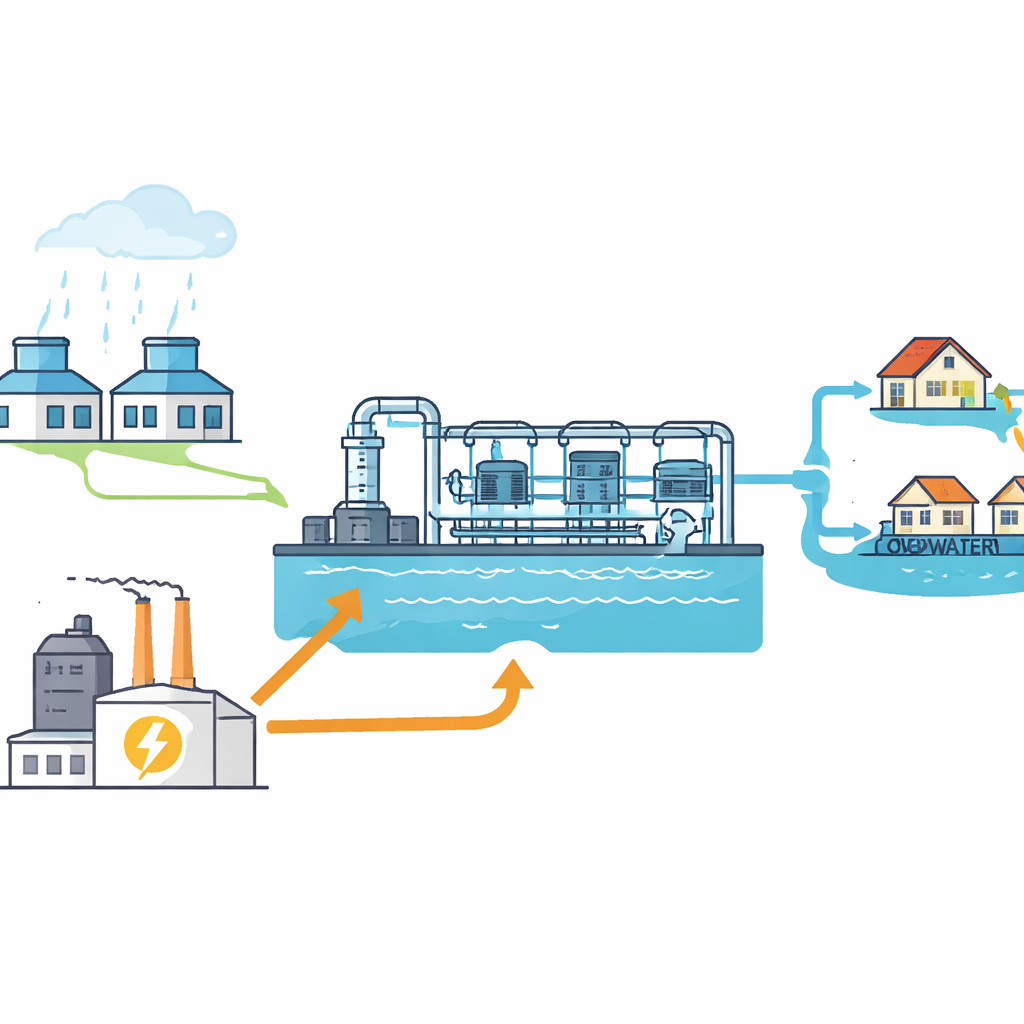
That tighter balance, however, comes with a carbon price. In the Maldives, most electricity still comes from diesel generators, so every kilowatt-hour used to push seawater through reverse-osmosis membranes releases substantial amounts of carbon dioxide. By combining desalinated volumes with standard estimates of plant energy use and the carbon intensity of the grid, the study calculates monthly emissions linked to water production. It shows that improving plant efficiency helps, but only to a point: in a fossil-heavy power system, even efficient desalination remains carbon intensive. Scenario tests reveal that the biggest emission cuts come from decarbonizing electricity—through renewables and storage—while also trimming demand in high-use sectors like resort islands and making better use of rainwater where roof area and storage allow.
What this means for island futures
Translated into everyday terms, the study shows that the Maldives has successfully used desalination to make its national water “books” add up, but at the cost of higher carbon emissions that feed back into the climate risks the islands already face. The accounting tool itself is meant to be simple enough to copy in other small island states using widely available data and open-source code. For policy-makers, the message is twofold: desalination can reliably plug water gaps, yet it should be paired with cleaner power, smarter demand and rainwater harvesting so that securing today’s drinking water does not worsen tomorrow’s climate pressures.
Citation: Birahim, S.A. Monthly national water and carbon accounting of desalination-linked balance closure in the Maldives. Commun. Sustain. 1, 64 (2026). https://doi.org/10.1038/s44458-026-00066-2
Keywords: desalination, Maldives, water security, carbon emissions, small island states