Clear Sky Science · en
Silicate-derived calcium as a pathway to low-carbon Portland cement
Why rocks matter for cleaner cities
Cement is the hidden glue of modern life, holding up our homes, bridges, and skyscrapers. Yet making it releases nearly as much carbon pollution as all the world’s small cars. This study explores a surprising way to keep using familiar Portland cement while sharply cutting those emissions: start not with chalky limestone, but with dark volcanic rocks such as basalt. 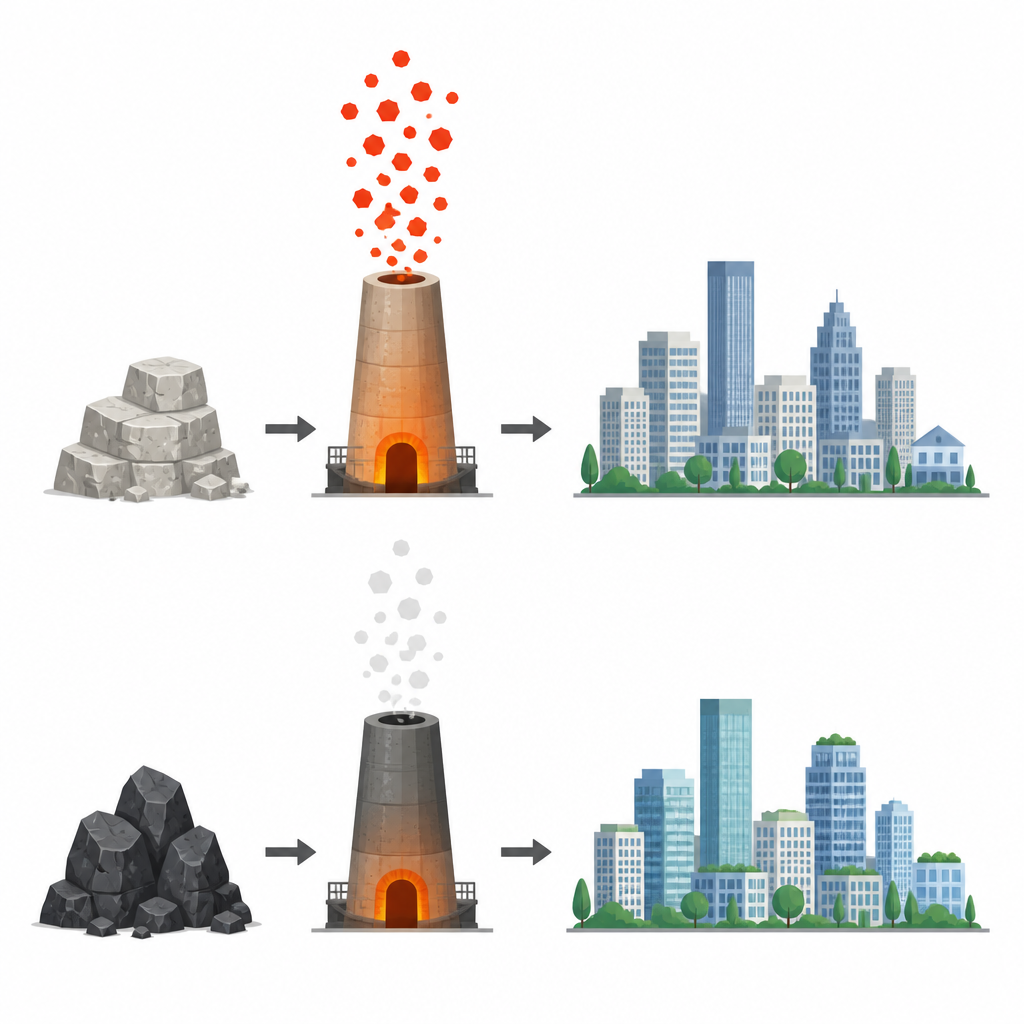
A quiet giant of climate pollution
Ordinary Portland cement dominates global construction because it is well understood, widely available, and backed by generations of building experience. But its main ingredient, calcium from limestone, comes with a built‑in carbon penalty. When limestone is heated to make cement, its carbon escapes as carbon dioxide, and more fuel is burned to reach very high kiln temperatures. Together, those steps give cement about 4.4% of humanity’s greenhouse gas emissions, comparable to all light‑duty vehicles on the planet.
A different kind of rock with the same useful element
The authors point out that most of Earth’s calcium actually sits not in limestone but in silicate rocks like basalt and gabbro, which contain calcium bound with silicon and oxygen but almost no carbon. Mapping global geology, they show that these rocks occur across many countries and could supply cement makers for hundreds of thousands of years. Although each tonne of basalt contains less calcium than limestone, the total accessible resource is vast and, crucially, does not release carbon when heated.
How basalt could make familiar cement
Turning basalt into Portland cement is more complex than the traditional route, because its calcium is diluted among other elements. Using thermodynamic analysis, the team compares the minimum possible energy needed to make cement from different minerals. They find that, in theory, converting calcium‑rich silicates into Portland cement could use less than half the energy required when starting from limestone, while avoiding carbon released from rock itself. The paper describes one practical pathway based on existing industrial steps: use acid to pull calcium and other metals from the rock, use electricity to separate and recover the chemicals, then heat the resulting calcium compound in a kiln much like today’s plants. Even in a conservative design that is not yet optimized, process emissions from the rock fall to zero and overall energy use can drop once valuable byproducts are counted. 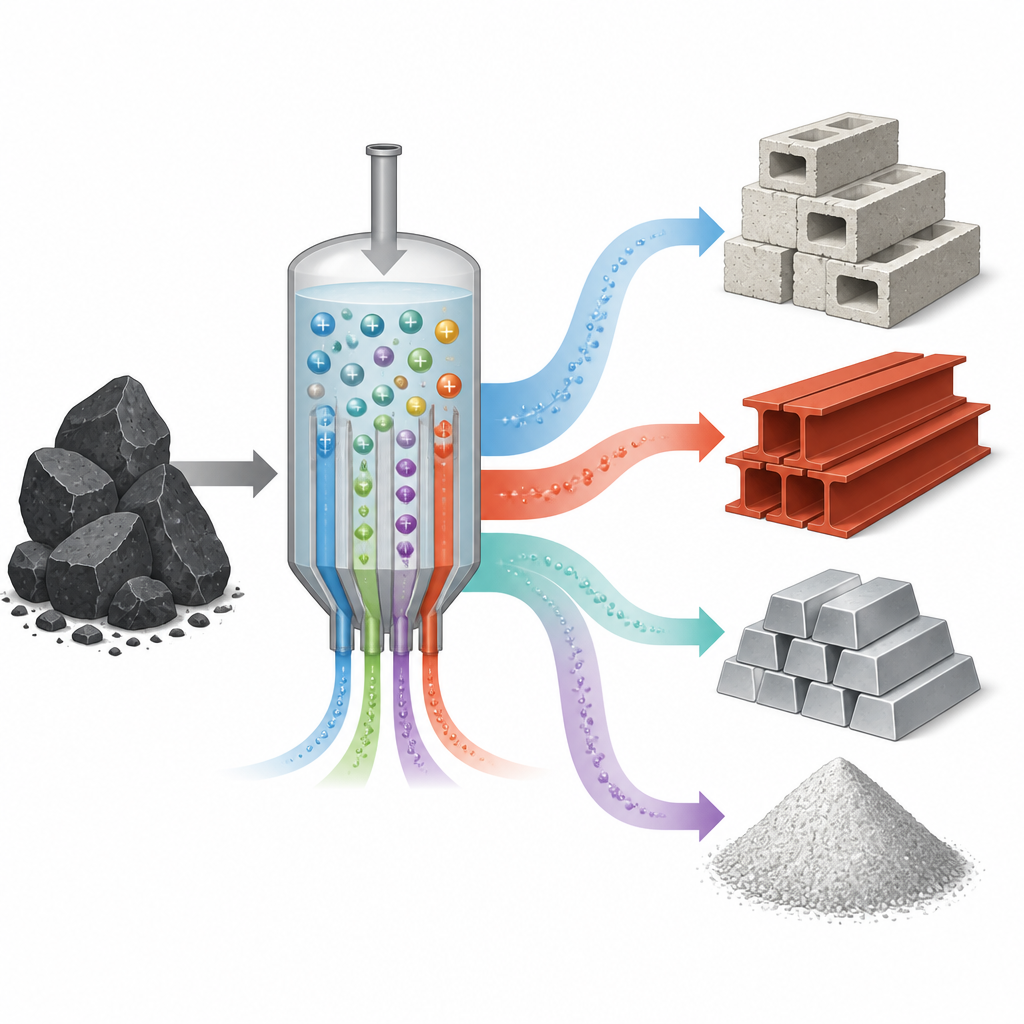
More than cement from a single quarry
Basalt is not just a calcium source. It also contains large amounts of iron, aluminum, and silica, the same ingredients used for steel, aluminum metal, and supplementary materials that are blended into cement. If future plants refined basalt at the scale needed to supply global cement, the study suggests they could also meet most or all of current demand for steel, aluminum oxide, and cement additives from the same rock stream. That could cut mine waste, reduce the number of separate mines, and create new revenue that helps pay for cleaner cement production.
Why sticking with familiar cement still matters
Many alternative cements have been proposed that use different chemistries and less calcium, often with lower emissions. Yet they have barely penetrated the market because builders and regulators are wary of unproven materials in structures meant to last for decades and keep people safe. The authors use a simple risk model to argue that thousands of real‑world buildings and many decades of observation may be needed before a brand‑new cement gains broad trust. In contrast, a cement made from basalt but engineered to behave just like ordinary Portland cement could fit into existing standards, design rules, and construction practice much more easily.
Building a lower‑carbon future with familiar tools
In plain terms, the paper concludes that we may be able to keep using the same kind of cement, but change the rock we start from and the way we process it. By drawing calcium from carbon‑free silicate rocks, refining co‑products like steel and aluminum, and powering the process with cleaner energy, the authors argue that cement could be made with little or no carbon pollution, potentially erasing that 4.4% slice of global emissions. This approach would not replace other strategies such as better building design, recycling, or carbon capture, but could work alongside them to help cities grow without locking in today’s climate costs.
Citation: Prancevic, J.P., Finke, C.E., Peterson, E. et al. Silicate-derived calcium as a pathway to low-carbon Portland cement. Commun. Sustain. 1, 78 (2026). https://doi.org/10.1038/s44458-026-00056-4
Keywords: cement emissions, basalt cement, low carbon construction, industrial decarbonization, Portland cement