Clear Sky Science · en
Longitudinal wastewater virome surveillance unveils untapped circulating viruses in the community
Why Sewage Can Tell Us About Our Health
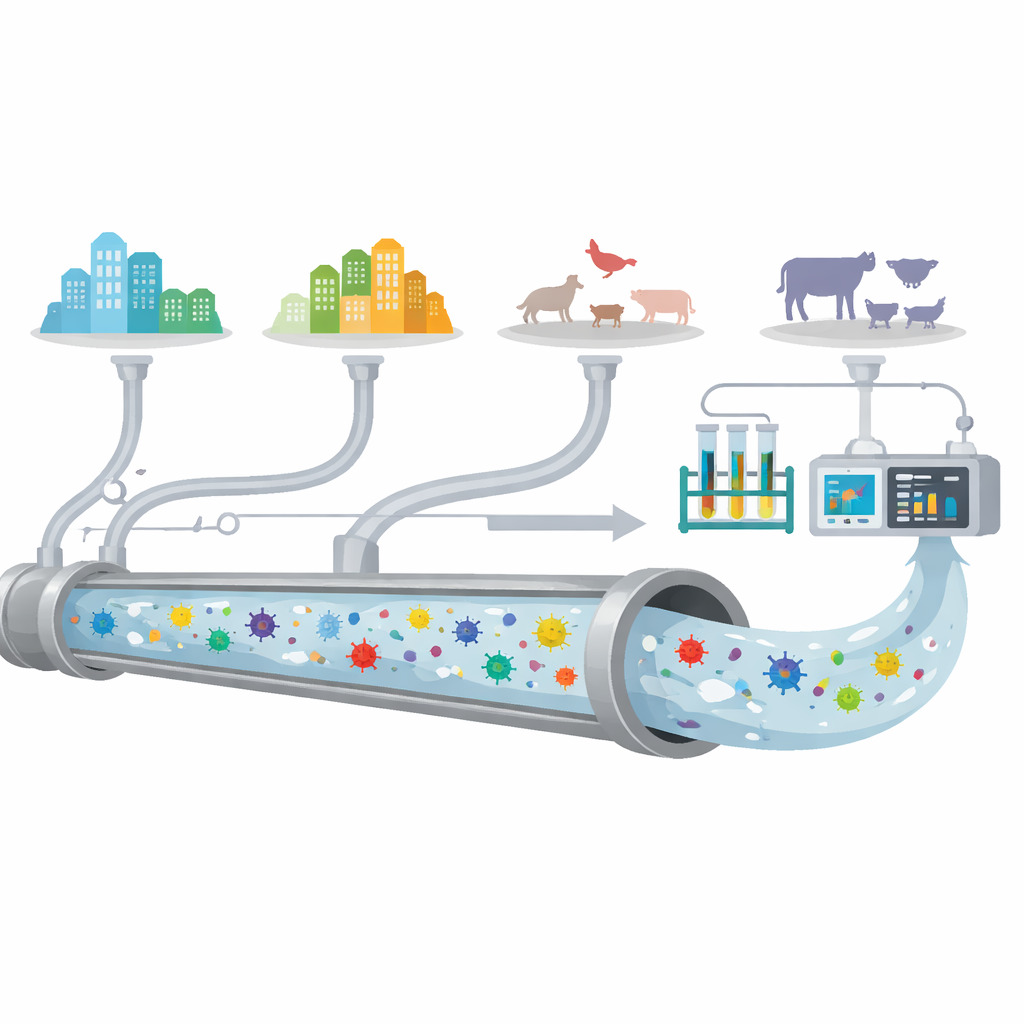
Every time we flush a toilet or drain a sink, tiny traces of viruses leave our homes and flow into the city’s sewers. Taken together, this shared stream of waste becomes a powerful snapshot of a community’s health. In this study, scientists in India turned city wastewater into a year‑long window on hundreds of known and hidden viruses, revealing how they ebb and flow with seasons and across neighborhoods—and how this information could strengthen early warning systems for disease outbreaks.
Looking for Hidden Viruses in City Sewers
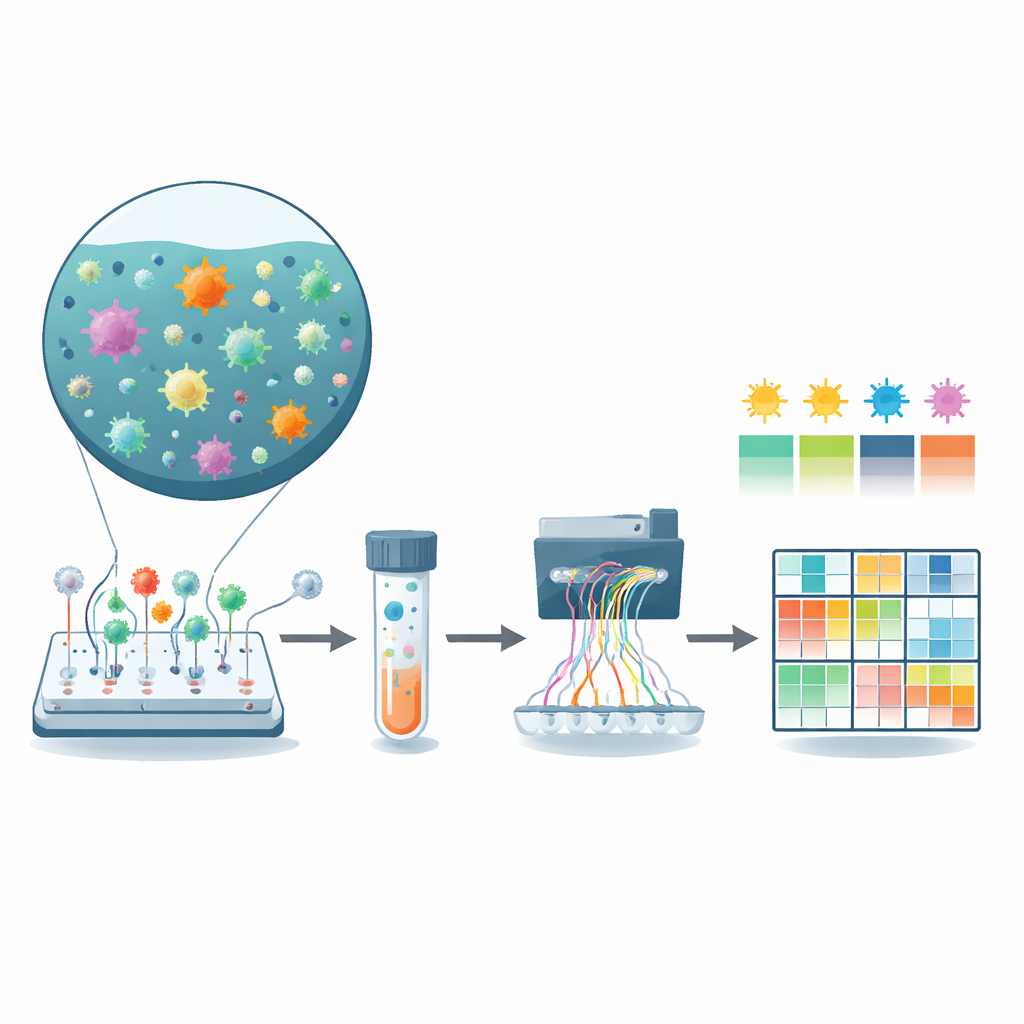
The researchers collected wastewater every two weeks for a full year from 24 treatment plants and pumping stations across four major cities in Gujarat, covering more than 16 million people. Rather than hunting for a single virus, they used a “catch‑all” genetic method that relies on special probes designed to grab bits of viral genetic material out of the complex soup of sewage. This approach enriched rare viral fragments and allowed high‑throughput sequencing machines to read them, building a detailed catalog of the viruses circulating in these communities over time.
A Crowded Viral World Beneath Our Feet
The team uncovered an unexpectedly rich and varied “virome” in the wastewater. They detected 10 families of DNA viruses and 23 families of RNA viruses, spanning more than 300 viral species and over 800 distinct strains. Many of these viruses are known to infect humans, while others target animals, plants, or insects but still appear in city sewage. Importantly, the scientists were able to assemble near‑complete genomes for hundreds of these viruses, not just short fragments, which is crucial for tracking how viruses evolve and for spotting shifts that might signal the rise of new variants.
How Viral Communities Change by Place and Season
Wastewater from different cities, and even from different sites within the same city, carried distinct viral fingerprints. Some locations in Ahmedabad, for example, showed especially high viral diversity, likely reflecting dense populations and heavy daily movement of people. By comparing samples collected from the same sites over time, the researchers found that viral communities changed quickly, often within weeks. RNA viruses, which tend to be less stable in the environment and more tied to active infections, showed strong seasonal patterns: diversity rose during the monsoon and winter months, then dipped in summer before rebounding. DNA viruses were more stable, changing less with season, suggesting they persist longer in wastewater and the environment.
Tracking Familiar Disease Threats in the Mix
Beyond broad patterns, the study zoomed in on well‑known disease‑causing viruses such as influenza, norovirus, rotavirus, hepatitis A virus, and SARS‑CoV‑2. Many showed clear peaks and lulls over the year, hinting at times when outbreaks may have been more likely. The researchers compared the abundance of certain viruses in wastewater with established measures: digital PCR tests on the same sewage and official clinical case counts. For SARS‑CoV‑2 and rotavirus, the trends from sequencing matched well with precise laboratory counts, and hepatitis A levels in sewage rose and fell in step with reported patient numbers. These agreements show that broad, sequencing‑based surveillance can be trusted to reflect real infection trends in the community.
Animals, Spillover Risks, and the Bigger Picture
The wastewater did not just contain human viruses. It also harbored viruses that infect birds, pets, livestock, and rodents, some of which are capable of jumping between species. Finding these animal‑linked viruses in city sewers underscores how closely human and animal health are intertwined. It also supports the “One Health” view that monitoring shared environments, like wastewater, can reveal early signs of cross‑species infections before they become widespread human problems.
What This Means for Everyday Life
For a layperson, the key message is that sewage is far more than just waste—it is an anonymous, community‑wide health sample collected every day. By reading the genetic signals in this flow, the Gujarat team showed that we can track a wide range of viruses at once, see how they change with seasons and locations, and align those signals with hospital data. Their results suggest that routine wastewater monitoring, powered by advanced sequencing, could act like a weather forecast for infectious diseases: quietly watching in the background, flagging rising threats early, and helping public health officials prepare before hospitals begin to fill.
Citation: Shukla, N., Thakor, J., Chavda, P. et al. Longitudinal wastewater virome surveillance unveils untapped circulating viruses in the community. npj Emerg. Contam. 2, 15 (2026). https://doi.org/10.1038/s44454-026-00035-3
Keywords: wastewater surveillance, virome, viral seasonality, One Health, metagenomic sequencing