Clear Sky Science · en
Antibiotic usage in shrimp farms in Bangladesh and its impact on resistant gene abundance and pond microbiomes
Why Shrimp Ponds Matter to Everyone
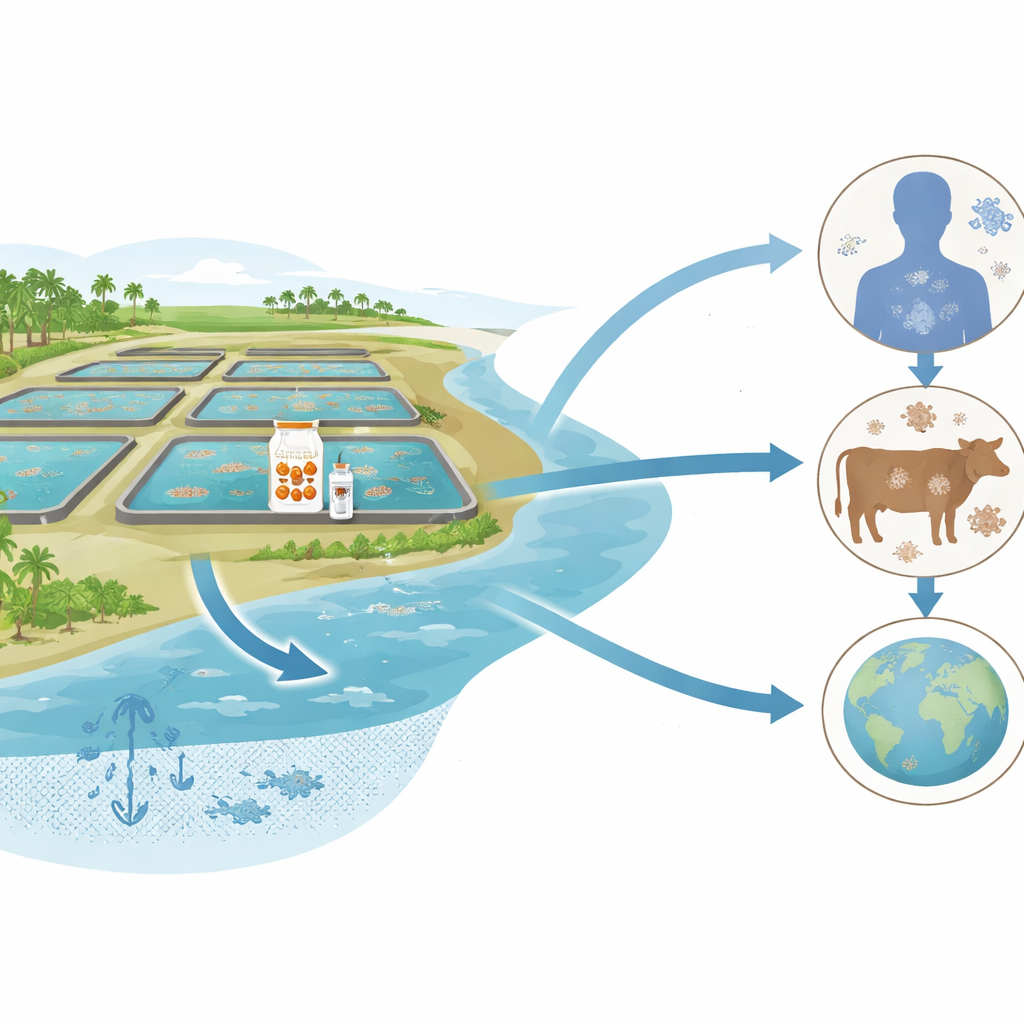
Shrimp from tropical ponds in countries like Bangladesh end up on dinner plates around the world. To keep these animals alive in crowded ponds, farmers often reach for antibiotics. This study asks what that means not just for shrimp, but for the invisible world of pond microbes and the growing global problem of drug‑resistant infections. By following how medicines are used on farms and how microbial life in pond mud reacts, the researchers shed light on links between seafood production, environmental health, and human well‑being.
Different Ways of Raising Shrimp
The team surveyed 24 shrimp farms in three major coastal districts of Bangladesh, covering three common styles of production. Extensive farms are large, shallow ponds that rely heavily on river water and natural food, with little control or investment. Improved extensive farms add more feed, somewhat higher animal numbers, and some management measures. Semi‑intensive farms are smaller but stock more shrimp, treat or pump their water, and use manufactured feed and probiotics more systematically. These differences in layout, water source, and daily care turned out to be crucial for both disease levels and the behavior of microbes in pond sediments.
Illness, Advice, and Heavy Reliance on Antibiotics
Disease was widespread: three out of four farms had recently faced at least one major shrimp illness, with low‑input extensive and improved extensive systems reporting the broadest mix of problems. Farmers commonly blamed sudden weather shifts, poor water quality, bad seed stock, and weak biosecurity for these outbreaks. In response, seven different antibiotics were in use, from familiar human medicines like amoxicillin and ciprofloxacin to drugs aimed at bacteria in animals. Improved extensive farms used the widest range and frequency of these compounds, while semi‑intensive farms, which had better management and more guidance from company technicians, used fewer drugs and avoided antibiotics during viral outbreaks. Overall, the number of antibiotics used on a farm did not match disease patterns very closely, suggesting that many treatments were precautionary or poorly targeted.
Hidden Resistance Building Up in the Mud
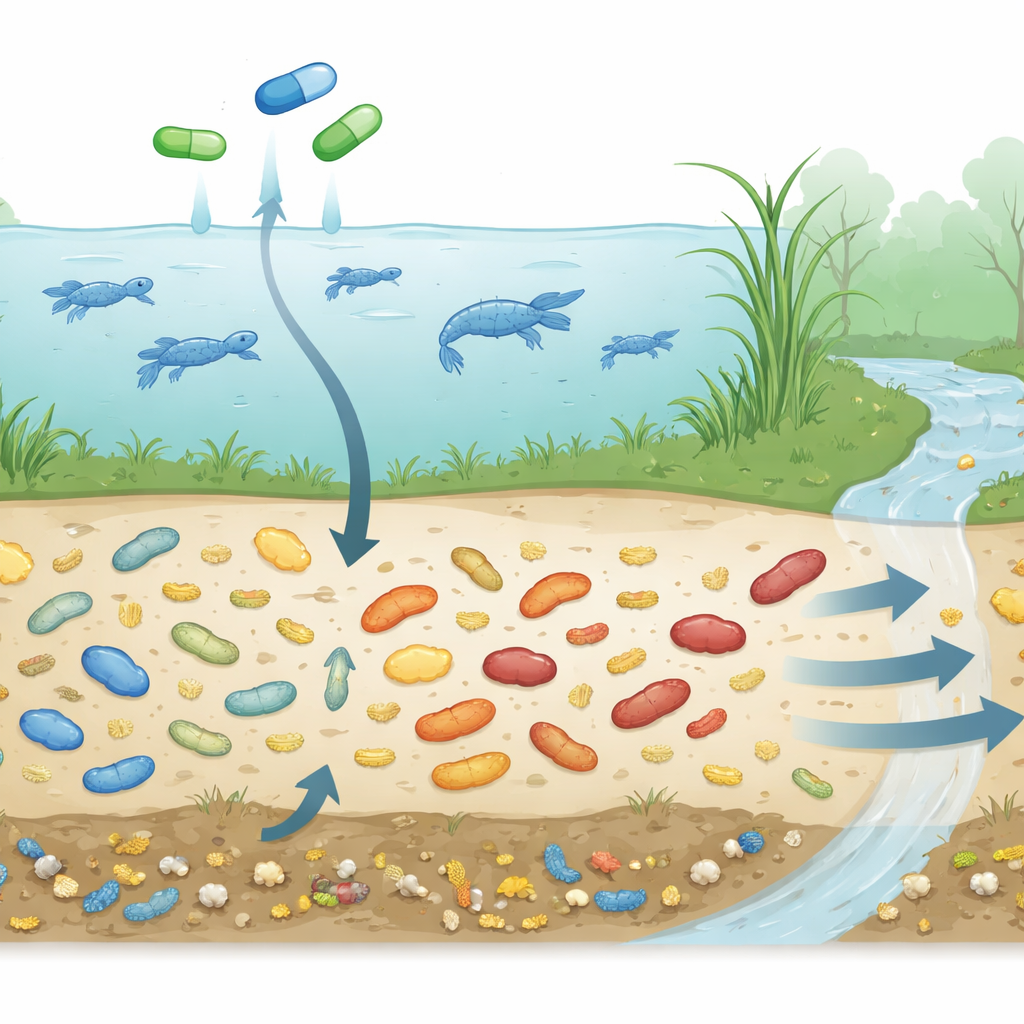
To see how this drug use shaped the microscopic world, the researchers examined DNA from pond sediments. They looked for antibiotic resistance genes—tiny genetic instructions that let bacteria survive exposure to medicines. Across all farms they found 62 types of such genes, with improved extensive farms showing the richest and most abundant collection. Some strong links appeared: use of oxytetracycline went hand‑in‑hand with genes that resist tetracycline‑type drugs, and trimethoprim use was closely tied to genes that block related treatments. Yet many resistance genes were present even when the matching drug had not been used, hinting that other pressures were at work. Farm design, links to livestock, and the kind of water entering ponds all seemed to help move and maintain resistance through the landscape.
Microbial Neighborhoods Shaped by Farming Style and Water
The study also mapped which broad groups of bacteria dominated the pond mud. One large group, Proteobacteria, was especially common in improved extensive farms, while Bacteroidetes and other groups were more frequent in systems drawing on open river water. Semi‑intensive farms showed higher levels of Actinobacteria, a group that includes many strains used as probiotics and natural producers of compounds that can break down residues. Measures of richness and diversity were higher in extensive systems, but overall antibiotic use itself did not strongly change the balance of bacterial groups. Instead, the type of culture system and the origin of the water—untreated river versus pumped groundwater or treated flows—were the main forces shaping these microbial communities and, by extension, the collection of resistance genes they carried.
What This Means for Safer Shrimp and Safer Health
For non‑specialists, the key message is that shrimp ponds can quietly become reservoirs of resistance genes that move between water, animals, and people, even when drugs are used with the shrimp in mind alone. The study shows that cutting back on careless antibiotic use is vital, but not enough by itself. Better pond design, cleaner and more controlled water sources, improved seed quality, stronger biosecurity, and farmer training all reduce the need for drugs and limit the spread of resistance. In short, smarter farming and smarter medicine together can protect both the shrimp industry and public health.
Citation: Bashar, A., Shaika, N.A., Hasan, N.A. et al. Antibiotic usage in shrimp farms in Bangladesh and its impact on resistant gene abundance and pond microbiomes. npj Vet. Sci. 1, 7 (2026). https://doi.org/10.1038/s44433-026-00010-z
Keywords: shrimp aquaculture, antibiotic resistance, pond microbiome, Bangladesh, One Health