Clear Sky Science · en
A transformer approach to forecasting PM10 concentration in the Arctic and Northern Europe
Why Northern Air Matters
Far‑northern skies may look pristine, but tiny particles in the air can quietly harm lungs and hearts, especially during sudden pollution spikes. In the Arctic and Nordic countries, these fine dust particles—known as PM10—are shaped by local habits like winter driving and home heating, as well as distant wildfires and industrial plumes. This study introduces a new artificial‑intelligence‑based forecasting tool that aims to give northern communities up to two days of advance warning when the air they breathe is about to worsen.
Dust You Cannot See
PM10 refers to microscopic bits of dust, soot, and droplets small enough to be inhaled deep into the lungs. Even short‑lived peaks in concentration can trigger breathing problems and strain the cardiovascular system. Europe’s new air‑quality rules tighten limits on these particles, capping average levels and restricting the number of days that can exceed a daily threshold. While many Nordic stations meet the yearly targets, their records reveal frequent short spikes that slip under the radar of regional averages but still matter for human health.
Why Forecasts Fall Short in the North
Across Europe, air quality is routinely predicted by sophisticated computer models that simulate the chemistry and movement of pollutants in the atmosphere. These systems, used by the Copernicus Atmosphere Monitoring Service, can look four days ahead but often perform poorly in Northern Europe and the European Arctic. There are relatively few monitoring stations feeding data into the models, and local sources such as studded winter tires grinding pavement, domestic heating, or shipping can cause sharp, short‑lived bursts of pollution. As a result, typical forecast errors in the north can be as large as the concentrations themselves, limiting their usefulness for local decision‑making.
Teaching a Machine to Read the Air
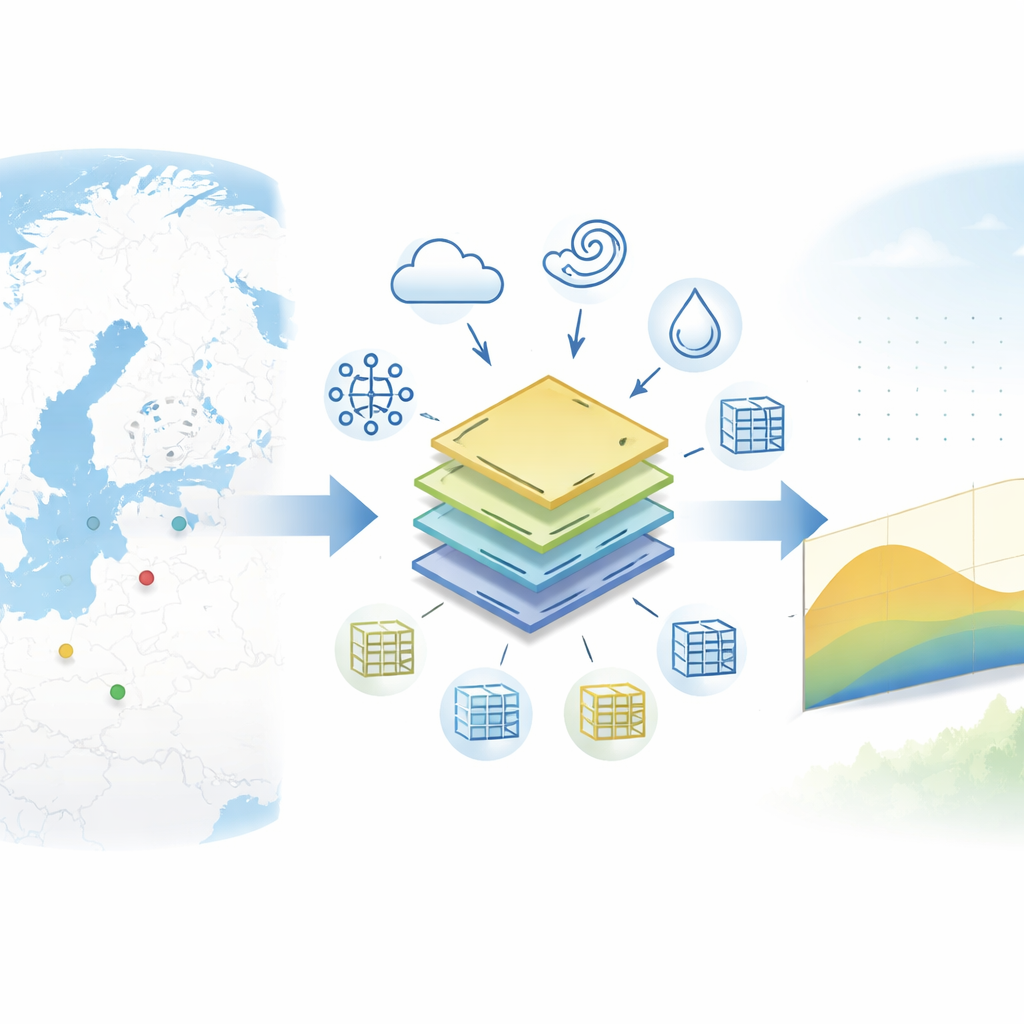
The authors turned to a class of deep‑learning models known as Transformers, originally designed for language translation but now widely used for time‑series data. They trained several leading Transformer variants—alongside more traditional statistical and neural‑network methods—on four years of hourly PM10 observations from 152 stations in Finland, Iceland, Norway, and Sweden. The models also ingested numerical pollution forecasts and key weather variables such as temperature, wind, precipitation, and boundary‑layer height. One architecture, called Crossformer, proved best at learning complex relationships across many variables and across time, edging out recurrent networks and simpler Transformers on standard error measures.
Adding Place to Time
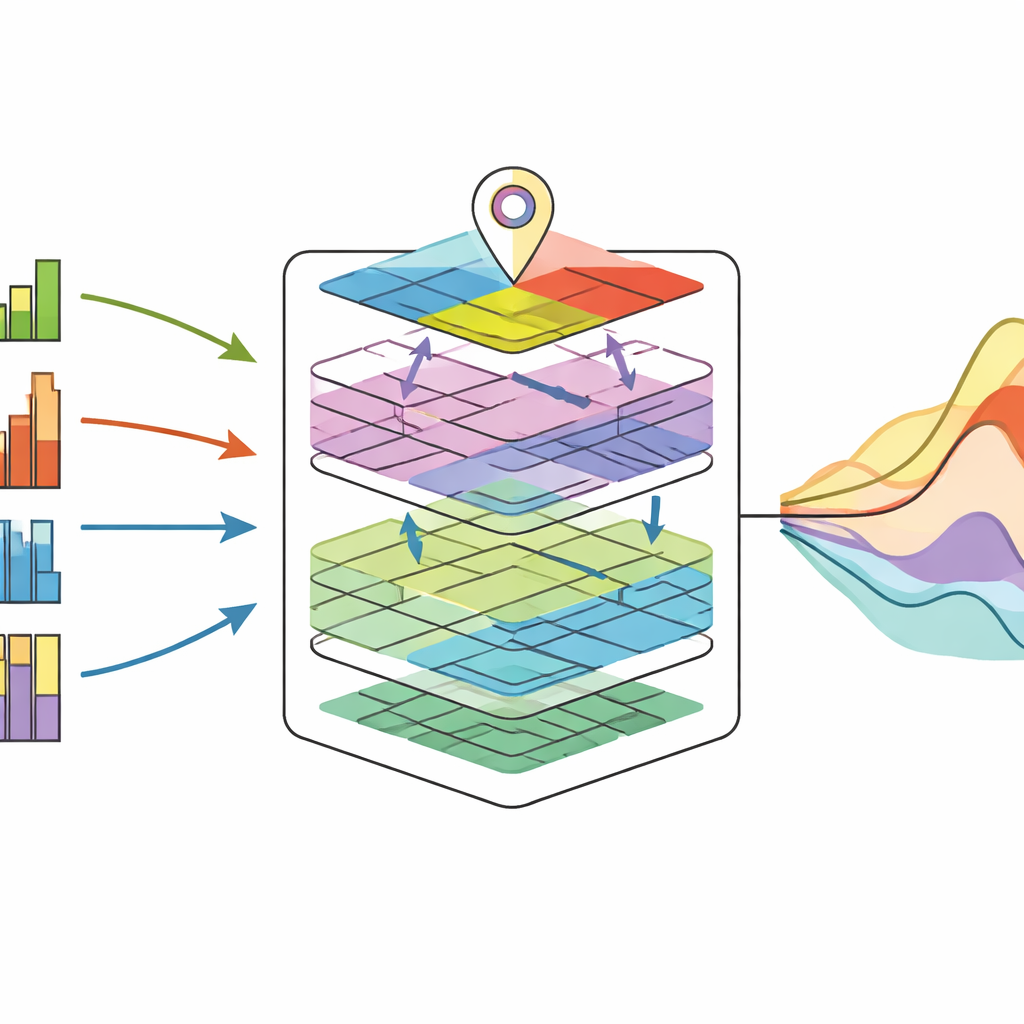
To make a single model work reliably across the whole region, the team modified Crossformer so that it also “knows” where each station is located. They added a geometric layer that encodes latitude, longitude, and altitude alongside the usual time‑series inputs, allowing the network to associate distinct pollution patterns with particular environments—from Arctic villages and remote forests to busy city streets. With this adaptation, the model not only predicted typical PM10 variations more accurately, it also generalized well to stations it had never seen in training, including sites in Denmark. Compared with Copernicus forecasts and their machine‑learning–based post‑processing, the adapted model reduced average errors by roughly one‑third and better captured sharp peaks at urban and remote locations.
What the Model Gets Right—and What It Misses
The new system is especially strong at tracing overall day‑to‑day swings in particle levels and at spotting many, though not all, high‑pollution events. It significantly outperforms current European forecast products in predicting when daily averages will cross the new legal threshold at a wide range of northern stations. However, it still struggles with the most localized spikes, such as those driven by traffic on partially icy roads or near busy highways, where emissions change rapidly over short distances that neither the input data nor the regional models fully resolve. The authors argue that more detailed local information and additional monitoring sites, particularly in underserved Arctic areas, will be needed to push this frontier further.
Clearer Warnings for Cold Climates
In practical terms, this work shows that a carefully designed deep‑learning system can turn a patchwork of monitoring data, weather forecasts, and existing model output into more accurate, station‑level PM10 forecasts up to 48 hours ahead. For northern and Arctic communities, such forecasts could support earlier health advisories, targeted traffic or heating restrictions, and better planning for events like wildfire smoke intrusions. While not perfect—especially for highly local street‑level surges—the approach offers a promising, computationally efficient complement to traditional air‑quality models and a template for extending similar methods to other key pollutants such as finer particles and nitrogen dioxide.
Citation: Cuzzucoli, A., Crotti, I., Dobricic, S. et al. A transformer approach to forecasting PM10 concentration in the Arctic and Northern Europe. npj Clean Air 2, 31 (2026). https://doi.org/10.1038/s44407-026-00071-8
Keywords: Arctic air pollution, PM10 forecasting, deep learning, Transformer models, Northern Europe air quality