Clear Sky Science · en
Neurological and respiratory outcomes of the HIPTox controlled double-blind air pollution exposure trial
Why the air you breathe can affect your mind
Air pollution is usually linked to heart and lung disease, but scientists are increasingly asking how dirty air might also affect the brain. This study explores what happens to thinking skills and breathing when older adults briefly breathe in different everyday pollution mixtures, such as traffic fumes, wood smoke, cooking particles, and cleaning-product vapors, compared with clean air.
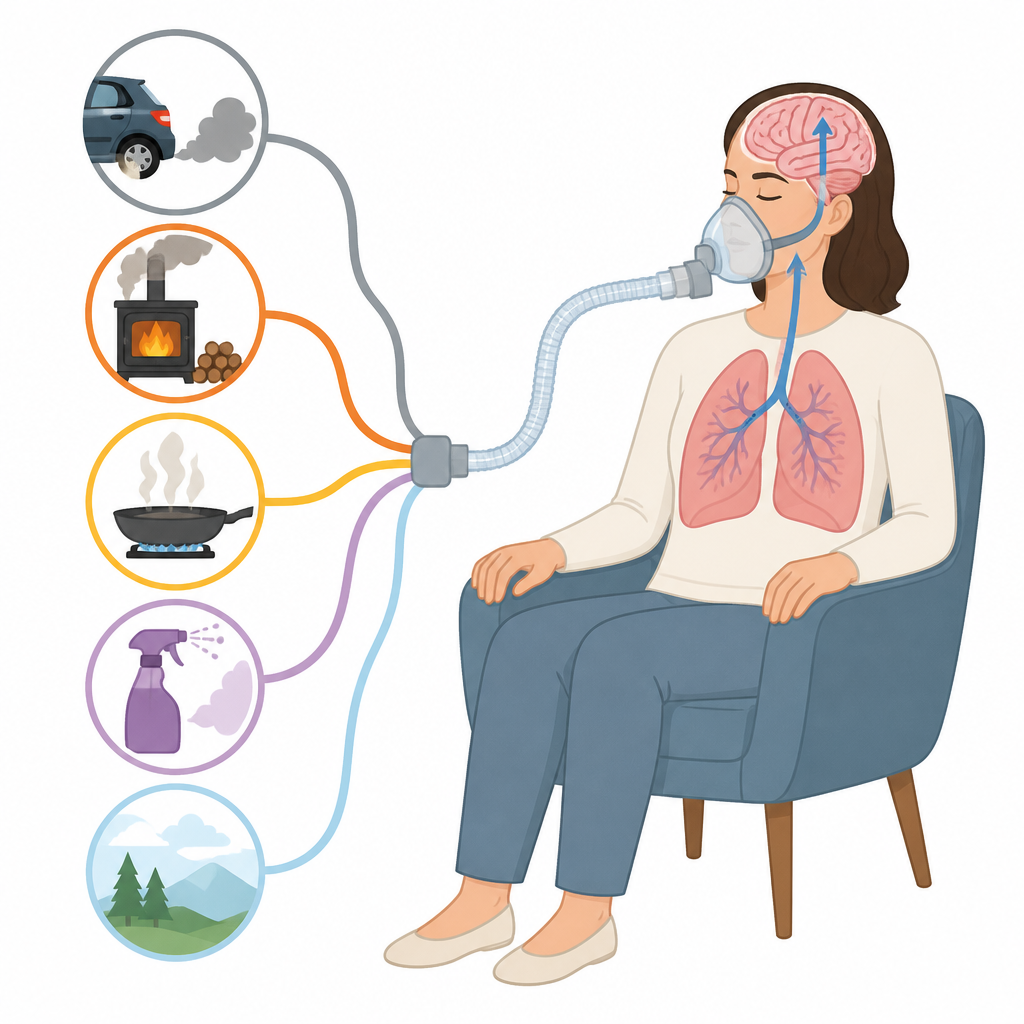
How the study was set up
Researchers recruited fifteen healthy volunteers over 50 years old, all with a family history of dementia, to take part in a tightly controlled laboratory trial. Each person made five separate visits spaced at least two weeks apart. In a special chamber, they spent an hour breathing one of four pollution types or clean air, delivered through a snug face mask: diesel exhaust, woodsmoke, cooking emissions, and particles formed from limonene, a lemon-scented chemical used in many cleaning products. Neither the volunteers nor the testers knew which mixture was being given on a particular visit. Before and four hours after each exposure, the team measured lung function and asked participants to complete a series of computer and manual tasks that probed attention, reaction speed, memory, and more complex decision making.
What happened to thinking speed and attention
The researchers found that different pollution sources had distinct short term effects on mental performance. In a simple reaction time test, which mainly measures how quickly someone can notice and respond to a signal, participants actually responded a little faster after breathing diesel exhaust or woodsmoke than after clean air or cooking emissions. The team suspects this gain in speed might be linked to gases called nitrogen oxides in these mixtures, which can widen blood vessels and may alter blood flow in the brain. In contrast, there were hints that diesel exhaust might slightly worsen performance on a more demanding task that required focusing on faces while ignoring distractions, suggesting that basic response speed and higher level attention may not move in the same direction.
Memory and mood-related thinking
Working memory, the mental scratchpad we use to hold and update information, was tested with a game in which volunteers tracked moving shapes and decided whether each one matched a recent location. For the easiest version of this game, people performed better after exposure to limonene-based particles than after breathing cooking emissions, but there were no clear differences for the tougher versions that placed a heavier load on memory. Other tasks looking at recognizing facial expressions, emotional approach or avoidance, and fine and gross hand movements did not show reliable changes between the different air types within this small group. Overall, the main planned measures of higher level thinking did not shift strongly enough to reach the strict thresholds scientists use to declare a firm effect.
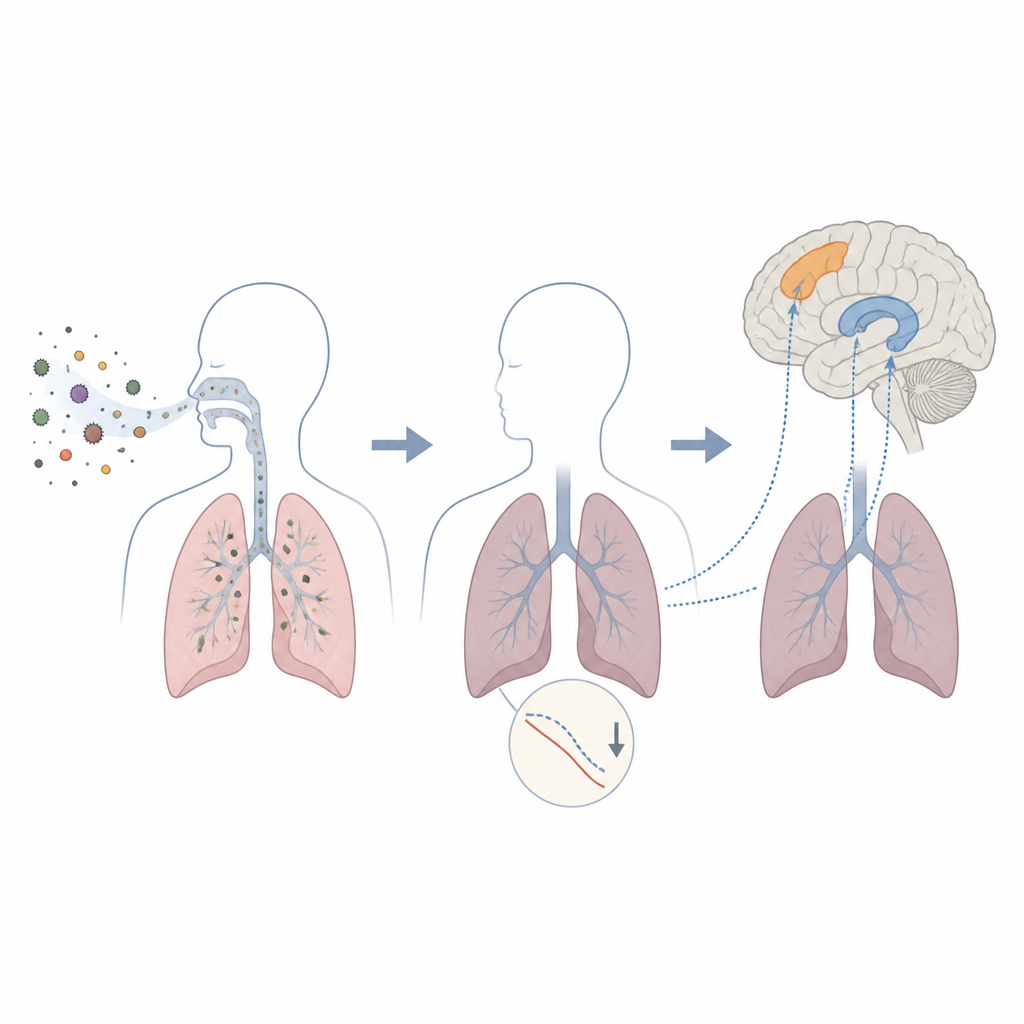
Subtle changes in breathing
Lung tests told a more consistent story. A standard measure called forced expiratory volume in one second, adjusted for each person’s age, height, sex, and ethnicity, was slightly lower after exposure to woodsmoke and limonene particles compared with clean air. The drop was small and not enough to be considered a clinical problem in healthy adults, but it was surprising given that the exposure lasted only an hour and used concentrations chosen to be safe. This suggests that even brief, realistic encounters with certain pollution sources can nudge lung performance, raising questions about how people with asthma, chronic lung disease, or other vulnerabilities might respond.
What this means for daily life
To a lay reader, the key message is that not all air pollution is equal, and its short term effects on the brain and lungs depend on the source. In this study, traffic fumes and wood smoke appeared to sharpen very simple reaction speed while possibly dulling more complex attention, and some mixtures caused small but measurable dips in lung function. Although the trial was small and cannot settle questions about long term harm, it shows that carefully controlled human studies can tease apart which everyday pollution sources may pose greater risks to both breathing and thinking. This kind of evidence can help guide cleaner transport, heating, cooking, and cleaning practices that protect the body and the brain.
Citation: Faherty, T., Badri, H., Hu, D. et al. Neurological and respiratory outcomes of the HIPTox controlled double-blind air pollution exposure trial. npj Clean Air 2, 34 (2026). https://doi.org/10.1038/s44407-026-00068-3
Keywords: air pollution, cognitive function, lung function, diesel exhaust, woodsmoke