Clear Sky Science · en
Common pathogenic mechanisms in the hippocampus across neurodegenerative dementias: Alzheimer’s disease, Down syndrome, and Parkinson’s disease
Why this matters to families and caregivers
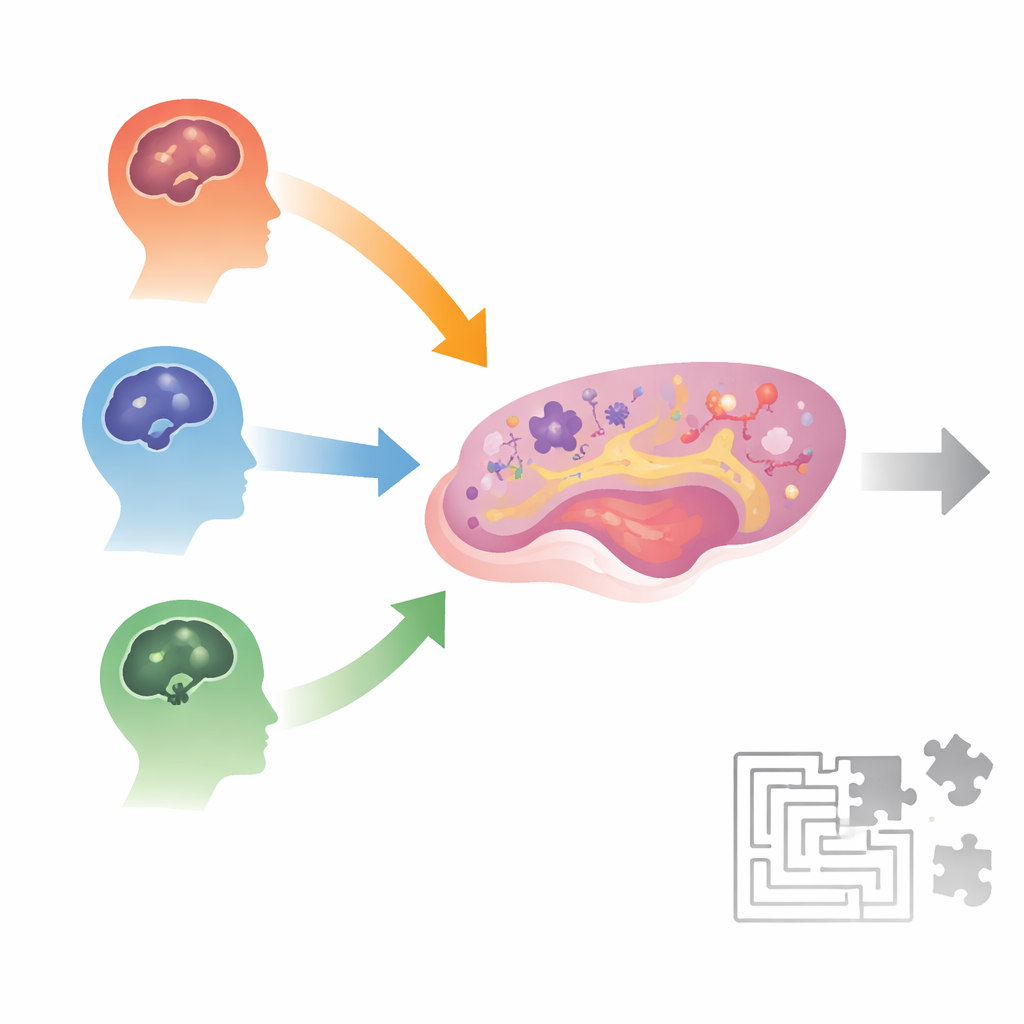
Dementia is often described by its labels—Alzheimer’s, Parkinson’s disease dementia, or the memory loss that can develop in people with Down syndrome—but families mainly see the same outcome: a gradual loss of thinking and independence. This study asks a simple but powerful question: beneath the different diagnoses, do these dementias share common roots in the brain, and could those shared features point to new ways to detect or treat them? Focusing on the hippocampus, a deep brain region vital for memory, the researchers search for molecular patterns that unite these seemingly distinct conditions.
Many roads, one vulnerable brain region
The team examined post-mortem hippocampal tissue from people with Alzheimer’s disease, Parkinson’s disease dementia, and Down syndrome with dementia, comparing them to older adults without dementia. All three conditions are known to cause shrinkage and damage in the hippocampus, which tracks closely with memory loss. By studying which genes were switched on or off in this region, the researchers hoped to see whether the same molecular disruptions appear across diseases that otherwise have different triggers—such as extra chromosome 21 in Down syndrome, or abnormal protein deposits in Alzheimer’s and Parkinson’s disease.
Biological clocks that run too fast
A central idea in this work is the difference between how old someone is in years and how old their tissue appears biologically. Using a machine-learning “RNA clock,” the scientists calculated the transcriptional age of each hippocampal sample—essentially, how old the tissue looks based on patterns of gene activity. In all three dementia groups, the hippocampus looked older than the person’s actual age, while this mismatch was not seen in the control group. This aging “speed-up” was especially striking in people with Down syndrome dementia, whose hippocampal tissue appeared decades older than their chronological age, even though they died younger. A second, independent method confirmed this accelerated aging, suggesting that in these dementias the hippocampus is biologically old before its time.
Shared gene changes across different dementias
Once the researchers corrected their analysis for biological age and other technical factors, they searched for genes whose activity differed between each dementia group and the controls. They found thousands of altered genes in Parkinson’s disease dementia, hundreds in Alzheimer’s disease, and nearly two hundred in Down syndrome dementia. Importantly, 45 genes were consistently disrupted across all three conditions. Many of these shared genes have previously been linked to brain function, nerve cell communication, or neurodevelopmental disorders. When the team grouped these genes by their known roles, common themes emerged: changes in proteins that modify other proteins by adding chemical marks (a way of controlling which genes are active), disruptions in structural scaffolds within cells, and problems with the tiny power plants inside cells that handle energy production.
Rewiring the cell’s genetic control center
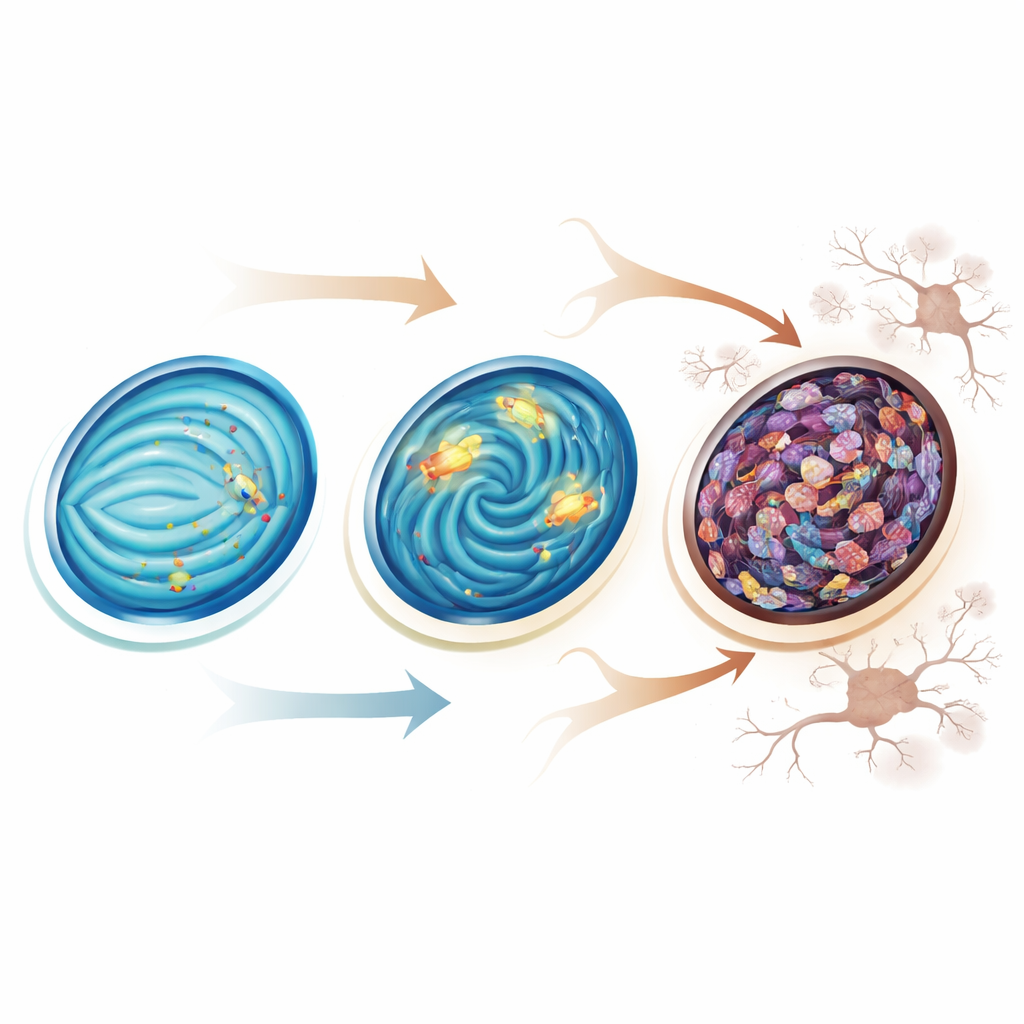
To move beyond individual genes, the scientists used network analysis to find clusters of genes that rise and fall together—hints of underlying biological systems. One such cluster stood out: a “chromatin organization” module that was quiet in healthy hippocampi but flipped into an active state in all three dementia groups. Chromatin is the packaging that winds DNA around proteins, controlling which stretches of the genetic code are accessible. Within this module, two genes emerged as highly connected hubs, meaning they sit at the crossroads of many interactions. These were EHMT2, an enzyme that adds repressive chemical marks to histone proteins, and LMNB2, a structural protein that helps form the nuclear envelope and influences how DNA is arranged inside the nucleus. Both genes were consistently more active in the dementia brains, and both have already been implicated separately in neurodegeneration and developmental disorders.
Possible new targets for treatment and diagnosis
The study’s findings suggest that, despite different causes, Alzheimer’s disease, Down syndrome dementia, and Parkinson’s disease dementia share a pattern of accelerated biological aging and a breakdown in how DNA is packaged and read in hippocampal cells. Overactive EHMT2 may lead to excessive gene silencing, while increased LMNB2 could disturb the three-dimensional layout of chromosomes, together nudging neurons toward dysfunction and death. Although the work is based on a modest number of post-mortem samples and bulk tissue measurements, it strengthens the idea that chromatin-related processes are a common weak point across dementias. Drugs that dial down EHMT2 activity have already improved memory and reduced nerve cell damage in animal models of Alzheimer’s and Parkinson’s disease, hinting that similar strategies might one day benefit people with Down syndrome dementia as well. In practical terms, this research points toward shared biomarkers and treatment targets that could cut across diagnostic labels, focusing instead on the common molecular engines that drive memory loss.
Citation: Crans, R.A.J., Fructuoso, M., Bascón-Cardozo, K. et al. Common pathogenic mechanisms in the hippocampus across neurodegenerative dementias: Alzheimer’s disease, Down syndrome, and Parkinson’s disease. npj Dement. 2, 32 (2026). https://doi.org/10.1038/s44400-026-00075-x
Keywords: dementia, hippocampus, biological aging, chromatin, gene expression