Clear Sky Science · en
A multi therapy bioelectronic wound dressing
Why Smarter Bandages Matter
Chronic and slow-to-heal skin wounds affect millions of people and can turn everyday injuries into long-lasting medical problems. When wounds stubbornly refuse to close, they can become infected, painful, and costly to treat. This study introduces a new kind of “smart” bandage that does more than cover a wound: it actively guides the body’s repair process using gentle electricity and targeted medicine delivery. Tested in pigs, whose skin heals much like ours, this flexible electronic dressing sped up healing and calmed harmful inflammation compared with standard bandages.
A Bandage That Actively Helps the Body Heal
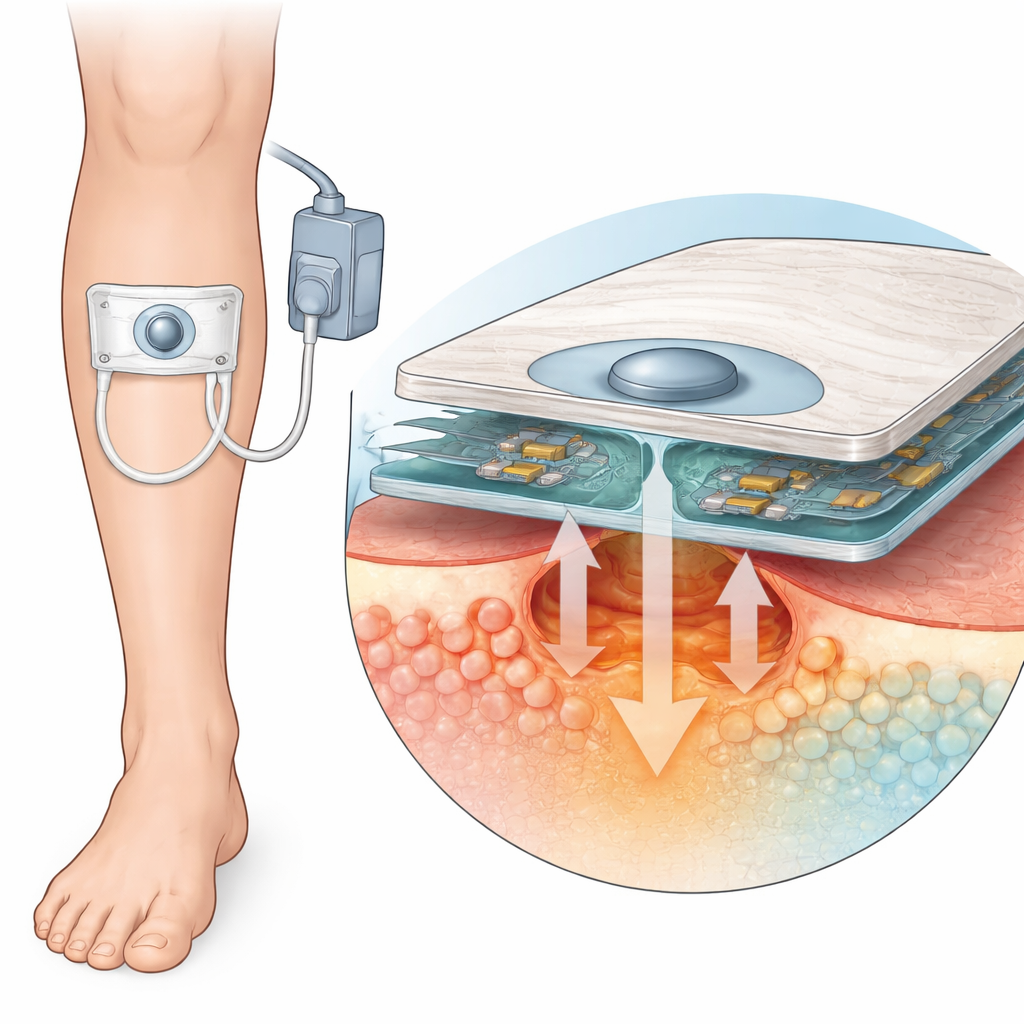
The researchers designed a soft, flexible dressing that can bend and conform to tricky places on the body, such as the bottom of the foot where chronic wounds are common. The system has two main parts: a thin, wound-contacting pad and a small external unit that holds batteries, electronics, and a tiny pump. Inside the pad are channels and soft “posts” filled with a special gel that conducts charged particles. These posts touch the wound surface and form the pathway through which the bandage can send electrical signals or move drug molecules directly into damaged tissue.
Using Gentle Electricity to Guide Repair
Our skin naturally generates tiny electrical fields when it is injured, and these signals help skin cells crawl toward the wound to close it. The new bandage amplifies this natural effect. By applying a small controlled voltage between ring-shaped and central contact points in the dressing, it boosts the electric field at the wound center. In lab tests and simulations, the device produced electric fields in the same range as those found in normal healing, but in a more focused and programmable way. This electric treatment was used during the early hours after injury, when the body is first reacting and preparing the site for repair, to encourage coordinated cell movement and accelerate the shift from inflammation to rebuilding.
Delivering Medicine Exactly Where It Is Needed
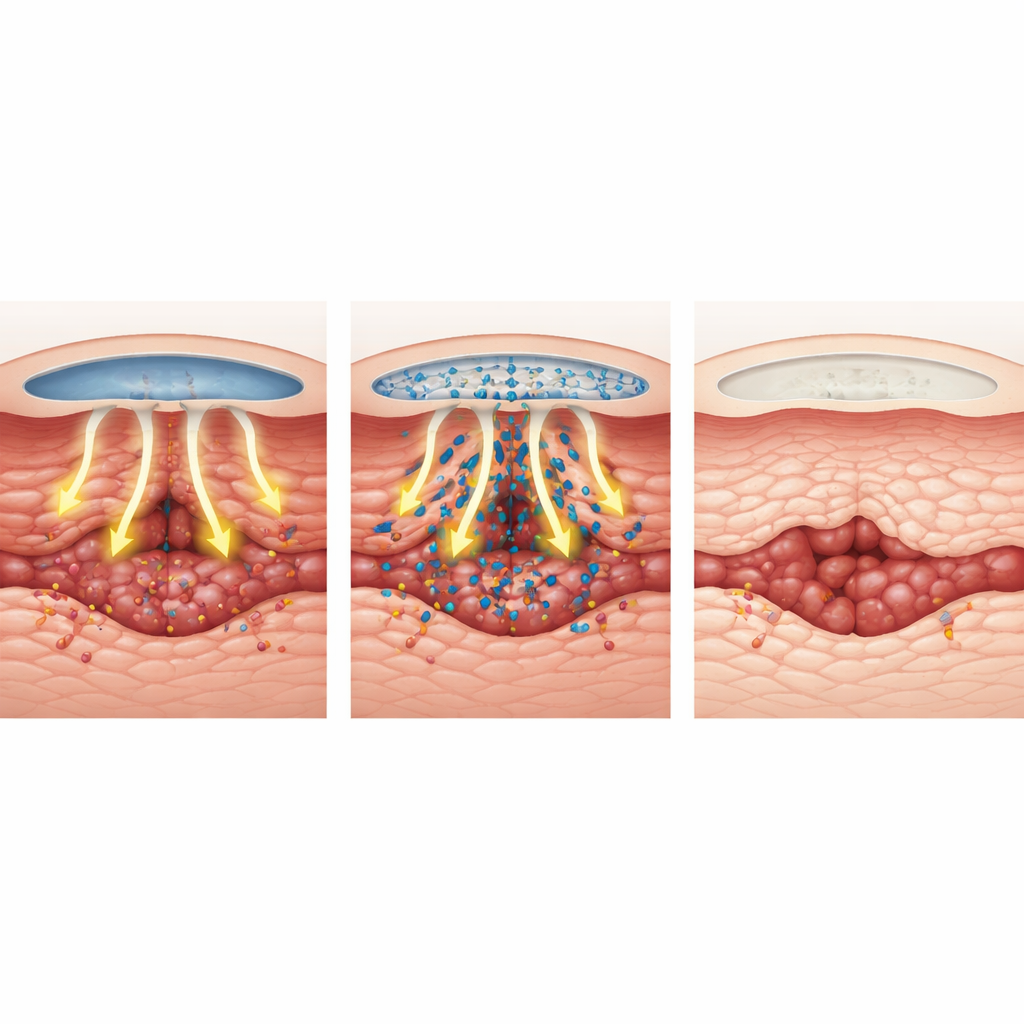
After the initial electrical treatment, the team switched the same bandage into a drug-delivery mode without changing the part touching the skin. A pump in the external unit pushed a solution containing fluoxetine—a commonly prescribed antidepressant that also influences immune responses—through the internal channel and into the gel-filled posts. When the device applied a small voltage, positively charged fluoxetine ions were driven out of the bandage and into the wound bed. This approach allowed the researchers to tightly control when the drug was delivered and at what rate, limiting waste and reducing exposure for the rest of the body. Lab measurements confirmed that active electronic delivery sharply increased drug transport compared with passive soaking alone.
Testing the Smart Dressing in Real Wounds
To see whether this multi-therapy bandage could actually improve healing, the researchers created controlled circular wounds on the backs of pigs. Each animal had some wounds treated with the electronic dressing and others covered with standard foam and film bandages for comparison. The smart bandage provided electrical stimulation during the first day, followed by several days of programmed fluoxetine delivery, and was then replaced with standard dressings. Over 22 days, the team photographed the wounds, measured their size, examined tissue under the microscope, and analyzed chemical signals and immune cells involved in inflammation.
What the Study Found and Why It Matters
Wounds that received the bioelectronic treatment consistently shrank faster than those treated with standard bandages, and by day 22 they showed less of the immature, bumpy “granulation” tissue that marks an earlier stage of repair. The tissue from treated wounds contained fewer inflammatory white blood cells and a pattern of signaling molecules that pointed toward reduced inflammation and more active rebuilding. Although this was a pilot study in a small number of animals, it shows that combining gentle electrical guidance with precise local drug delivery in a single flexible dressing can meaningfully improve wound healing. If future work confirms these results in larger studies and eventually in patients, such smart bandages could become an important new tool to help stubborn wounds close faster, with less scarring and fewer complications.
Citation: Schorger, K., Yang, Hy., Kim, S. et al. A multi therapy bioelectronic wound dressing. npj Biomed. Innov. 3, 26 (2026). https://doi.org/10.1038/s44385-026-00081-x
Keywords: smart bandage, wound healing, bioelectronic therapy, drug delivery, electric field stimulation