Clear Sky Science · en
Metal-phenolic networks improve interfacial electron transfer in bio-electrochemical systems
Making Sensors Work Better
Home glucose meters and other biosensors quietly power modern health care, but many struggle to move electrons efficiently from living molecules into electronic circuits. This study explores a simple, low-cost coating that helps enzymes talk to electrodes more easily, potentially leading to more sensitive, stable, and versatile devices for measuring chemicals like blood sugar or fuel for bioenergy systems.
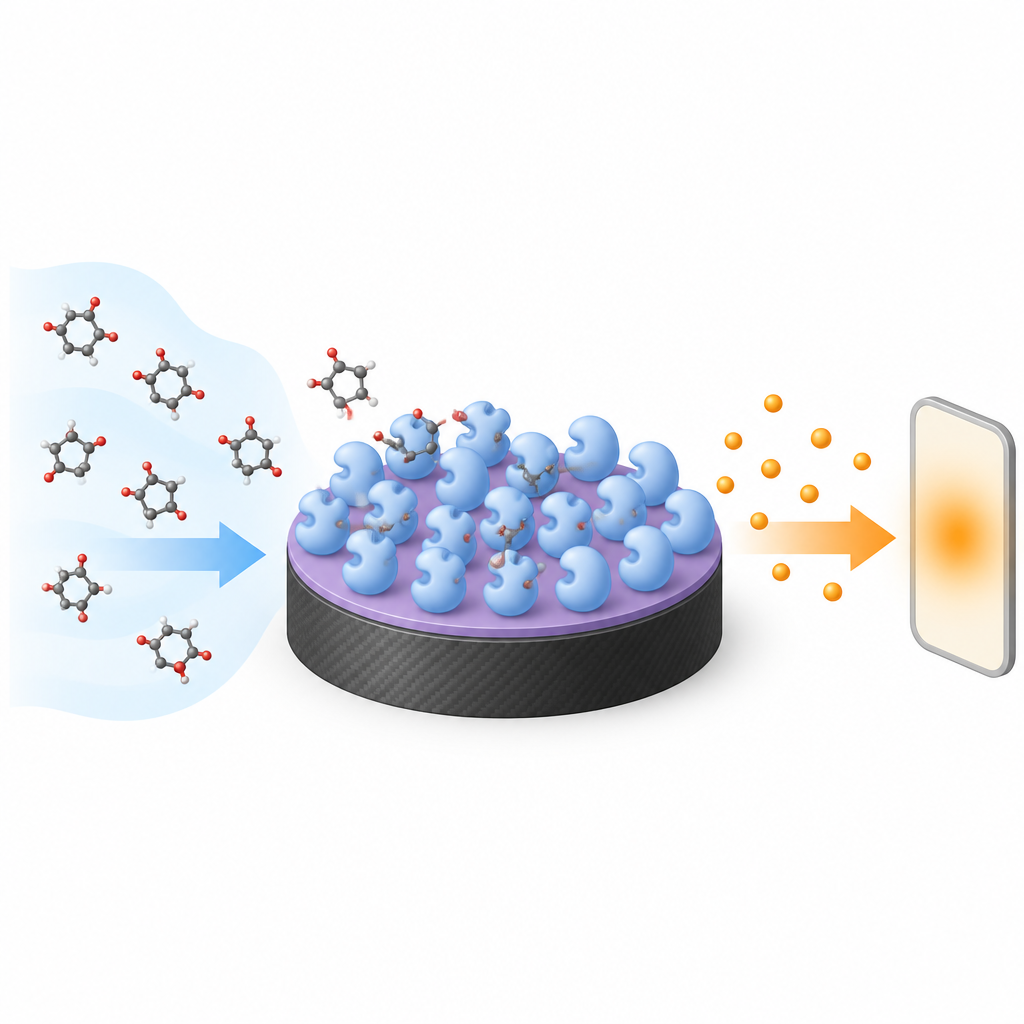
A Smart Coating for Enzymes
The researchers focused on a family of coatings called metal phenolic networks, built from plant-derived molecules that can grab onto metal ions such as copper, cobalt, or iron. When these ingredients are mixed and then activated on an electrode by a small applied voltage, they lock together into a thin, stable film. Unlike many traditional plastics used in sensors, these films are easy to form from water-based solutions and can be tuned by swapping in different metals or plant molecules, changing how well they conduct electrons and how friendly they are to enzymes.
Building the Working Surface
To turn this coating into a working sensor surface, the team let the network assemble directly on carbon electrodes while dissolved enzymes were present. As the film formed, it trapped the enzymes within a gentle matrix instead of gluing them down with harsh chemicals. Microscopy and elemental analysis confirmed that the new layer really covered the electrode and kept the metal ions in place. Electrical tests showed that electrodes with these coatings allowed charges to move more easily than bare electrodes, a strong hint that the films could boost sensor performance.
Helping Enzymes Pass the Baton
The group tested a classic two-step enzyme chain used in sensing glucose. One enzyme converts glucose into a different molecule while releasing reactive oxygen, and the second enzyme uses that oxygen to complete a reaction that produces an electrical signal. On their own, such enzyme chains often lose efficiency because electrons have trouble jumping between the buried active sites of the proteins and the hard electrode surface. Inside the metal phenolic coating, however, the enzymes worked together more effectively, producing significantly higher electrical currents than the same enzymes simply dried on a bare electrode.
Finding the Best Combinations
Not every coating performed the same. Networks made from copper and tannic acid consistently gave the strongest signals with several different helper molecules that carry electrons in solution. The researchers attribute this to the many contact points in tannic acid and the ability of copper to switch between charge states, together forming many pathways for electrons to travel. Other combinations, such as iron with lignin, were less effective for the first enzyme step but still supported strong activity from the second enzyme, showing that the choice of metal and plant molecule can favor different parts of the reaction chain. In all cases, though, the coated electrodes outperformed uncoated ones.
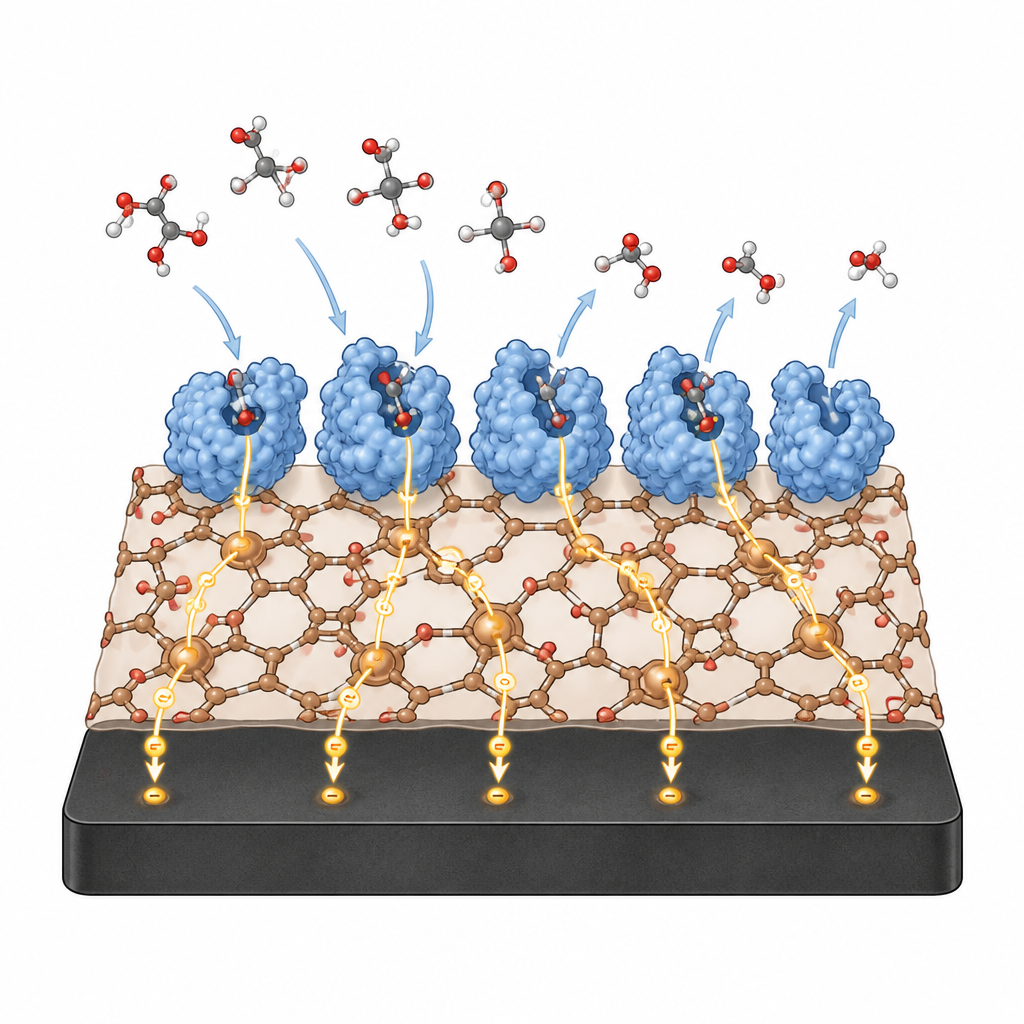
What This Means for Future Sensors
Overall, the study shows that thin films made from plant-like molecules and common metals can create a hospitable, conductive home for enzymes on electrode surfaces. By making it easier for electrons to move between enzymes and electronics, and by allowing the coating recipe to be tailored to a specific enzyme chain, these networks could improve a wide range of biosensors and bioelectronic devices without adding much cost or complexity.
Citation: Dey, S., Laws, M.E., Yeon, S. et al. Metal-phenolic networks improve interfacial electron transfer in bio-electrochemical systems. npj Biosensing 3, 32 (2026). https://doi.org/10.1038/s44328-026-00100-2
Keywords: biosensors, enzyme electrodes, electron transfer, metal phenolic networks, glucose sensing